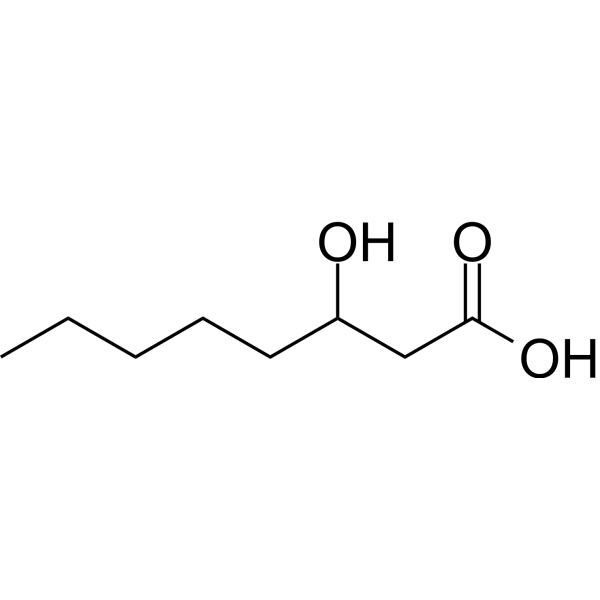
3-Hydroxyoctanoic acid acts as an agonist for the orphan receptor GPR109B, promoting an increase in intracellular calcium levels in human neutrophils expressing this receptor. This hydroxylated fatty acid, which occurs in the lipopolysaccharides of Pseudomonas aeruginosa and in poly(3-hydroxyalkanoate) produced by Pseudomonas oleophores, plays a role in metabolic studies. Research indicates that 3-hydroxyoctanoic acid interferes with lipolysis in human adipocytes and demonstrates significant changes in plasma levels under various dietary conditions, making it a valuable reagent for biochemical assays focused on metabolic regulation and related disorders.
3-Hydroxyoctanoic acid acts as an agonist for the orphan receptor GPR109B, promoting an increase in intracellular calcium levels in human neutrophils expressing this receptor. This hydroxylated fatty acid, which occurs in the lipopolysaccharides of Pseudomonas aeruginosa and in poly(3-hydroxyalkanoate) produced by Pseudomonas oleophores, plays a role in metabolic studies. Research indicates that 3-hydroxyoctanoic acid interferes with lipolysis in human adipocytes and demonstrates significant changes in plasma levels under various dietary conditions, making it a valuable reagent for biochemical assays focused on metabolic regulation and related disorders.
This calculator helps you calculate mass of compound based on solution concentration, volume and molecular weight in a specific solution using the formula: