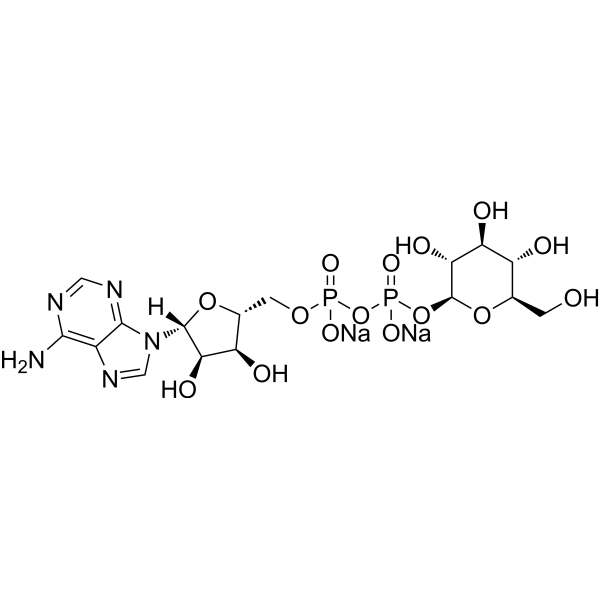
ADP-Glucose disodium is a critical biochemical assay reagent that serves as an immediate precursor for the biosynthesis of storage polysaccharides such as amylose and amylopectin in plants, green algae, and cyanobacteria. This compound facilitates the enzymatic synthesis of starch and other polysaccharides through the activity of enzymes like amylose synthase and starch synthase primarily in plastids. Although predominantly produced in plastids, ADP-Glucose can also be synthesized in the cytoplasm of certain grasses and subsequently transported into plastids by specialized membrane-bound transporters, making it essential for studying carbohydrate metabolism and storage processes in various organisms.
ADP-Glucose disodium is a critical biochemical assay reagent that serves as an immediate precursor for the biosynthesis of storage polysaccharides such as amylose and amylopectin in plants, green algae, and cyanobacteria. This compound facilitates the enzymatic synthesis of starch and other polysaccharides through the activity of enzymes like amylose synthase and starch synthase primarily in plastids. Although predominantly produced in plastids, ADP-Glucose can also be synthesized in the cytoplasm of certain grasses and subsequently transported into plastids by specialized membrane-bound transporters, making it essential for studying carbohydrate metabolism and storage processes in various organisms.
This calculator helps you calculate mass of compound based on solution concentration, volume and molecular weight in a specific solution using the formula: