Spinoxin

Catalog No.: A68083
Potassium Channel Inhibitor
Spinoxin is a 34-residue peptide neurotoxin derived from the venom of the scorpion Heterometrus spinifer and is classified as a Kv1.3 potassium channel inhibitor. With an IC50 of 63 nM, Spinoxin exhibits strong potency in inhibiting Kv1.3, making it a valuable tool in research related to autoimmune disorders and cancer therapies. Its unique structure, stabilized by four disulfide bridges, enhances its relevance in exploring the role of potassium channels in various biological processes.
Grouped product items
Size Price Stock Qty
100µg
$610.00
In stock
Bulk Size
Bulk Discount
Free Delivery on orders over $500
Research use only. We do not sell to patients.

Loading distributor info...

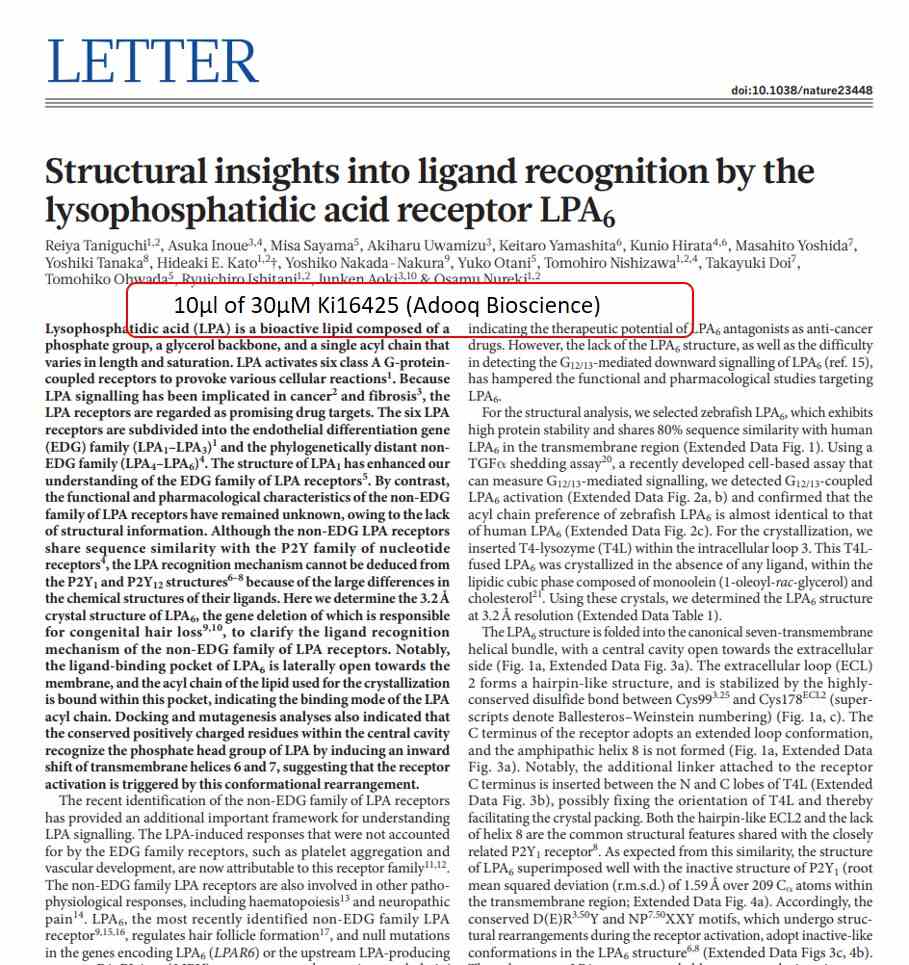
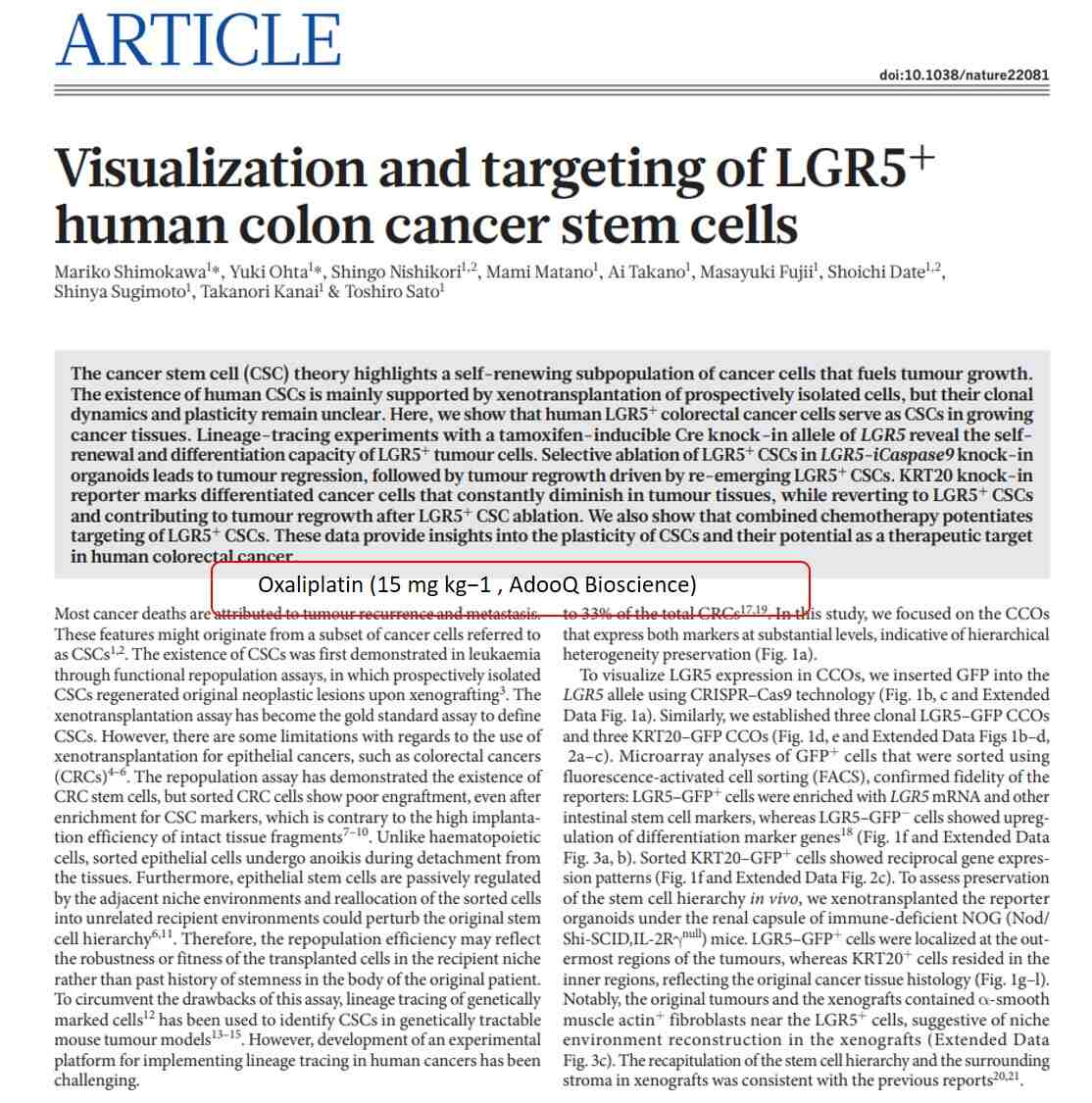
Adooq Products cited in reputable paper
Science VOLUME 380, ISSUE 6663 (2023)
Science VOLUME 369, ISSUE 6510 (2020)
Science VOLUME 356, ISSUE 6336 (2017)
Cell Vol. 185 Issue 23 p4428-4447.e28
Cell Vol 177, Issue 7, p1933-1947.e25
Cell Vol 156, Issue 5, p857-1114
Nature Volume 622 Issue 7982 (2023)
Nature volume 620, pages890-897 (2023)
Nature volume 610, pages540-546 (2022)
Nature volume 588, pages83-88 (2020)
Nature volume 574, pages268-272 (2019)
Nature volume 573, pages539-545 (2019)
Nature volume 567, pages118-122 (2019)
Nature volume 551, pages639-643 (2017)
Nature volume 551, pages247-250 (2017)
Nature volume 548, pages356-360 (2017)
Nature volume 545, pages187-192 (2017)
Biological Activity
DescriptionSpinoxin is a 34-residue peptide neurotoxin derived from the venom of the scorpion Heterometrus spinifer and is classified as a Kv1.3 potassium channel inhibitor. With an IC50 of 63 nM, Spinoxin exhibits strong potency in inhibiting Kv1.3, making it a valuable tool in research related to autoimmune disorders and cancer therapies. Its unique structure, stabilized by four disulfide bridges, enhances its relevance in exploring the role of potassium channels in various biological processes.
Product Information
Catalog NumA68083
FormulaC147H236N48O46S9
Molecular Weight3700.33
CAS Number752984-66-0
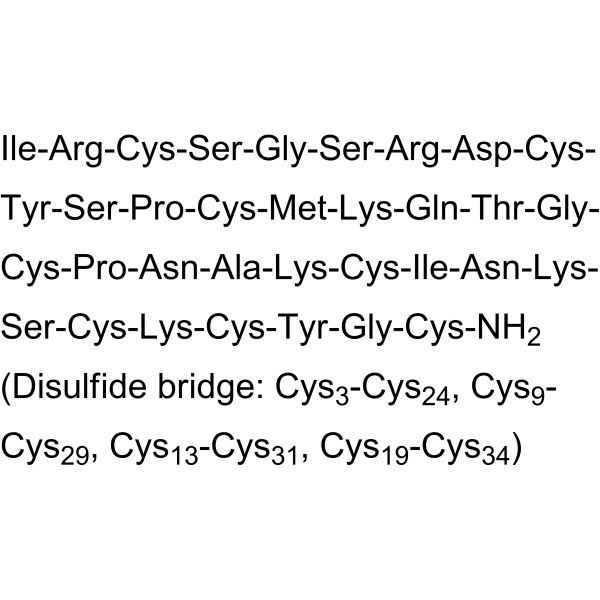
SequenceIle-Arg-Cys-Ser-Gly-Ser-Arg-Asp-Cys-Tyr-Ser-Pro-Cys-Met-Lys-Gln-Thr-Gly-Cys-Pro-Asn-Ala-Lys-Cys-Ile-Asn-Lys-Ser-Cys-Lys-Cys-Tyr-Gly-Cys-NH2 (Disulfide bridge: Cys3-Cys24, Cys9-Cys29, Cys13-Cys31, Cys19-Cys34)
Sequence shorteningIRCSGSRDCYSPCMKQTGCPNAKCINKSCKCYGC-NH2 (Disulfide bridge: Cys3-Cys24, Cys9-Cys29, Cys13-Cys31, Cys19-Cys34)
SMILESO=C1N2[C@@](CCC2)(C(=O)N[C@@H](CC(N)=O)C(=O)N[C@@H](C)C(=O)N[C@@H](CCCCN)C(=O)N[C@@]3(C(=O)N[C@@]([C@H](CC)C)(C(=O)N[C@@H](CC(N)=O)C(=O)N[C@@H](CCCCN)C(=O)N[C@@H](CO)C(=O)N[C@@]4(C(=O)N[C@@H](CCCCN)C(=O)N[C@@]5(C(=O)N[C@@H](CC6=CC=C(O)C=C6)C(=O)NCC(=O)N[C@H](C(N)=O)CSSC[C@@]1(NC(=O)CNC(=O)[C@]([C@@H](C)O)(NC(=O)[C@H](CCC(N)=O)NC(=O)[C@H](CCCCN)NC(=O)[C@H](CCSC)NC(=O)[C@](CSSC5)(NC(=O)[C@]7(N(C(=O)[C@H](CO)NC(=O)[C@H](CC8=CC=C(O)C=C8)NC(=O)[C@](CSSC4)(NC(=O)[C@H](CC(O)=O)NC(=O)[C@H](CCCNC(=N)N)NC(=O)[C@H](CO)NC(=O)CNC(=O)[C@H](CO)NC(=O)[C@@H](NC([C@@H](NC([C@H]([C@H](CC)C)N)=O)CCCNC(=N)N)=O)CSSC3)[H])CCC7)[H])[H])[H])[H])[H])[H])[H])[H])[H]
SynonymsPotassium channel toxin alpha-KTx 6.13; SPX; α-KTx6.13
Useful Calculator

This calculator helps you calculate mass of compound based on solution concentration, volume and molecular weight in a specific solution using the formula:


Mass (mg) = Concentration (mM) × Volume (mL) × Molecular Weight (g/mol)

  • Mass

    Concentration

    Volume

    Molecular Weight

Please check COA/MSDS for correct molecular weight.

Calculate the dilution required to prepare a stock solution.
This equation is commonly abbreviated as: C1V1 = C2V2

  • C1

    V1

    C2

    V2