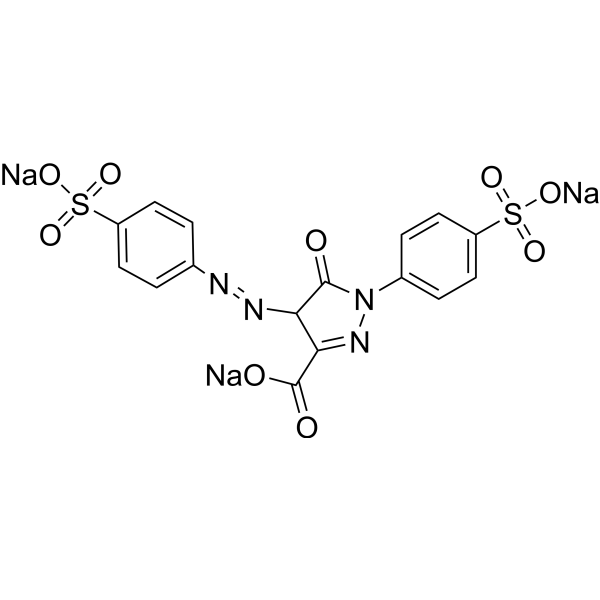
Tartrazine (Acid Yellow 23; FD&C Yellow No. 5) is an orally active synthetic azo dye that appears as an orange-yellow, water-soluble powder producing a bright yellow coloration in solution. It is widely used as a food colorant and in pharmaceuticals and cosmetics due to its high chemical and photostability.
Beyond its industrial applications, Tartrazine has been reported to induce mitochondria-mediated apoptosis and to exhibit potential biological effects, including neurodevelopmental toxicity, cytotoxicity, and genotoxicity under certain experimental conditions. It serves as a model compound in toxicological and biochemical studies investigating the safety and cellular impact of synthetic food dyes.
Tartrazine (Acid Yellow 23; FD&C Yellow No. 5) is an orally active synthetic azo dye that appears as an orange-yellow, water-soluble powder producing a bright yellow coloration in solution. It is widely used as a food colorant and in pharmaceuticals and cosmetics due to its high chemical and photostability.
Beyond its industrial applications, Tartrazine has been reported to induce mitochondria-mediated apoptosis and to exhibit potential biological effects, including neurodevelopmental toxicity, cytotoxicity, and genotoxicity under certain experimental conditions. It serves as a model compound in toxicological and biochemical studies investigating the safety and cellular impact of synthetic food dyes.
Store lyophilized at -20ºC, keep desiccated. In lyophilized form, the chemical is stable for 36 months. In solution, store at -20ºC and use within 1 months to prevent loss of potency. Aliquot to avoid multiple freeze/thaw cycles.
This calculator helps you calculate mass of compound based on solution concentration, volume and molecular weight in a specific solution using the formula: