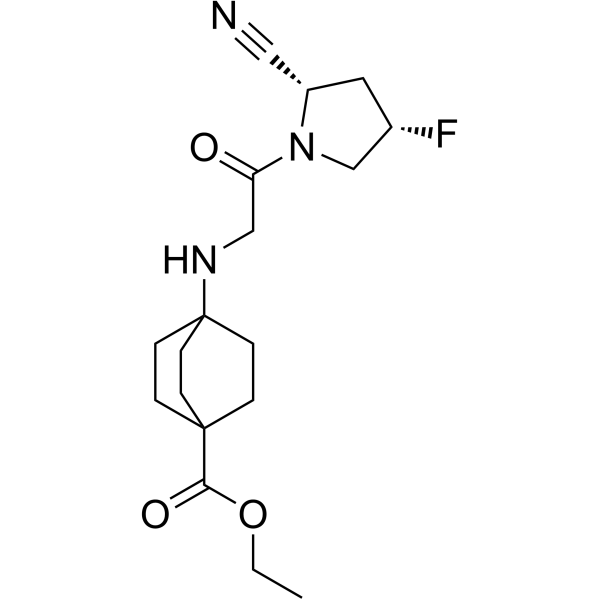
Bisegliptin is a small molecule inhibitor targeting histone methyltransferases, primarily recognized for its antidiabetic properties. It undergoes metabolic conversion, predominantly transforming the cyano group into a carboxylic acid form, with DPP-4 contributing to its metabolism. The resultant carboxylic acid metabolite can be detected in both in vivo and in vitro settings. Research indicates that co-administration with other DPP inhibitors influences the plasma concentration of this metabolite, highlighting the complexity of its metabolic dynamics. Additionally, the amide intermediate demonstrates a significantly faster conversion rate than the parent compound in the presence of DPP-4, underscoring its relevance in metabolic studies.
Bisegliptin is a small molecule inhibitor targeting histone methyltransferases, primarily recognized for its antidiabetic properties. It undergoes metabolic conversion, predominantly transforming the cyano group into a carboxylic acid form, with DPP-4 contributing to its metabolism. The resultant carboxylic acid metabolite can be detected in both in vivo and in vitro settings. Research indicates that co-administration with other DPP inhibitors influences the plasma concentration of this metabolite, highlighting the complexity of its metabolic dynamics. Additionally, the amide intermediate demonstrates a significantly faster conversion rate than the parent compound in the presence of DPP-4, underscoring its relevance in metabolic studies.
This calculator helps you calculate mass of compound based on solution concentration, volume and molecular weight in a specific solution using the formula: