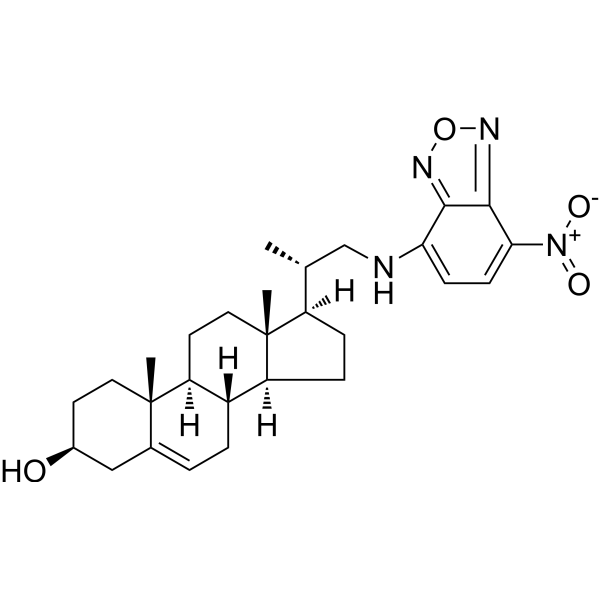
Fluoresterol (22-NBD Cholesterol) is a cholesterol-specific fluorescent probe designed to bind selectively to cholesterol transport-related proteins, including ABCA1 and ABCG1. This compound serves as a valuable tool for studying cholesterol metabolism, enabling visualization and quantitative analysis of cholesterol absorption, efflux, intracellular transport dynamics, and reverse cholesterol transport processes. Fluoresterol is particularly useful in research exploring the mechanisms underlying hyperlipidemia, atherosclerosis, and non-alcoholic fatty liver disease (NAFLD). Common application concentrations range from 0.1 to 10 μM in vitro and doses of 5 to 20 mg/kg for in vivo studies, with excitation and emission wavelengths of 472 nm and 540 nm, respectively.
Fluoresterol (22-NBD Cholesterol) is a cholesterol-specific fluorescent probe designed to bind selectively to cholesterol transport-related proteins, including ABCA1 and ABCG1. This compound serves as a valuable tool for studying cholesterol metabolism, enabling visualization and quantitative analysis of cholesterol absorption, efflux, intracellular transport dynamics, and reverse cholesterol transport processes. Fluoresterol is particularly useful in research exploring the mechanisms underlying hyperlipidemia, atherosclerosis, and non-alcoholic fatty liver disease (NAFLD). Common application concentrations range from 0.1 to 10 μM in vitro and doses of 5 to 20 mg/kg for in vivo studies, with excitation and emission wavelengths of 472 nm and 540 nm, respectively.
This calculator helps you calculate mass of compound based on solution concentration, volume and molecular weight in a specific solution using the formula: