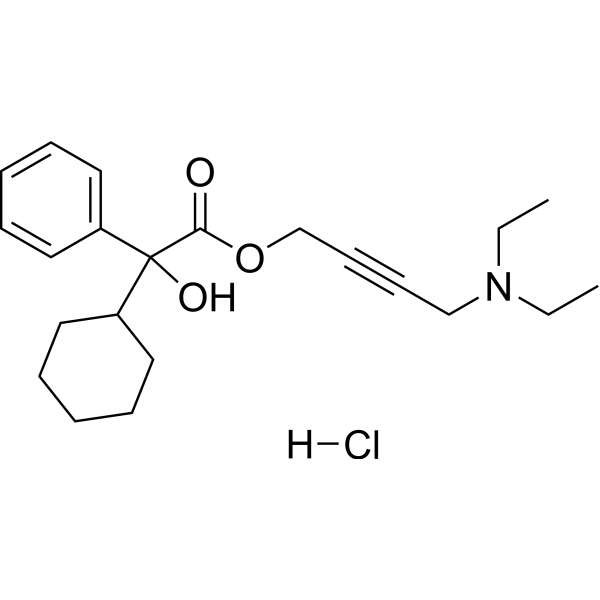
Oxybutynin chloride is a competitive antagonist of muscarinic acetylcholine receptors (mAChRs), exhibiting binding affinities with Ki values of 14.3 nM and 5.55 nM for [3H]NMS in mouse bladder and cerebral cortex, respectively. It effectively inhibits vascular Kv channels with an IC50 of 11.51 μM, independent of its anticholinergic effects. Oxybutynin chloride is primarily utilized for the management of overactive bladder syndrome (OAB) and alleviating bladder and urinary tract muscle spasms. Additionally, it serves as a click chemistry reagent due to its alkyne functionality, enabling copper-catalyzed azide-alkyne cycloaddition (CuAAc) reactions with azide-containing molecules.
Oxybutynin chloride is a competitive antagonist of muscarinic acetylcholine receptors (mAChRs), exhibiting binding affinities with Ki values of 14.3 nM and 5.55 nM for [3H]NMS in mouse bladder and cerebral cortex, respectively. It effectively inhibits vascular Kv channels with an IC50 of 11.51 μM, independent of its anticholinergic effects. Oxybutynin chloride is primarily utilized for the management of overactive bladder syndrome (OAB) and alleviating bladder and urinary tract muscle spasms. Additionally, it serves as a click chemistry reagent due to its alkyne functionality, enabling copper-catalyzed azide-alkyne cycloaddition (CuAAc) reactions with azide-containing molecules.
This calculator helps you calculate mass of compound based on solution concentration, volume and molecular weight in a specific solution using the formula: