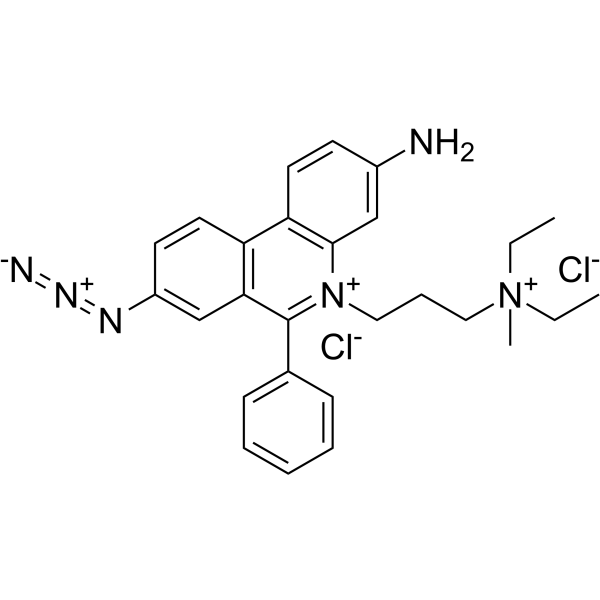
Propidium monoazide (PMA) is a cell-impermeant photoreactive DNA-binding dye that selectively targets double-stranded DNA (dsDNA). It effectively prevents the amplification of DNA derived from dead bacteria during polymerase chain reaction (PCR), enhancing both the specificity and sensitivity of PCR assays. Additionally, PMA serves as a click chemistry reagent, containing an azide group that participates in copper-catalyzed azide-alkyne cycloaddition (CuAAc) and strain-promoted alkyne-azide cycloaddition (SPAAC) reactions with alkyne-containing molecules, DBCO, or BCN groups, facilitating advanced chemical labeling and analysis in research applications.
Propidium monoazide (PMA) is a cell-impermeant photoreactive DNA-binding dye that selectively targets double-stranded DNA (dsDNA). It effectively prevents the amplification of DNA derived from dead bacteria during polymerase chain reaction (PCR), enhancing both the specificity and sensitivity of PCR assays. Additionally, PMA serves as a click chemistry reagent, containing an azide group that participates in copper-catalyzed azide-alkyne cycloaddition (CuAAc) and strain-promoted alkyne-azide cycloaddition (SPAAC) reactions with alkyne-containing molecules, DBCO, or BCN groups, facilitating advanced chemical labeling and analysis in research applications.
This calculator helps you calculate mass of compound based on solution concentration, volume and molecular weight in a specific solution using the formula: