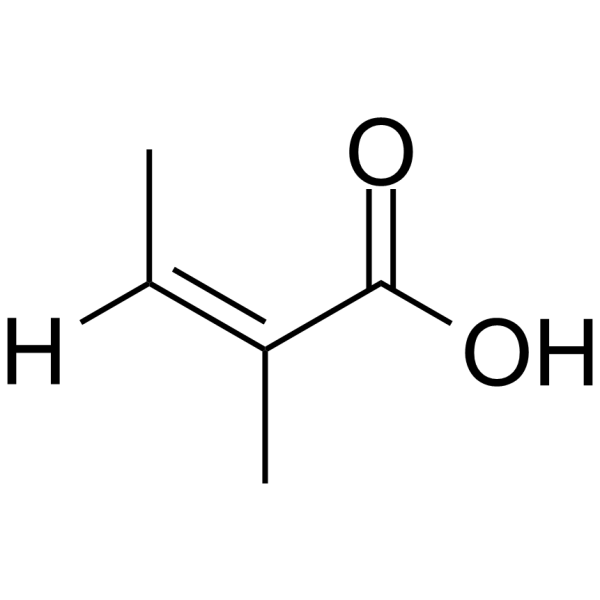
Angelic acid is a ferroptosis inducer that targets NRF2 degradation. By binding to the NRF2 protein, it facilitates its ubiquitination and subsequent proteasomal degradation, thereby mitigating the protective effects of NRF2 against oxidative stress and promoting lipid peroxidation. This process leads to the induction of ferroptosis in tumor cells, evidenced by increased intracellular reactive oxygen species (ROS) and upregulation of ferroptosis-related markers such as CHAC1 and PTGS2. Additionally, Angelic acid exhibits the ability to scavenge UVA-induced ROS, inhibiting skin fibroblast senescence and extracellular matrix degradation, and promotes wound healing through its sedative properties.
Angelic acid is a ferroptosis inducer that targets NRF2 degradation. By binding to the NRF2 protein, it facilitates its ubiquitination and subsequent proteasomal degradation, thereby mitigating the protective effects of NRF2 against oxidative stress and promoting lipid peroxidation. This process leads to the induction of ferroptosis in tumor cells, evidenced by increased intracellular reactive oxygen species (ROS) and upregulation of ferroptosis-related markers such as CHAC1 and PTGS2. Additionally, Angelic acid exhibits the ability to scavenge UVA-induced ROS, inhibiting skin fibroblast senescence and extracellular matrix degradation, and promotes wound healing through its sedative properties.
This calculator helps you calculate mass of compound based on solution concentration, volume and molecular weight in a specific solution using the formula: