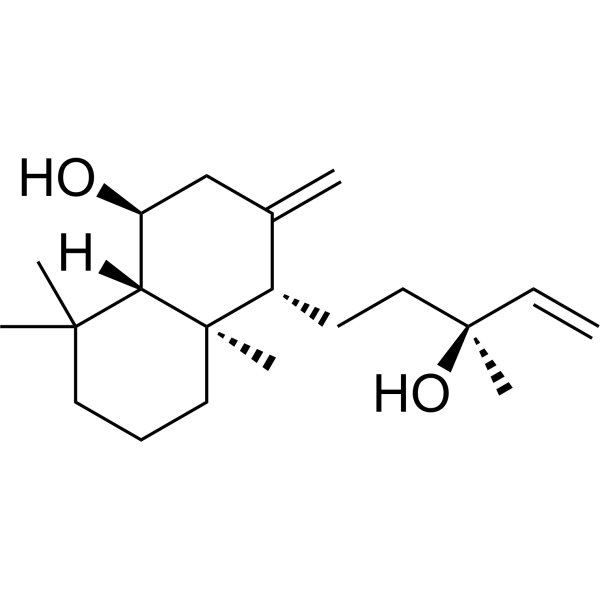
Larixol is an fMLP inhibitor that also suppresses key signaling pathways involved in immune regulation, including Src kinase, ERK1/2, p38, and AKT phosphorylation. It disrupts the interaction between the βγ subunit of the fMLP receptor Gi protein and downstream effectors, thereby inhibiting fMLP-induced respiratory burst. Larixol effectively inhibits fMLP (0.1 μM)-induced superoxide anion production (IC50: 1.98 μM), cathepsin G release (IC50: 2.76 μM), and neutrophil chemotaxis. It mitigates neutrophil hyperactivation and helps reduce inflammation and tissue damage. Additionally, Larixol derivatives have shown inhibitory activity against TRPC6 functional mutants associated with focal segmental glomerulosclerosis (FSGS).
Larixol is an fMLP inhibitor that also suppresses key signaling pathways involved in immune regulation, including Src kinase, ERK1/2, p38, and AKT phosphorylation. It disrupts the interaction between the βγ subunit of the fMLP receptor Gi protein and downstream effectors, thereby inhibiting fMLP-induced respiratory burst. Larixol effectively inhibits fMLP (0.1 μM)-induced superoxide anion production (IC50: 1.98 μM), cathepsin G release (IC50: 2.76 μM), and neutrophil chemotaxis. It mitigates neutrophil hyperactivation and helps reduce inflammation and tissue damage. Additionally, Larixol derivatives have shown inhibitory activity against TRPC6 functional mutants associated with focal segmental glomerulosclerosis (FSGS).
Store lyophilized at -20ºC, keep desiccated. In lyophilized form, the chemical is stable for 36 months. In solution, store at -20ºC and use within 1 months to prevent loss of potency. Aliquot to avoid multiple freeze/thaw cycles.
This calculator helps you calculate mass of compound based on solution concentration, volume and molecular weight in a specific solution using the formula: