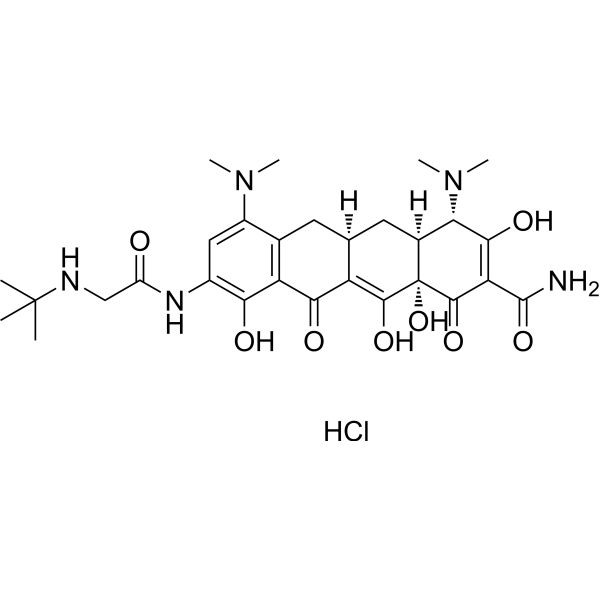
Tigecycline hydrochloride is a broad-spectrum glycylcycline antibiotic that primarily targets bacterial protein synthesis by binding to the 30S ribosomal subunit. It exhibits significant antibacterial activity against a variety of gram-positive and gram-negative pathogens, including Escherichia coli and Acinetobacter baumannii, with mean inhibitory concentrations (MIC) of approximately 125 ng/mL for E. coli and MIC50 and MIC90 values of 1 and 2 mg/L for A. baumannii, respectively. Tigecycline hydrochloride is commonly used in research settings to investigate antibiotic resistance mechanisms and to study the efficacy of antimicrobial agents.
Tigecycline hydrochloride is a broad-spectrum glycylcycline antibiotic that primarily targets bacterial protein synthesis by binding to the 30S ribosomal subunit. It exhibits significant antibacterial activity against a variety of gram-positive and gram-negative pathogens, including Escherichia coli and Acinetobacter baumannii, with mean inhibitory concentrations (MIC) of approximately 125 ng/mL for E. coli and MIC50 and MIC90 values of 1 and 2 mg/L for A. baumannii, respectively. Tigecycline hydrochloride is commonly used in research settings to investigate antibiotic resistance mechanisms and to study the efficacy of antimicrobial agents.
This calculator helps you calculate mass of compound based on solution concentration, volume and molecular weight in a specific solution using the formula: