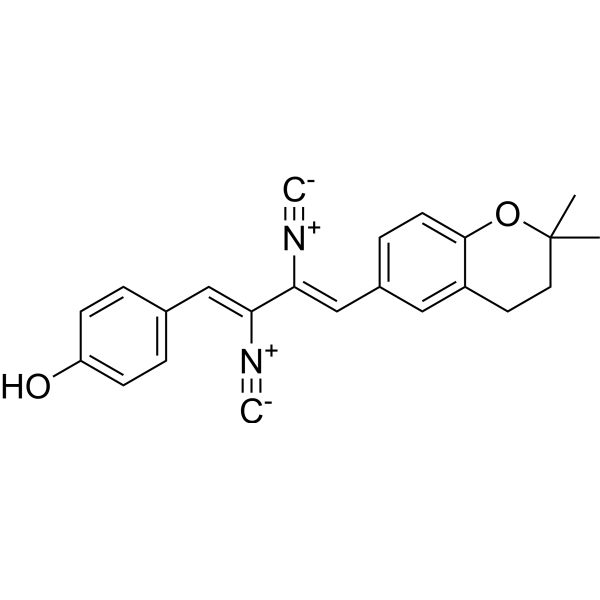
Xanthoascin is a natural phenolic metabolite that exhibits strong antibacterial activity. Derived from the fermentation products of the endophytic fungus Aspergillus sp. IFB-YXS found in Ginkgo biloba leaves, Xanthoascin demonstrates a minimum inhibitory concentration (MIC) of 0.3125 µg/mL against Clavibacter michiganense subsp. sepedonicus, along with moderate activity against other bacterial pathogens (MIC = 5-20 µg/mL). Its mechanism involves disrupting bacterial cell membrane permeability, resulting in the leakage of nucleic acids. This compound holds potential for research applications in antimicrobial development and the study of plant pathogen interactions.
Xanthoascin is a natural phenolic metabolite that exhibits strong antibacterial activity. Derived from the fermentation products of the endophytic fungus Aspergillus sp. IFB-YXS found in Ginkgo biloba leaves, Xanthoascin demonstrates a minimum inhibitory concentration (MIC) of 0.3125 µg/mL against Clavibacter michiganense subsp. sepedonicus, along with moderate activity against other bacterial pathogens (MIC = 5-20 µg/mL). Its mechanism involves disrupting bacterial cell membrane permeability, resulting in the leakage of nucleic acids. This compound holds potential for research applications in antimicrobial development and the study of plant pathogen interactions.
This calculator helps you calculate mass of compound based on solution concentration, volume and molecular weight in a specific solution using the formula: