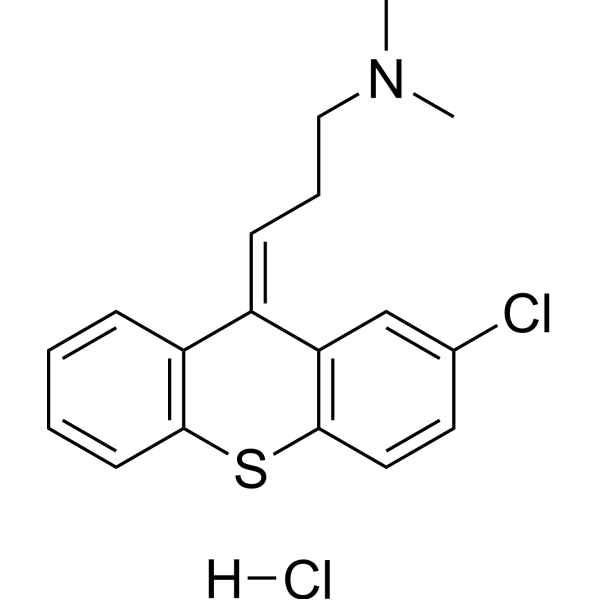
Chlorprothixene hydrochloride functions as an antagonist of dopamine and histamine receptors, exhibiting Kis of 18 nM for hD1, 2.96 nM for hD2, 4.56 nM for hD3, 9 nM for hD5, and 3.75 nM for hH1 receptors. This compound demonstrates significant antipsychotic activity, making it a valuable tool for research into neuropharmacology and the mechanisms underlying psychotic disorders. Its receptor modulation also indicates potential applications in the study of bacterial inhibition mechanisms, providing insights into the interplay between neurotransmitter systems and microbial pathogenesis.
Chlorprothixene hydrochloride functions as an antagonist of dopamine and histamine receptors, exhibiting Kis of 18 nM for hD1, 2.96 nM for hD2, 4.56 nM for hD3, 9 nM for hD5, and 3.75 nM for hH1 receptors. This compound demonstrates significant antipsychotic activity, making it a valuable tool for research into neuropharmacology and the mechanisms underlying psychotic disorders. Its receptor modulation also indicates potential applications in the study of bacterial inhibition mechanisms, providing insights into the interplay between neurotransmitter systems and microbial pathogenesis.
This calculator helps you calculate mass of compound based on solution concentration, volume and molecular weight in a specific solution using the formula: