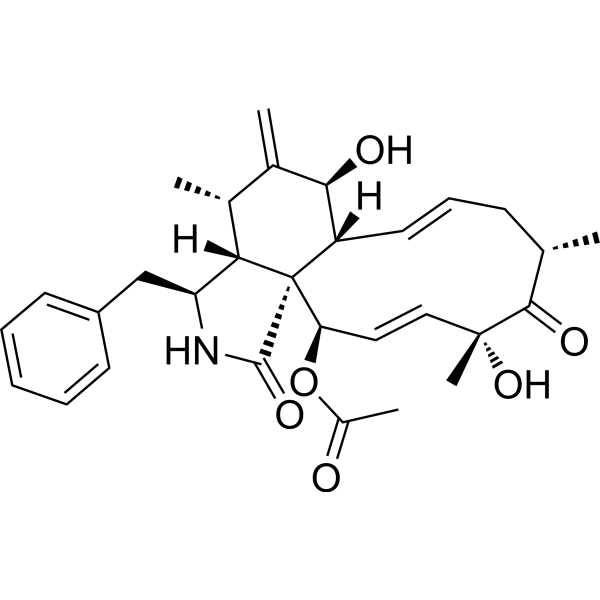
Cytochalasin D (also known as Zygosporin A) is a cell-permeable fungal metabolite and a potent inhibitor of actin polymerization. It binds to G-actin, thereby disrupting the G-actin–cofilin interaction and preventing cofilin association with F-actin. Through this mechanism, Cytochalasin D reduces both actin polymerization and depolymerization rates in living cells, leading to profound effects on cytoskeletal organization and cell morphology. In addition, Cytochalasin D suppresses exosome release, consequently decreasing survivin levels within the tumor microenvironment. It also promotes phosphorylation and cytoplasmic retention of YAP, implicating it in the regulation of mechanotransduction and tumor cell signaling.
Cytochalasin D (also known as Zygosporin A) is a cell-permeable fungal metabolite and a potent inhibitor of actin polymerization. It binds to G-actin, thereby disrupting the G-actin–cofilin interaction and preventing cofilin association with F-actin. Through this mechanism, Cytochalasin D reduces both actin polymerization and depolymerization rates in living cells, leading to profound effects on cytoskeletal organization and cell morphology. In addition, Cytochalasin D suppresses exosome release, consequently decreasing survivin levels within the tumor microenvironment. It also promotes phosphorylation and cytoplasmic retention of YAP, implicating it in the regulation of mechanotransduction and tumor cell signaling.
Store lyophilized at -20ºC, keep desiccated. In lyophilized form, the chemical is stable for 36 months. In solution, store at -20ºC and use within 1 months to prevent loss of potency. Aliquot to avoid multiple freeze/thaw cycles.
This calculator helps you calculate mass of compound based on solution concentration, volume and molecular weight in a specific solution using the formula: