
- Cat. No.
- A12340
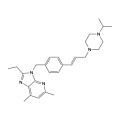
GPR4 antagonist 1
GPR4 antagonist 1 is a GPR4 antagonist, with an IC50 of 189 nM.
In stock
View Details
Search by product name, CAS, target or catalog number. Press Down Arrow to reach product suggestions, Tab to move between links, and Escape to close suggestions.
G protein reagents here range from guanine nucleotides to ligands for orphan G protein-coupled receptors. Heterotrimeric G proteins consist of a Gα subunit, which binds guanine nucleotides, and a tightly associated Gβγ dimer. An activated G protein-coupled receptor (GPCR) exchanges guanosine diphosphate (GDP) for guanosine triphosphate (GTP) on Gα, which then separates from Gβγ. Guanosine 5'-triphosphate trisodium salt is listed as a G protein activator, but most other compounds act on less studied receptors. G15 blocks the G protein-coupled estrogen receptor (GPER, also called GPR30), and CID16020046 antagonizes G protein-coupled receptor 55 (GPR55). Kynurenic acid, an endogenous tryptophan metabolite, is listed as a GPR35 agonist. GTPase-accelerating proteins that end the signal are covered in RGS Protein.
GPR4 antagonist 1 is a GPR4 antagonist, with an IC50 of 189 nM.
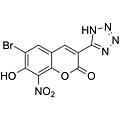
GPR35 agonist 1 (compound 50) is a potent and specific G protein-coupled receptor-35 (GPR35)/CXCR8 agonist with an EC50 of 5.8 nM, displays good druggability.
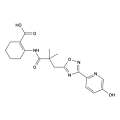
MK-6892 is a potent, selective, and full agonist for the high affinity nicotinic acid (NA) receptor GPR109A.K i and GTPγS EC 50 of MK-6892 on the Human GPR109A is 4 nM and 16 nM, respectively.
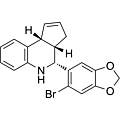
G15 is a high affinity and selective G-protein-coupled estrogen receptor (GPER/GPR30) antagonist with a Ki of 20 nM.
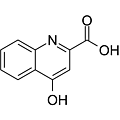
Synonyms: Quinurenic acid
Kynurenic acid, an endogenous tryptophan metabolite, is a broad-spectrum antagonist targeting NMDA, glutamate, α7 nicotinic acetylcholine receptor. Kynurenic acid is also an agonist of GPR35/CXCR8.
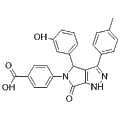
Synonyms: C390-0219
CID16020046 is a selective GPR55 antagonist, inhibiting GPR55 constitutive activity with IC50 of 0.15 μM in yeast. It demonstrates weak activity against a broad spectrum of other GPCRs, ion channels, kinases, and nuclear receptor.
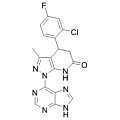
TM N1324 is an agonist of G-Protein-Coupled Receptor 39 (GPR39) with EC50s of 9 nM/5 nM in the presence of Zn2+, and 280 nM/180 nM in the absence of Zn2+ for human/murine GPR39.
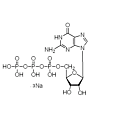
Synonyms: 5'-GTP trisodium salt; Guanosine triphosphate; H4GTP
Guanosine 5'-triphosphate trisodium salt (5'-GTP trisodium salt) is an activator of signal transduction of G proteins.
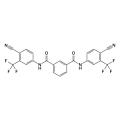
DJ-V-159 is an agonist for G protein-coupled receptor family C group 6 member A (GPRC6A).
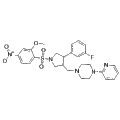
Synonyms: GTPL7039; GTPL 7039.
AR234960, a non-peptide MAS (a G protein-coupled receptor) agonist, increases both mRNA and protein levels of CTGF via ERK1/2 signaling in HEK293-MAS cells and adult human cardiac fibroblasts.
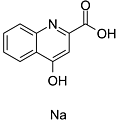
Kynurenic acid sodium, an endogenous tryptophan metabolite, is a broad-spectrum antagonist targeting NMDA, glutamate, α7 nicotinic acetylcholine receptor. Kynurenic acid sodium is also an agonist of GPR35/CXCR8.
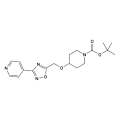
PSN632408 is an optimized agonist of GPR119 receptors that shows similar potency to OEA at both recombinant mouse and human GPR119 receptors, exhibiting EC50 values of 5.6 and 7.9 uM, respectively.
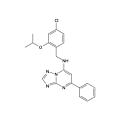
AF64394 is a GPR3 inverse agonist, with a pIC50 of 7.3.
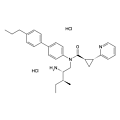
(1R,2R)-2-PCCA hydrochloride is a diastereomer of 2-PCCA, and acts as a potent GPR88 receptor agonist, with an EC50 of 3 nM in cell-free assay, and 603 nM in cell assay.
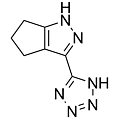
MK-0354 is a partial agonist of GPR109a receptor, for hGPR109a/ mGPR109a with EC50 of 1.65/1.08 μM, showed no activation of GPR109b.
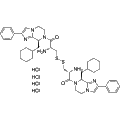
Synonyms: BIM-46187 tetrahydrochloride
PH-064 tetrahydrochloride is a potent inhibitor of the heterotrimeric G-protein complex. It effectively inhibits serotonin transporter (SERT) activity and reduces shear stress-induced Akt phosphorylation, showcasing significant anti-hyperalgesic properties. This compound is valuable for research in pain models, including inflammatory and neuropathic pain, as well as in studies related to G protein-coupled receptor-dependent tumorigenesis and inflammatory lung injury.
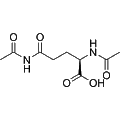
α,δ-NAG is an allosteric modulator targeting G protein-coupled receptors (GPCRs). This orally active derivative of L-Glutamine is resistant to glutaminase activity and exhibits less hydrolysis, making it a valuable tool in the study of inflammatory responses. α,δ-NAG effectively suppresses neutrophilic airway inflammation by activating the GPCR/ERK/MKP-1 signaling pathway. This compound is useful for research applications in inflammation and immunology, particularly in conditions such as asthma.
Out of stock
All 3 sizes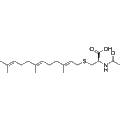
Synonyms: N-Acetyl-S-farnesyl-L-cysteine
Arazine (N-Acetyl-S-farnesyl-L-cysteine) acts as a cell-permeable modulator of G protein and G-protein coupled receptor signaling. By competing with prenylated G proteins or their receptors, Arazine serves as a substrate for isoprenylcysteine methyltransferase, influencing downstream signaling pathways. This compound is valuable in the study of G protein signaling mechanisms and its implications in various cellular processes.
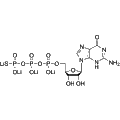
Synonyms: Guanosine 5'-[γ-thio]triphosphate tetralithium
GTPγS tetralithium is a G-protein activator known for its ability to prevent proteolytic degradation of proteins. It stimulates GLUT4 translocation in a tyrosine kinase-dependent manner, activates phospholipases, and induces actin polymerization. This reagent is useful for coupling with G-protein α to investigate its effects on kinase activity and serves as a component in lysis buffers for various biochemical assays.
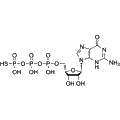
Synonyms: Guanosine 5'-[γ-thio]triphosphate
Guanosine 5'-[γ-thio]triphosphate (GTP-γ-S) is a potent G-protein activator that enhances the stability of proteins against proteolytic degradation. It facilitates glucose transporter 4 (GLUT4) translocation through a tyrosine kinase-dependent pathway, activates phospholipases, and promotes actin polymerization. GTP-γ-S is commonly utilized in research for studying the coupling effects of G-proteins with kinase activity, as well as acting as a component in lysis buffer formulations.
Out of stock
All 3 sizes