






Epigenetics
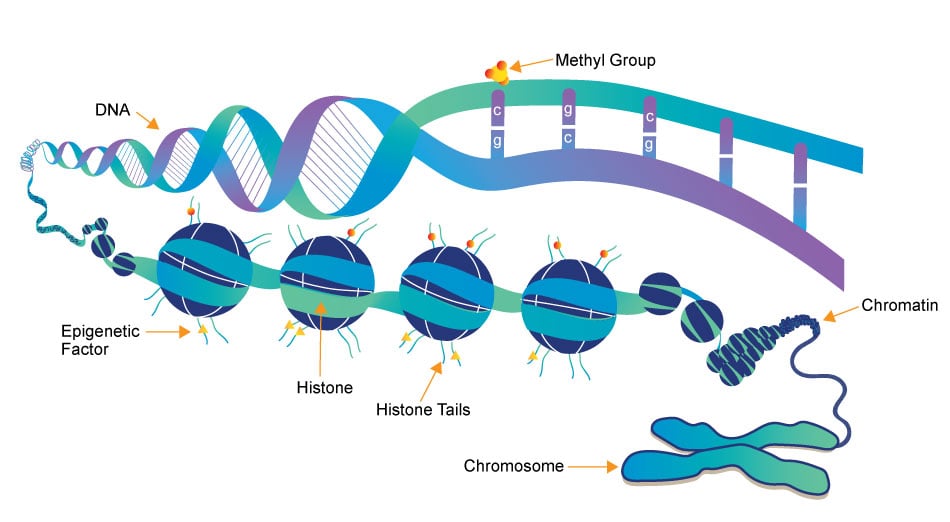
Epigenetics research delves into the molecular mechanisms that control gene expression and cellular traits without altering the underlying DNA sequence. One crucial aspect of this field is the role of small molecules, which act as powerful regulators of epigenetic modifications. These small compounds, typically comprising a few dozen to a few hundred atoms, have emerged as essential tools in understanding and manipulating the epigenome.
- DNA Methylation Inhibitors: Small molecules like 5-azacytidine and 5-aza-2'-deoxycytidine are DNA methyltransferase inhibitors. They block the addition of methyl groups to DNA, leading to DNA demethylation. This can reactivate silenced genes, potentially offering therapeutic avenues for conditions like cancer.
- HDAC inhibitors: HDACs remove acetyl groups from histone proteins, contributing to gene repression. Small molecule HDAC inhibitors, such as Vorinostat and Romidepsin, can reverse this process by increasing histone acetylation, allowing genes to be more accessible for transcription. These inhibitors are being explored for cancer therapy and other conditions.
- Histone Methyltransferase Inhibitors: Small molecules like GSK126 inhibit specific histone methyltransferases, affecting histone methylation patterns. This can alter gene expression, making them promising candidates for cancer and other diseases with epigenetic dysregulation.
- RNA Modulators: Small molecules can also target non-coding RNAs involved in epigenetic regulation. For instance, small molecules called small interfering RNAs (siRNAs) can be designed to target and degrade specific long non-coding RNAs, influencing gene expression.
- Epigenetic Reader Domain Inhibitors: These small molecules target proteins that recognize and bind to specific epigenetic marks. Examples include inhibitors of bromodomain-containing proteins (BET inhibitors), which can disrupt gene regulation by interfering with protein-DNA interactions.
Small molecules in epigenetics research not only provide insights into the fundamental biology of gene regulation but also hold immense promise for developing novel therapeutics. Their ability to selectively modulate specific epigenetic marks and pathways has led to ongoing clinical trials and drug development efforts for various diseases, including cancer, neurological disorders, and inflammatory conditions. Understanding and harnessing the power of these small molecules is at the forefront of modern epigenetics research, offering new hope for precision medicine and targeted therapies.
3 key components involved in the regulation of epigenetic modifications
Epigenetics Writer
Epigenetics writers are enzymes responsible for adding chemical marks or modifications to DNA or histone proteins. These marks include DNA methylation (addition of methyl groups to DNA) and histone modifications (such as acetylation, methylation, phosphorylation, etc.).
Epigenetics Reader
Function: Epigenetics readers are proteins that can recognize and bind to specific epigenetic marks on DNA or histones. These reader proteins interpret the epigenetic code and facilitate downstream cellular processes, such as gene activation or repression.
Epigenetics Eraser
Function: Epigenetics erasers are enzymes responsible for removing or reversing epigenetic marks on DNA or histones. This process allows for the dynamic regulation of gene expression and the resetting of epigenetic states during various stages of development and in response to environmental changes.
-
SMARCA2/4 PROTAC degrader
PROTAC SMARCA2/4-degrader-2 is a molecular degrader specifically designed to target SMARCA2 and SMARCA4 proteins. It effectively induces degradation of these proteins in A549 cell lines with degradation concentrations (DC50s) less than 100 nM, achieving a maximum degradation rate (Dmax%) exceeding 90% after 24 hours of exposure. This compound is valuable for investigating the roles of SMARCA2 and SMARCA4 in various biological processes and may have applications in cancer research and therapeutic development. -
SMARCA2 PROTAC degrader
PROTAC SMARCA2 degrader-13 is a novel PROTAC targeted at the degradation of SMARCA2 proteins. This compound effectively induces the degradation of SMARCA2 in A549 cells with a DC50 of less than 100 nM, achieving over 90% degradation after 24 hours of treatment. It serves as a valuable tool for studying the functional role of SMARCA2 in cancer biology and other cellular processes. -
SMARCA2/4 PROTAC degrader
PROTAC SMARCA2/4-degrader-33 (compound I-277) is a targeted protein degradation compound that engages and induces degradation of SMARCA2 and SMARCA4. It demonstrates effective biological activity in A549 cells, with degradation concentrations (DC50s) below 100 nM, achieving over 90% protein degradation (Dmax%) after 24 hours of treatment. This reagent is suitable for research applications involving epigenetic regulation and cancer biology. -
SMARCA2 PROTAC degrader
PROTAC SMARCA2 degrader-9 (compound I-285) is an innovative PROTAC agent designed to selectively degrade SMARCA2 proteins. It demonstrates potent biological activity with a DC50 value of less than 100 nM, achieving over 90% degradation of SMARCA2 in A549 cell lines after 24 hours of treatment. This compound serves as a valuable tool for research applications aimed at elucidating the role of SMARCA2 in cancer biology and exploring targeted protein degradation strategies. -
NUAK1 Inhibitor
NUAK1-IN-3 is a selective inhibitor of NUAK1 with a high potency, exhibiting an IC50 of 0.49 nM. It also demonstrates inhibitory activity against NUAK2 and JAK3 with IC50 values of 265 nM and 225 nM, respectively. This compound disrupts the NUAK1-MYPT1 signaling pathway, leading to reduced MYPT1 phosphorylation and inhibition of proliferation, migration, and invasion in triple-negative breast cancer cells. Additionally, NUAK1-IN-3 counteracts TGF-β1-induced epithelial-mesenchymal transition effects by modulating critical markers such as Snail, N-cadherin, and E-cadherin. It holds potential for exploring therapeutic strategies for triple-negative breast cancer. -
HDAC2 Inhibitor
HDAC2-IN-3 is a selective HDAC2 inhibitor with an IC50 of 14 nM, capable of crossing the blood-brain barrier. This compound effectively upregulates histone acetylation levels both in cultured cells and in vivo, and has been shown to enhance long-term potentiation (LTP) in the hippocampus. HDAC2-IN-3 is valuable for research applications focused on neurodegenerative disorders, particularly Alzheimer's disease. -
PfDNMT2 Inhibitor
SC83288 is an inhibitor of PfDNMT2 in Plasmodium falciparum, with an IC50 of 7 μM. This compound disrupts the epigenetic regulation within malaria parasites, impeding DNA replication and nuclear division, and consequently arrests the development of the asexual blood stage. SC83288 also induces pyknotic morphology in the parasites without impacting cytokinesis post-nuclear division or parasite egress, making it valuable for malaria-related research applications. -
JAK1 Inhibitor
YYSW001 is a selective Janus kinase 1 (JAK1) inhibitor with an IC50 of 6 nM, demonstrating significant efficacy in blocking JAK1-mediated phosphorylation of STAT6 as well as IL-6-induced phosphorylation of STAT3. This compound effectively suppresses pro-inflammatory cytokine levels, reduces paw swelling, and lowers clinical arthritis scores, thereby alleviating joint damage and diminishing bone loss. YYSW001 is particularly valuable for research related to rheumatoid arthritis and inflammation-related disorders. -
JAK3 Inhibitor
JAK3-IN-20 is a selective and orally active JAK3 inhibitor, demonstrating an IC50 of 0.7473 nM. By covalently binding to JAK3 Cys909 and outcompeting ATP at the catalytic site, JAK3-IN-20 effectively blocks JAK-STAT pathway activation. This compound exhibits anti-tumor properties by inhibiting migration, proliferation, and growth of Bortezomib-resistant cancer cells, as well as inducing dose-dependent apoptosis. JAK3-IN-20 is a valuable tool for researching Bortezomib-resistant multiple myeloma. -
HDAC8 Inhibitor
HDAC8-IN-16 is a selective inhibitor of histone deacetylase 8 (HDAC8), exhibiting an IC50 of 0.16 μM. It has been shown to induce apoptosis in various cell lines, trigger G2/M phase cell cycle arrest, and moderately inhibit cancer cell proliferation. This compound is particularly relevant for research applications related to colorectal cancer, providing valuable insights into the therapeutic potential of HDAC8 modulation. -
HDAC6 Inhibitor
HDAC6-IN-78 is a highly selective inhibitor of histone deacetylase 6 (HDAC6), exhibiting an IC50 of 24 nM. This compound demonstrates specificity by showing no significant activity against other HDAC isoforms. HDAC6-IN-78 is valuable for research applications focused on studying the role of HDAC6 in cellular processes, including neurodegenerative diseases and cancer. -
HDAC6 Inhibitor
NCT-10b is a selective inhibitor of HDAC6, primarily targeting this enzyme to influence cellular processes. It facilitates α-tubulin acetylation while having minimal effect on histone H4 acetylation. NCT-10b is applicable in research focused on multiple myeloma, providing insights into the mechanisms of this hematological malignancy and potential therapeutic strategies. -
HDAC2 Inhiibitor
4-Phenylcinnamic acid is a weak inhibitor of HDAC2, exhibiting an IC50 value greater than 5 μM. This compound has demonstrated moderate activity in inhibiting cell growth in various tumor cell lines. Its role as an HDAC2 inhibitor makes it a useful tool for exploring the effects of histone deacetylation in cancer research and related fields. -
JAK1 Inhibitor
oJak-989 is a selective inhibitor of Janus kinase 1 (JAK1), demonstrating a Ki of 2.8 nM for JAK1, 110 nM for JAK3, and 31 nM for TYK2. This compound is particularly relevant in the study of inflammatory diseases, as it may help elucidate the role of JAK1 in various pathological conditions and facilitate the development of targeted therapeutics. Research applications include investigating JAK1-mediated signaling pathways and the potential therapeutic impact on autoimmune disorders. -
SMARCA2/4 PROTAC degrader
PROTAC SMARCA2/4 degrader-40 is a specific degrader targeting SMARCA2 and SMARCA4. It demonstrates potent degradation activity in HeLa cells, with a DC50 value of less than 0.1 nM. This compound is particularly useful for investigating cancers linked to SMARCA2/SMARCA4 abnormalities or mutations within the SWI/SNF complex, facilitating insights into their role in tumorigenesis. -
Pim Inhibitor
Quercetagetin, also known as 6-Hydroxyquercetin, is a flavonoid that serves as a selective inhibitor of Pim-1 kinase, exhibiting an IC50 of 0.34 μM. This compound demonstrates notable anti-inflammatory and anticancer activities, making it a valuable tool in cancer research. Its ability to penetrate cell membranes allows for diverse applications in studies focused on cellular signaling pathways and therapeutic interventions. -
WDR5-MLL1 Interaction Disruptor
Z116334910 is a potent disruptor of the WDR5-MLL1 interaction. It exhibits significant biological activity in inhibiting the assembly of MLL1 complexes, making it valuable in cancer research. This compound can be applied to investigate the role of WDR5-MLL1 interactions in oncogenic processes and therapeutic strategies targeting these pathways.
