






Epigenetics
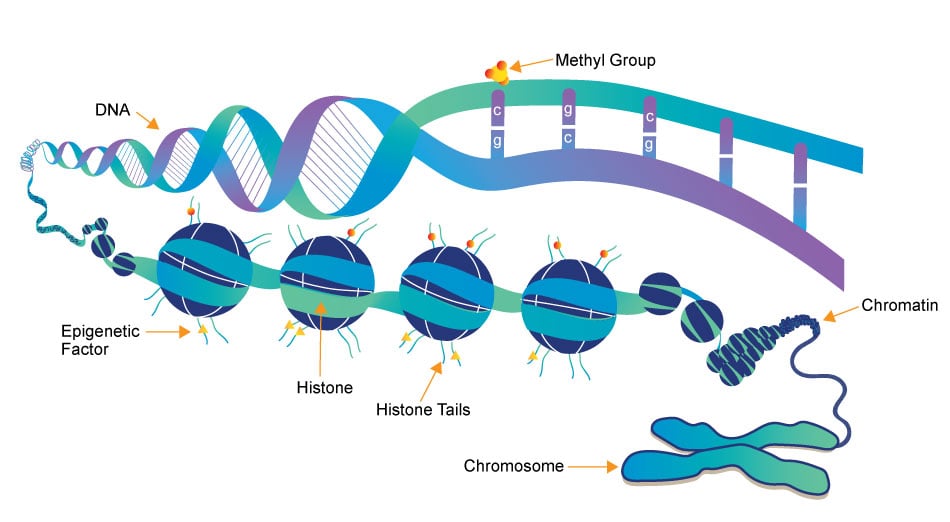
Epigenetics research delves into the molecular mechanisms that control gene expression and cellular traits without altering the underlying DNA sequence. One crucial aspect of this field is the role of small molecules, which act as powerful regulators of epigenetic modifications. These small compounds, typically comprising a few dozen to a few hundred atoms, have emerged as essential tools in understanding and manipulating the epigenome.
- DNA Methylation Inhibitors: Small molecules like 5-azacytidine and 5-aza-2'-deoxycytidine are DNA methyltransferase inhibitors. They block the addition of methyl groups to DNA, leading to DNA demethylation. This can reactivate silenced genes, potentially offering therapeutic avenues for conditions like cancer.
- HDAC inhibitors: HDACs remove acetyl groups from histone proteins, contributing to gene repression. Small molecule HDAC inhibitors, such as Vorinostat and Romidepsin, can reverse this process by increasing histone acetylation, allowing genes to be more accessible for transcription. These inhibitors are being explored for cancer therapy and other conditions.
- Histone Methyltransferase Inhibitors: Small molecules like GSK126 inhibit specific histone methyltransferases, affecting histone methylation patterns. This can alter gene expression, making them promising candidates for cancer and other diseases with epigenetic dysregulation.
- RNA Modulators: Small molecules can also target non-coding RNAs involved in epigenetic regulation. For instance, small molecules called small interfering RNAs (siRNAs) can be designed to target and degrade specific long non-coding RNAs, influencing gene expression.
- Epigenetic Reader Domain Inhibitors: These small molecules target proteins that recognize and bind to specific epigenetic marks. Examples include inhibitors of bromodomain-containing proteins (BET inhibitors), which can disrupt gene regulation by interfering with protein-DNA interactions.
Small molecules in epigenetics research not only provide insights into the fundamental biology of gene regulation but also hold immense promise for developing novel therapeutics. Their ability to selectively modulate specific epigenetic marks and pathways has led to ongoing clinical trials and drug development efforts for various diseases, including cancer, neurological disorders, and inflammatory conditions. Understanding and harnessing the power of these small molecules is at the forefront of modern epigenetics research, offering new hope for precision medicine and targeted therapies.
3 key components involved in the regulation of epigenetic modifications
Epigenetics Writer
Epigenetics writers are enzymes responsible for adding chemical marks or modifications to DNA or histone proteins. These marks include DNA methylation (addition of methyl groups to DNA) and histone modifications (such as acetylation, methylation, phosphorylation, etc.).
Epigenetics Reader
Function: Epigenetics readers are proteins that can recognize and bind to specific epigenetic marks on DNA or histones. These reader proteins interpret the epigenetic code and facilitate downstream cellular processes, such as gene activation or repression.
Epigenetics Eraser
Function: Epigenetics erasers are enzymes responsible for removing or reversing epigenetic marks on DNA or histones. This process allows for the dynamic regulation of gene expression and the resetting of epigenetic states during various stages of development and in response to environmental changes.
-
Aurora Kinase Inhibitor
Tripolin B is an ATP-competitive inhibitor targeting Aurora kinases, exhibiting IC50 values of 2.5 µM and 6 µM for Aurora A and Aurora B kinases, respectively. This compound has demonstrated selectivity in its inhibition profile and is primarily utilized in cellular studies to explore the roles of Aurora kinases in cell cycle regulation and cancer progression. Tripolin B can be a valuable tool in research focused on cell division and oncogenic signaling pathways. -
Aurora Kinase Inhibitor
BI 831266 is a potent and selective inhibitor of Aurora kinase B, a critical regulator of mitosis. This compound exhibits significant antitumor activity, making it valuable for cancer research. Its inhibition of Aurora B can lead to disruptions in cell division, providing insights into potential therapeutic applications for various malignancies. -
Aurora A/B Kinases Inhibitor
TY-011 is a selective inhibitor of Aurora A and B kinases, disrupting normal microtubule-kinetochore attachment. This interference results in DNA damage and apoptosis, effectively inhibiting the proliferation of human gastric cancer cells, with observed IC50 values between 0.11 and 4.49 μM across various gastric cancer cell lines. TY-011 serves as a valuable tool in the study of gastric cancer and the mechanisms underlying mitotic regulation. -
Aurora Kinase Inhibitor
OM137 is a potent Aurora Kinase inhibitor, demonstrating IC50 values of 21.7 μM for Aurora A kinase and 2.4 μM for Aurora B kinase. Additionally, OM137 affects cell cycle regulation by inhibiting Cdk1/cyclinB and Cdk5/p25, also with an approximate IC50 of 20 μM. This compound is notable for its ability to reduce spindle checkpoint-signaling proteins, such as Mad2 and BubR1, at the kinetochores of chromosomes, making it a valuable tool in cancer research and studies on mitotic regulation. -
Aurora Kinase Inhibitor
AT9283 hydrochloride is a multi-targeted kinase inhibitor that primarily targets Aurora A and Aurora B kinases, which play critical roles in cell proliferation and survival. Its inhibitory effects extend to additional kinases such as JAK2 and Abl (T315I), enhancing its potential utility in cancer research. AT9283 hydrochloride has demonstrated significant anti-tumor activity, making it a valuable tool for investigating therapeutic strategies in various malignancies. -
Aurora Kinase Inhibitor
VE-465 is a potent Aurora kinase inhibitor that promotes apoptosis in cancer cells. Its anticancer activities have been demonstrated across various tumor models, making it a valuable tool for cancer research. This compound's ability to selectively target Aurora kinases positions it as a significant candidate for investigations into tumor progression and treatment strategies. -
Aurora Kinase Inhibitor
Binucleine 2 is an ATP-competitive inhibitor targeting Drosophila Aurora B kinase, displaying an inhibition constant (Ki) of 0.36 μM. This compound exhibits isoform specificity, effectively inhibiting Drosophila Aurora B in a dose-dependent manner while exhibiting minimal activity against human and Xenopus laevis Aurora B kinases at concentrations up to 100 μM. Binucleine 2 is valuable for studying mitotic processes, as it induces defects in mitosis and cytokinesis in Drosophila Kc167 cells and disrupts contractile ring assembly in Drosophila S2 cells at a concentration of 40 μM, highlighting the critical role of Aurora B kinase in cell division. -
Aurora A Inhibitor
Aurora A inhibitor 4 (compound C9) is a selective inhibitor of Aurora A kinase, demonstrating a GI50 of 4.26 μM in DU 145 cells and 7.08 μM in HT-29 cells. This compound exhibits significant anti-proliferative effects, making it valuable for research focused on cell cycle regulation and cancer therapeutics. Its ability to inhibit Aurora A activity can be applied in studies investigating mitotic dysregulation in various tumor types. -
Aurora Kinase Control
Win 47338 is a control compound targeting Aurora kinases (AurA/AurB) and the mitotic kinase monopolar spindle 1 (MPS1). It serves as a crucial reference for studies involving mitotic regulation and cellular division processes. With a Ki value greater than 100 μM, it provides a baseline for evaluating the potency of other kinase inhibitors in research applications focused on cell cycle dynamics and cancer therapeutics. -
Aurora Kinase Inhibitor
Aurora B inhibitor 1 is a selective inhibitor of the Aurora B kinase, exhibiting a Ki value of <0.010 µM. This compound plays a crucial role in manipulating cell division and is instrumental in research surrounding cancer biology and therapeutic development. Its ability to inhibit Aurora B activity makes it a valuable tool for studies focused on mitotic regulation and chromosomal instability. -
BRD4 PROTAC Degrader
PROTAC BRD4 Degrader-21 is a targeted PROTAC that degrades the BRD4 protein through the induction of ubiquitination, achieving an IC50 of 59 nM. This compound effectively leads to BRD4 degradation via the proteasome pathway, and demonstrates moderate affinity for recombinant HSP90α with an IC50 range of 100-1000 nM. In preclinical studies, PROTAC BRD4 Degrader-21 has been shown to induce apoptosis in cancer cells and inhibit tumor growth in xenograft mouse models, making it a valuable tool for research into acute myeloid leukemia and diffuse large B-cell lymphoma. -
JAK/STAT Inhibitor
Phenylpyropene C is a JAK/STAT pathway inhibitor known to effectively inhibit interferon-gamma (IFN-γ) mediated expression of reporter genes, with an IC50 range of 5.4 to 10.8 μM. Additionally, it serves as an inhibitor of acyl-CoA, exhibiting an IC50 of 16.0 μM. This compound is valuable for research applications focusing on the modulation of immune responses and the exploration of cytokine signaling pathways. -
HDAC Inhibitor
2-Propylpent-4-ynoic acid, a histone deacetylase (HDAC) inhibitor, exhibits an IC50 of 0.5 mM against human HDAC. This compound induces P-glycoprotein function and has been associated with teratogenicity, fetal growth inhibition, and neurotoxicity. Notably, the S-enantiomer demonstrates more significant teratogenic effects compared to its R-enantiomer and other analogs. 2-Propylpent-4-ynoic acid is relevant in research focused on the mechanisms underlying colon cancer and neural tube defects, including exencephaly. -
Sirtuin-modulating Compound
Sirtuin Modulator 9 is a sirtuin-modulating compound that enhances cellular lifespan and promotes mitochondrial activity. This compound has potential applications in research related to aging, inflammation, and cancer. Investigators may utilize Sirtuin Modulator 9 to explore its therapeutic effects in age-related disorders and diseases associated with compromised mitochondrial function. -
Endogenous Metabolite
5-Hydroxymethylcytosine (5hmC) is an oxidized derivative of 5-methylcytosine found within mammalian DNA. Generated through an enzymatic process involving the Ten-eleven translocation (TET) enzymes TET1, TET2, and TET3, 5hmC serves as an important marker for investigating the dynamic processes of DNA demethylation and gene transcription. Its presence is particularly significant in the study of conditions such as non-small cell lung cancer, neurodegenerative diseases like Alzheimer’s and Parkinson’s, and various hematological malignancies, including acute myeloid leukemia and myelodysplastic syndromes. -
AMPK/SIRT3/PGC-1α Modulator
MitoPBN is an AMPK/SIRT3/PGC-1α modulator that enhances mitochondrial function by acting as a reactive oxygen species scavenger. This compound promotes mitochondrial biogenesis through increased AMPK phosphorylation, restoration of SIRT3 expression, and upregulation of PGC-1α. MitoPBN is effective in regulating glucose metabolism, as it decreases blood glucose levels by inhibiting hepatic gluconeogenesis and enhancing glucose uptake, while also improving ATP production and maintaining mitochondrial membrane potential. Additionally, it can reduce apoptosis and enhance sperm motility and membrane integrity, making it a valuable reagent for research related to diabetes and metabolic disorders. -
Stable Isotope
SAH-13C10 is a stable isotope labeled derivative of S-Adenosylhomocysteine (SAH). As an important amino acid derivative, SAH plays a crucial role as a modulator in various metabolic pathways and serves as an intermediate in the synthesis of cysteine and adenosine. It functions as an inhibitor of the METTL3-METTL14 heterodimer complex, demonstrating an IC50 of 0.9 μM, making it valuable for research in epitranscriptomics and cellular metabolism studies. -
WDR5 Ligand
Dimethyl-F-OICR-9429-COOH is a potent ligand for the WD40 repeat domain protein 5 (WDR5), functioning as a critical component in the synthesis of proteolysis-targeting chimeras (PROTACs). Its specific binding to WDR5 facilitates the targeted degradation of associated proteins, making it a valuable tool in chemical biology research. This compound is instrumental in the exploration of protein interactions and the development of innovative therapeutic strategies. -
SMARCA2 Ligand
SMARCA2 ligand-8 acts as a selective ligand for the target protein SMARCA2, facilitating the synthesis of the PROTAC SMARCA2/4-degrader-35. This compound is instrumental in research applications focused on targeted protein degradation, offering insights into the modulation of gene regulation and chromatin remodeling. Its utility in developing innovative degraders highlights its significance in the study of cancer biology and potential therapeutic interventions. -
JAK3/TEC Family Kinase Inhibitor
Plodicitinib is an inhibitor of Janus tyrosine kinase 3 (JAK3) and TEC family kinases. This compound exhibits significant anti-inflammatory activity, making it valuable for research in inflammation-related disorders. It is applicable in studies exploring the modulation of immune responses and potential therapeutic interventions in autoimmune diseases. -
BRD4 BD2 Inhibitor
BRD4-BD1/2-IN-3 is a selective inhibitor of the BRD4 bromodomain 2 (BD2), exhibiting an IC50 of 0.41 nM for BRD4 BD2 compared to BRD4 BD1. This compound effectively inhibits LPS-induced expression of IL-6, demonstrating significant anti-inflammatory properties through modulation of the TNF and NF-κB signaling pathways. BRD4-BD1/2-IN-3 is valuable for research focused on inflammatory diseases. -
PARP-1 Inhibitor
L-2286 is a potent orally active inhibitor of PARP-1. This compound demonstrates significant biological activity by alleviating carotid artery remodeling, reducing oxidative stress and inflammation in spontaneously hypertensive rats, while also providing neuroprotective effects in the dorsal hippocampus. L-2286 is applicable in research focused on hypertension and its associated vascular and neurological complications. -
BRD4 PROTAC
Lenalidomide-CO-C7-NH2 is a CRBN-dependent intermediate designed as a BRD4-targeting PROTAC degrader. This compound facilitates the selective degradation of the oncoprotein BRD4, leading to decreased cancer cell proliferation, cell cycle arrest, and enhanced apoptosis. It demonstrates noteworthy anti-tumor efficacy in xenograft models, making Lenalidomide-CO-C7-NH2 a valuable tool for investigating mechanisms in acute myeloid leukemia research. -
Fluorescent Probe
Citrulline-specific probe-biotin is a biotinylated fluorescent probe designed for the detection of citrulline, a hydrolysis product of arginine produced by the enzyme protein arginine deiminase (PAD). Increased PAD activity is implicated in various pathological conditions, including autoimmune diseases and inflammatory disorders. This probe facilitates the identification of diseases characterized by elevated citrulline levels and is particularly useful in animal models of ulcerative colitis for studying disease mechanisms and potential therapeutic interventions. -
HDAC8 Modulator
LG190119 is a selective modulator of HDAC8, primarily targeting Schistosoma mansoni with reduced affinity for human HDAC8. This compound has been shown to induce apoptosis in schistosome cells, making it a valuable tool for research in anti-parasitic agents. Its ability to selectively affect parasitic cells underscores its potential in developing effective treatments against schistosomiasis. -
SMARCA2 PROTAC degrader
YD54 is a PROTAC designed to induce degradation of the SMARCA2 protein, exhibiting a DC50 of 3.5 nM. This compound utilizes a targeted approach to promote the ubiquitination and proteasomal degradation of SMARCA2, making it a valuable tool for studying SMARCA2-dependent biological processes. YD54 is suitable for applications in cancer research and cellular signaling investigations, where modulation of SWI/SNF complex activity is critical. -
EGFR PARP Dual-targeting PROTAC Molecule
DP-C-4 is a Cereblon-based dual-targeting PROTAC molecule designed for the concurrent degradation of epidermal growth factor receptor (EGFR) and poly (ADP-ribose) polymerase (PARP). This compound demonstrates significant biological activity by promoting the targeted destruction of these proteins, which can be crucial in cancer research and therapeutic applications. DP-C-4 may facilitate studies investigating the interplay between EGFR and PARP pathways, potentially leading to new insights in oncology and the development of innovative treatment strategies. -
SMARCA2 Degrader
PROTAC SMARCA2 degrader-8 is a selective degrader targeting the SMARCA2 protein, exhibiting a DC50 of 28 nM in A375 cells. This compound facilitates the ubiquitination and subsequent proteasomal degradation of SMARCA2, thereby effectively reducing its cellular levels. It is particularly useful for studies investigating the role of SMARCA2 in various cancer types and for elucidating its mechanisms of action in cellular processes. -
BRD4 PROTAC
MS83 is a novel PROTAC that employs a KEAP1 ligand to target and degrade BRD4, along with its homologs BRD3 and BRD2. By harnessing the ubiquitin-proteasome system, MS83 facilitates targeted protein degradation, providing a powerful tool for dissecting the functional roles of BRD4 in cellular processes. This compound is particularly relevant for research on cancer and epigenetic regulation, offering insights into therapeutic strategies that leverage targeted protein degradation. -
BRD9 Degrader PROTAC
PROTAC BRD9 Degrader-5 is a proteolysis-targeting chimera (PROTAC) that facilitates the targeted degradation of the bromodomain-containing protein BRD9. This compound employs the cellular ubiquitin-proteasome pathway to promote the selective elimination of BRD9, leading to the modulation of biological pathways associated with cancer and other diseases. It serves as a valuable tool for researchers investigating the role of BRD9 in various cellular processes and therapeutic interventions. -
SMARCA2 Degrader degrader
SMARCA2 degrader-20 is a potent PROTAC that targets the SMARCA2 protein for degradation, exhibiting a DC50 of less than 100 nM in A549 cells. This degrader is valuable for studying the functional consequences of SMARCA2 depletion in cancer biology and epigenetic regulation. Its high efficacy facilitates research into targeted protein degradation strategies and their therapeutic potential in oncology. -
PROTAC Linkers
6-Hydroxy-1-(4-(2-hydroxyethyl)piperazin-1-yl)hexan-1-one serves as a key linker in the development of PROTAC molecules targeting METTL3. This compound is integral for facilitating the degradation of specific proteins, thereby enabling cellular pathway modulation and functional studies. Researchers can employ this linker to explore targeted protein degradation applications in various biological contexts. -
SMARCA2 PROTAC degrader
PROTAC SMARCA2 degrader-17 (compound I-290) is a potent PROTAC degrader designed to selectively target and degrade the SMARCA2 protein. It demonstrates effective degradation in A549 cells with a DC50 value of less than 100 nM and achieves a maximum degradation rate exceeding 90% after 24 hours of treatment. This reagent is valuable for research in cancer biology and the investigation of SMARCA2-related pathways. -
SMARCA2 PROTAC degrader
PROTAC SMARCA2 degrader-16 (compound I-278) is a PROTAC designed to selectively degrade the SMARCA2 protein. It demonstrates significant biological activity by efficiently reducing SMARCA2 levels in A549 cells, achieving a DC50 value of less than 100 nM and a maximum degradation rate exceeding 90% after 24 hours of treatment. This compound is invaluable for research applications involving the modulation of SMARCA2 in cancer biology and therapeutic development. -
SMARCA2 Degrader
PROTAC SMARCA2 degrader-25 is a potent heterobifunctional molecule that targets SMARCA2 for degradation via the proteasome pathway. With a DC50 value of less than 0.01 μM, this compound efficiently engages the target protein using a specific ligand, a link to facilitate the interaction, and an E3 ligase ligand to promote ubiquitination. Its high efficiency makes it a valuable tool in investigating the role of SMARCA2 in various biological processes and diseases. -
SMARCA2/4 PROTAC degrader
PROTAC SMARCA2/4-degrader-32 is a PROTAC degrader that targets SMARCA2 and SMARCA4 proteins. It demonstrates effective degradation of these proteins in A549 cells, achieving DC50 values below 100 nM and a maximum degradation rate exceeding 90% after 24 hours of treatment. This compound is suitable for research applications focusing on the regulation of chromatin remodeling and its implications in various cancers. -
SMARCA2/4 PROTAC degrader
PROTAC SMARCA2/4-degrader-16 (compound I-337) is a potent PROTAC degrader designed to selectively target and degrade SMARCA2 and SMARCA4 proteins. It demonstrates significant biological activity in A549 cells, achieving DC50 values of less than 100 nM and over 90% maximum degradation rate (Dmax%) after 24 hours of treatment. This compound is valuable for research applications focused on understanding the role of SMARCA2 and SMARCA4 in tumor biology and for exploring targeted protein degradation strategies. -
SMARCA2 PROTAC degrader
PROTAC SMARCA2 degrader-12 is a molecule specifically designed to induce degradation of the SMARCA2 protein. This PROTAC exhibits potent biological activity, effectively degrading SMARCA2 proteins in A549 cells with a DC50 value of less than 100 nM and achieving over 90% maximum degradation after 24 hours of treatment. This reagent is suitable for research applications focusing on targeted protein degradation and the functional analysis of SMARCA2 in cancer biology. -
SMARCA2/4 Degrader
PROTAC SMARCA2/4-degrader-35 is an efficient degrader targeting the SMARCA2 and SMARCA4 proteins, demonstrating a DC50 of less than 2.5 nM. This compound promotes the ubiquitination and subsequent degradation of the target proteins via the recruitment of E3 ligases. Its potent biological activity makes it valuable for research applications focused on epigenetics and cancer biology, particularly in studies targeting the modulation of chromatin remodeling complexes. -
SMARCA2 PROTAC degrader
PROTAC SMARCA2 degrader-14 is a targeted protein degradation compound designed to selectively degrade the SMARCA2 protein. Demonstrating a DC50 value of less than 100 nM, it achieves maximum degradation rates exceeding 90% in A549 cells following a 24-hour treatment. This reagent serves as a valuable tool for research applications focused on elucidating the role of SMARCA2 in various biological processes and therapeutic contexts. -
SMARCA2/4 PROTAC Degrader
PROTAC SMARCA2/4 degrader-41 is a potent degrader targeting the SMARCA2 and SMARCA4 proteins, exhibiting DC50 and IC50 values both below 0.1 μM. This compound facilitates the selective degradation of these ATP-dependent chromatin remodelers, making it a valuable tool for studying SMARCA2/4-related or SMARCA2/4-deficient cancers. Its application in cancer research can aid in elucidating the role of these proteins in tumorigenesis and therapeutic resistance. -
SMARCA2/4 PROTAC degrader
PROTAC SMARCA2/4-degrader-7 is a selective protein degrader that targets SMARCA2 and SMARCA4 proteins. Demonstrating effective degradation in A549 cells, it achieves DC50 values of less than 100 nM and results in more than 90% degradation after 24 hours of treatment. This compound serves as a valuable tool for investigating the roles of SMARCA2 and SMARCA4 in cancer biology and other research applications involving epigenetic regulation. -
SMARCA2/4 PROTAC degrader
PROTAC SMARCA2/4-degrader-22 is a targeted protein degradation reagent designed to selectively degrade SMARCA2 and SMARCA4 proteins. This compound effectively reduces SMARCA2 and SMARCA4 levels in A549 cells, achieving DC50 values of less than 100 nM and exceeding 90% maximum degradation rate after 24 hours of treatment. It is a valuable tool for research into the role of these proteins in various biological processes and disease states. -
BRD9 PROTAC Degrader
PROTAC BRD9 Degrader-8 is a selective BRD9 PROTAC degrader that operates through targeted protein degradation, exhibiting a DC50 of 16 pM. This compound effectively induces cell cycle arrest in the G1 phase and promotes apoptosis, making it a valuable tool for studies focused on acute myeloid leukemia and diffuse large B-cell lymphoma. Its mechanism provides a unique approach to modulating BRD9 levels in therapeutic research. -
SMARCA2 PROTAC degrader
PROTAC SMARCA2 degrader-15 is a targeted PROTAC that selectively degrades the SMARCA2 protein. Demonstrating a DC50 value of less than 100 nM, this compound achieves over 90% maximum degradation (Dmax%) within 24 hours in A549 cells. Its ability to modulate SMARCA2 levels makes it a valuable tool for research exploring the role of this protein in cancer biology and epigenetic regulation. -
SMARCA2/4 PROTAC degrader
PROTAC SMARCA2/4-degrader-23 is a targeted proteolysis-targeting chimera (PROTAC) designed to degrade SMARCA2 and SMARCA4 proteins. This compound effectively induces degradation of both targets in A549 cells, exhibiting a DC50 of less than 100 nM and achieving a maximum degradation rate exceeding 90% after 24 hours of treatment. It is suitable for use in studies aimed at understanding the functional roles of SWI/SNF chromatin remodeling complexes in cancer and other disease models. -
SMARCA2 PROTAC degrader
PROTAC SMARCA2 degrader-10 is a targeted protein degrader that specifically engages and promotes the degradation of SMARCA2. This compound demonstrates effective degradation of SMARCA2 proteins in A549 cells, achieving a DC50 value of less than 100 nM and a maximum degradation rate exceeding 90% after 24 hours of treatment. It serves as a valuable tool for research applications focused on elucidating the biological roles of SMARCA2 and its implications in cancer biology and therapeutics. -
SMARCA2 PROTAC degrader
PROTAC SMARCA2 degrader-6 (compound I-427) is a PROTAC agent specifically designed to target and induce the degradation of SMARCA2 proteins. This compound effectively degrades SMARCA2 in A549 cells, achieving a DC50 value of less than 100 nM and demonstrating a maximum degradation rate exceeding 90% within 24 hours of treatment. It serves as a powerful tool for investigating the role of SMARCA2 in various biological processes and potential therapeutic applications in cancer research. -
SMARCA2/4 Degrader
PROTAC SMARCA2/4-degrader-3 is a potent SMARCA2/4 degrader that utilizes the VH032-NH2 framework for targeted protein degradation. It exhibits a degradation potency (DC50) of less than 100 nM in MV4-11 cells, facilitating the selective depletion of SMARCA2 and SMARCA4 proteins. This compound is valuable for research applications involving chromatin remodeling and cancer biology, providing insights into the functional roles of these proteins in various cellular contexts. -
SMARCA2/4 PROTAC degrader
PROTAC SMARCA2/4-degrader-1 is a PROTAC degrader specifically designed to target SMARCA2 and SMARCA4 proteins. It effectively degrades these proteins in A549 cells, exhibiting a DC50 of less than 100 nM and achieving over 90% degradation after 24 hours of treatment. This compound is suitable for research applications focused on understanding the role of SMARCA2 and SMARCA4 in various biological processes and disease models.
