- Cat. No.
- A10669
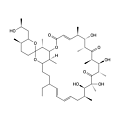
Oligomycin A
Oligomycin A is a mitochondrial ATPase inhibitor. Oligomycin A inhibits ATP5 (mitochondrial ATPases, F1F0) bound to the cell membrane.
Search by product name, CAS, target or catalog number. Press Down Arrow to reach product suggestions, Tab to move between links, and Escape to close suggestions.
Mitochondrial metabolism compounds act on the respiratory chain, energy coupling and redox balance of mitochondria. In 1961 Mitchell proposed that phosphorylation is coupled to electron transfer through a chemiosmotic mechanism. In this model a proton gradient across the inner membrane drives adenosine triphosphate (ATP) synthase in oxidative phosphorylation (OXPHOS). Rotenone inhibits complex I of the electron transport chain, and oligomycin A blocks ATP synthase. Gboxin, reported in 2019, is an OXPHOS inhibitor that suppresses the growth of glioblastoma cells. Mito-TEMPO is a mitochondria-targeted antioxidant that scavenges superoxide in the matrix. Meldonium inhibits carnitine biosynthesis and so limits fatty acid transport into mitochondria. The set is mixed and also lists compounds with secondary mitochondrial links, such as the fluoroquinolone ciprofloxacin.
Oligomycin A is a mitochondrial ATPase inhibitor. Oligomycin A inhibits ATP5 (mitochondrial ATPases, F1F0) bound to the cell membrane.
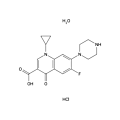
Synonyms: Ciprofloxacin Hydrochloride
Ciprofloxacin Hydrochloride is a broad-spectrum antimicrobial carboxyfluoroquinoline, interfering with the bacterial DNA gyrase, inhibiting the DNA synthesis, and preventing bacterial cell growth.
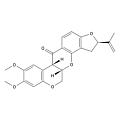
Rotenone is an mitochondrial electron transport chain complex I inhibitor. Rotenone induces apoptosis through enhancing mitochondrial reactive oxygen species production.
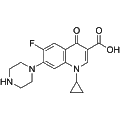
Synonyms: Bay-09867
Ciprofloxacin is a potent topoisomerase IV inhibitor that demonstrates significant antibacterial activity as a fluoroquinolone antibiotic. It induces both mitochondrial and nuclear DNA damage, leading to mitochondrial dysfunction and increased reactive oxygen species (ROS) production. Ciprofloxacin exhibits anti-proliferative properties and triggers apoptotic pathways, making it a valuable tool for research applications focused on bacterial infections, oxidative stress, and cancer biology.
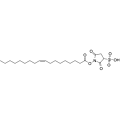
Synonyms: Sulfo-N-succinimidyl oleate
Sulfosuccinimidyl oleate (Sulfo-N-succinimidyl oleate) is a long chain fatty acid that inhibits fatty acid transport into cells. Sulfosuccinimidyl oleate is a potent and irreversible inhibitor of mitochondrial respiratory chain.
BAY 87-2243, a highly potent and selective inhibitor of hypoxia-induced gene activation has antitumor activities by inhibition of mitochondrial complex I.
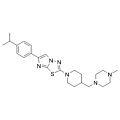
Gboxin is an oxidative phosphorylation inhibitor that targets glioblastoma. Gboxin inhibits the activity of F0F1 ATP synthase. Antitumour activity.
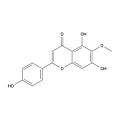
Synonyms: Dinatin
Hispidulin is a natural flavone with a broad spectrum of biological activities. Hispidulin is a Pim-1 inhibitor with an IC50 of 2.71 μM.
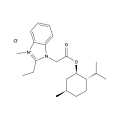
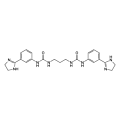
iMAC2 inhibits mitochondrial apoptosis-induced channel (MAC) (IC50 = 28 nM).
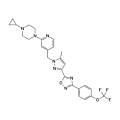
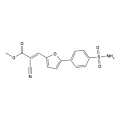
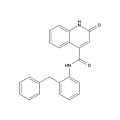
E260 is a novel inhibitor of the Fer/FerT kinase with Kd of 0.85 uM.
Synonyms: TUDCA; UR 906; Taurolite
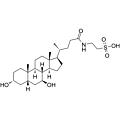
Tauroursodeoxycholate (TUDCA; UR 906; Taurolite) is an endoplasmic reticulum (ER) stress inhibitor.
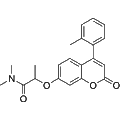
CCI-006 is a selective inhibitor and chemosensitizer of MLL-rearranged leukemia cells, by inhibits mitochondrial respiration resulting in insurmountable mitochondrial depolarization and a pro-apoptotic unfolded protein response (UPR) in a subset of MLL-r leukemia cells.
p32 inhibitor M36 (M36) is a p32 mitochondrial protein inhibitor, which binds directly to p32 and inhibits p32 association with LyP-1.
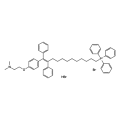
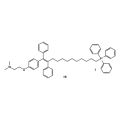
MitoTam bromide, hydrobromide is a tamoxifen derivative, an electron transport chain (ETC) inhibitor, spreduces mitochondrial membrane potential in senescent cells and affects mitochondrial morphology.
Synonyms: MSDC 0602
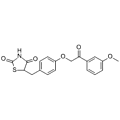
MSDC-0602, a PPARγ-sparing thiazolidinedione (TZD), interacts with the mitochondrial pyruvate carrier (MPC) and inhibits its activity and are effective for treatment of type 2 diabetes with reducing risk of PPARγ-mediated side effects.
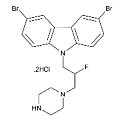
BI-6C9 is a BH3 interacting domain (Bid) inhibitor, which prevents mitochondrial outer membrane potential (MOMP) and mitochondrial fission, and protects the cells from cell death.
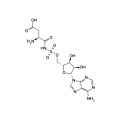
Asp-AMS, an analogue of aspartyl-adenylate, is an aspartyl-tRNA synthetase inhibitor and also a strong competitive inhibitor of the mitochondrial enzyme.
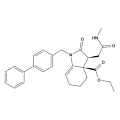
Fumarate hydratase-IN-1 (compound 2) is a cell-permeable fumarate hydratase inhibitor. Fumarate hydratase-IN-1 has antiproliferative activity against several cancer cell lines with a mean IC50 of 2.2 μM.
ER-000444793 is a potent inhibitor of mitochondrial permeability transition pore (mPTP) opening. ER-000444793 inhibits mPTP with an IC50 of 2.8 μM.
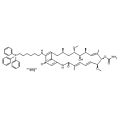
Gamitrinib TPP hexafluorophosphate is a Gamitrinib (GA) mitochondrial matrix inhibitor.
MitoTam iodide, hydriodide is a tamoxifen derivative, an electron transport chain (ETC) inhibitor, spreduces mitochondrial membrane potential in senescent cells and affects mitochondrial morphology.
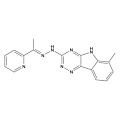
VLX600 is an iron-chelating inhibitor of oxidative phosphorylation (OXPHOS).
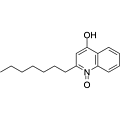
HQNO, secreted by P. aeruginosa, is a potent electron transport chain inhibitor with a Kd of 64 nM for complex III.
IMT1 is a first-in-class, specific, and noncompetitive inhibitor of human mitochondrial RNA polymerase (POLRMT). It induces a conformational change in POLRMT, preventing substrate binding and inhibiting transcription in a dose-dependent manner in vitro. IMT1 decreases deoxynucleoside triphosphate levels and citric acid cycle intermediates, leading to significant depletion of cellular amino acid levels. IMT1 holds potential for the treatment of diseases associated with mitochondrial transcription disorders.
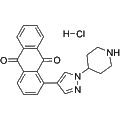
PDK4-IN-1 hydrochloride is a potent inhibitor of pyruvate dehydrogenase kinase 4 (PDK4) with an IC50 value of 84 nM. This anthraquinone derivative effectively suppresses cellular transformation and proliferation while inducing apoptosis. PDK4-IN-1 hydrochloride is valuable for research applications in diabetes, cancer, and allergy studies, showcasing significant antidiabetic, anticancer, and anti-allergic activities.