






-
mAChR Antagonist
(±)-Darifenacin is a selective antagonist of the M3 muscarinic acetylcholine receptor (mAChR), functioning primarily by inhibiting receptor activation. This compound demonstrates potent activity in modulating smooth muscle contraction and glandular secretion, making it particularly useful for research in gastrointestinal disorders and urinary incontinence. Applications include studies on the mechanism of muscarinic receptor signaling and the development of therapeutic strategies targeting mAChR-related conditions. -
M4 mAChR Agonist
M4 mAChR agonist-1 is a selective agonist targeting the M4 muscarinic acetylcholine receptor. This compound exhibits potent activation of the M4 receptor with an EC50 greater than 10 μM in human cell systems. It is valuable for research applications focused on studying cholinergic signaling and neuropharmacology. -
Sigma-1 Receptor Agonist
Pentoxyverine is an orally active sigma-1 receptor agonist, exhibiting affinity with Kis of 41 nM for σ1, 894 nM for σ2, and 75 nM for guinea-pig brain membran σ1. This compound acts as a muscarinic antagonist and demonstrates significant biological activities, including antitussive, anticonvulsant, and spasmolytic effects. Pentoxyverine is utilized in research for its potential to inhibit bronchial interceptors, diminish the cough reflex, induce relaxation of bronchial smooth muscle, and reduce airway resistance in various pulmonary conditions. -
Muscarinic M1 Receptor Agonist
LY593093 is a selective agonist of the muscarinic M1 receptor, demonstrating an EC50 of 22.8 nM. This compound is orally active and effectively penetrates the blood-brain barrier, making it a valuable tool for investigating mechanisms underlying Alzheimer's disease. Its selectivity for the muscarinic M1 receptor positions LY593093 as a promising reagent for research in neurodegenerative disorders. -
M3 Receptor Antagonist
Zamifenacin fumarate is a potent antagonist of the muscarinic M3 receptor, primarily targeting the gastrointestinal system. It demonstrates significant efficacy in reducing colonic motility, making it relevant for research in conditions such as irritable bowel syndrome. This compound is essential for studies exploring gut motility modulation and the pharmacological mechanisms underlying gastrointestinal disorders. -
M4 Positive Allosteric Modulator
VU0467485 is a potent and selective positive allosteric modulator of the muscarinic acetylcholine receptor 4 (M4). It enhances acetylcholine activity at M4 receptors, exhibiting EC50 values of 26.6 nM in rat and 78.8 nM in human systems. VU0467485 shows high selectivity for M4 over the other muscarinic receptor subtypes (M1, M2, M3, and M5) in both human and rat samples. This compound also demonstrates moderate to high central nervous system penetration and possesses antipsychotic-like properties, making it a valuable tool for the study of neurological disorders. -
mAChR M1 Antagonist
Cycrimine is an orally active antagonist of the muscarinic acetylcholine receptor M1, effectively inhibiting acetylcholine levels in models of Parkinson's disease. Its antispasmodic properties make Cycrimine a valuable tool for research in behavioral and mental disorders, providing insights into cholinergic signaling pathways. This compound is suitable for studies aimed at understanding the role of mAChRs in neurodegenerative conditions and related therapeutic interventions. -
mAChR 4 Antagonist
PCS1055 is a selective competitive antagonist of the muscarinic M4 receptor, exhibiting an IC50 of 18.1 nM and a Kd of 5.72 nM. It effectively inhibits radioligand [3H]-NMS binding to the M4 receptor with a Ki of 6.5 nM. Additionally, PCS1055 demonstrates inhibitory activity against acetylcholinesterase (AChE), with IC50 values of 22 nM for electric eel AChE and 120 nM for human AChE. This compound is valuable for research focused on muscarinic receptor signaling and cholinergic modulation. -
mAChR M2 Agonist
Arecaidine but-2-ynyl ester tosylate is a selective agonist of the mAChR M2 receptor, known to induce dose-dependent reductions in mean arterial pressure and heart rate in rodent models. This compound serves as a valuable tool in cardiovascular disease research, elucidating the role of mAChR M2 in cardiac function. Additionally, as a click chemistry reagent, Arecaidine but-2-ynyl ester tosylate contains an alkyne functional group, enabling its application in copper-catalyzed azide-alkyne cycloaddition reactions with azide-containing molecules for further synthetic applications. -
M3 Receptor Antagonist
Zamifenacin is a potent antagonist of the muscarinic M3 receptor, demonstrating gut-selective activity. This compound effectively reduces colonic motility, making it a valuable tool in the study of irritable bowel syndrome and related gastrointestinal disorders. Its mechanism of action provides insights into the modulation of gastrointestinal function and potential therapeutic applications in digestive health. -
mAChR Agonist
Muscarine iodide is a potent agonist of the muscarinic acetylcholine receptors (mAChR). It actively stimulates the parasympathetic nervous system, making it a valuable tool in studying cholinergic signaling pathways. This compound is commonly utilized in research focused on neuropharmacology and the physiological effects of muscarinic receptor activation. -
M1 Positive Allosteric Modulator
VU0486846 is a selective positive allosteric modulator of the M1 muscarinic acetylcholine receptor. This compound enhances receptor activity in a manner dependent on the presence of the endogenous ligand. VU0486846 is utilized in research to explore its potential therapeutic effects in cognitive disorders and neurodegenerative diseases. Its oral bioavailability makes it a valuable tool for in vivo studies of M1 modulation. -
Muscarinic M1 Agonist
PF-06767832 is a selective positive allosteric modulator of the muscarinic M1 receptor, exhibiting an EC50 value of 60 nM. This compound demonstrates favorable penetration into the central nervous system, enhancing M1 receptor signaling. It is primarily used in research focused on neuropharmacology, cognition, and potential treatments for cognitive disorders. -
mAChR Agonist
LASSBio-873 is a potent muscarinic acetylcholine receptor (mAChR) agonist that effectively crosses the blood-brain barrier. It exhibits significant analgesic properties in models of acute and inflammatory pain. Research indicates that the analgesic effects of LASSBio-873 can be antagonized by the M2 receptor inhibitor methoctramine, making it a valuable tool for studying pain mechanisms and mAChR signaling pathways. -
M4 Positive Allosteric Modulator
VU6000918 is a positive allosteric modulator of the muscarinic acetylcholine receptor M4, demonstrating an EC50 of 19 nM for human M4. This compound enhances the receptor's activity in response to acetylcholine, making it a valuable tool for studying M4 receptor function. VU6000918 can be utilized in research related to neurological disorders and cognitive functions, providing insights into the therapeutic potential of modulating M4 receptor signaling. -
Muscarinic M3 Receptor Antagonist
DAU 5884 hydrochloride is a potent antagonist of the muscarinic M3 receptor. It effectively inhibits methacholine-induced cellular proliferation and muscle contractility, making it a valuable tool for research into muscarinic signaling pathways and related physiological effects. This compound is useful for studies investigating respiratory physiology and disorders associated with muscarinic receptor activation. -
mAChR Antagonist
L-Hyoscyamine sulfate is a competitive antagonist of muscarinic acetylcholine receptors (mAChRs). This natural tropane alkaloid demonstrates significant biological activity by inhibiting mAChRs, making it useful in research applications focused on neuropharmacology and the modulation of cholinergic signaling. Its structural similarity to atropine further emphasizes its relevance in studies related to anticholinergic effects and the exploration of receptor interaction mechanisms. -
M4 Positive Allosteric Modulator
LY 2033298 is a selective positive allosteric modulator of the muscarinic M4 receptor, enhancing the receptor's activity. This compound is valuable for investigating psychiatric disorders and related neurobiological pathways, providing insights into the potential therapeutic mechanisms for disorders associated with M4 receptor dysfunction. -
Anticholinergic Agent
Tridihexethyl chloride is an anticholinergic agent that acts as a muscarinic acetylcholine receptor (mAChR) antagonist. It exhibits significant antimuscarinic and antisecretory properties, providing pronounced antispasmodic effects on the gastrointestinal system. This compound is valuable for research related to peptic ulcer disease and acquired nystagmus, facilitating studies on gastrointestinal motility and secretion modulation. -
M4 mAChR Activator
Thiochrome is a selective enhancer of muscarinic acetylcholine receptor subtype M4. As a natural oxidation product and metabolite of thiamine, Thiochrome exhibits neutral cooperativity with acetylcholine at M1 to M3 receptors. This compound is valuable for studying the modulation of cholinergic signaling and its implications in neuropharmacology and therapeutic research. -
Muscarinic M3 Receptor Antagonist
CHF5407 is a selective, competitive antagonist of the muscarinic M3 receptor, exhibiting subnanomolar affinities for human muscarinic receptors M1, M2, and M3. This compound demonstrates prolonged antibronchospastic activity, making it a valuable tool for research into bronchial hyperreactivity and related respiratory conditions. CHF5407 is suitable for studies investigating the role of muscarinic receptors in various biological processes and potential therapeutic applications. -
Stable Isotope
Tiotropium-d6 bromide is a deuterium-labeled analogue of Tiotropium, primarily targeting muscarinic acetylcholine receptors (mAChR). As a potent mAChR antagonist, it effectively inhibits the binding of acetylcholine, preventing the activation of ligand-gated ion channels. This reagent is valuable for studies involving receptor binding assays, pharmacokinetics, and metabolic pathway analysis. -
DREADD Agonist
JHU37152 is a potent agonist for Designer Receptors Exclusively Activated by Designer Drugs (DREADDs), specifically targeting the hM3Dq and hM4Di receptors with EC50 values of 5 nM and 0.5 nM, respectively, in HEK-293 cells. This compound demonstrates selective displacement of [3H]Clozapine from DREADD sites without affecting other Clozapine-binding sites in mouse brain tissue. JHU37152 is valuable for research applications involving neural circuit manipulation and the study of neuropharmacology. -
mAChR Antagonist
Hexocyclium methylsulfate is a potent antagonist of muscarinic acetylcholine receptors (mAChR), exhibiting pKi values of 8.9, 7.7, 8.4, and 8.8 for the M1, M2, M3, and M4 subtypes, respectively. This compound demonstrates significant biological activity in modulating cholinergic signaling pathways. It is valuable in research applications related to gastrointestinal conditions such as duodenal ulcers and irritable bowel syndrome. -
M1 Muscarinic Positive Allosteric Modulator
VU6004256 is a potent and selective positive allosteric modulator of the M1 muscarinic receptor, exhibiting an EC50 value of 155 nM. This compound enhances M1 receptor activity and shows promise in addressing cognitive deficits associated with schizophrenia. It is a valuable tool for research into therapeutic strategies targeting muscarinic receptors in neuropsychiatric disorders. -
mAChR M4 PAM
VU0152099 is a selective positive allosteric modulator of the mAChR M4 receptor, exhibiting an EC50 of 0.4 µM for the rat M4 receptor. This compound demonstrates significant brain penetrance and is inactive against other mAChR subtypes and GPCRs. VU0152099 does not possess agonist activity; instead, it enhances the response of M4 to acetylcholine, making it a valuable tool for research into neuropharmacology and the modulation of cholinergic signaling. -
M4 Positive Allosteric Modulator
VU0448088 is a potent positive allosteric modulator targeting the M4 muscarinic acetylcholine receptor, demonstrating EC50 values of 56 nM and 176 nM for human and rat receptors, respectively. This tricyclic compound effectively crosses the blood-brain barrier, making it a valuable tool for investigating neuropsychiatric conditions, particularly those related to psychosis. Its ability to enhance M4 receptor activity highlights its potential in research applications focused on neuromodulation and cognitive function. -
Muscarinic Receptor Full Activator
Guvacoline hydrobromide is a pyridine alkaloid that functions as a full activator of muscarinic receptors. It exhibits biological activity as a weak full agonist of both atrial and ileal muscarinic acetylcholine receptors (mAChR). This compound is valuable for research applications involving cholinergic signaling and receptor pharmacology. -
Muscarinic Acetylcholine Receptor M2 Modulator
BAY-2413555 is an orally active modulator of the muscarinic acetylcholine receptor M2, primarily targeting cardiac function. This compound demonstrates protective effects on the heart and enhances cardiac performance, making it a valuable tool for researching heart failure and related cardiovascular conditions. Its unique mechanism may provide insights into therapeutic strategies for managing heart health. -
mAChR M5 NAM
(R)-VU 6008667 acts as a negative allosteric modulator (NAM) of the muscarinic acetylcholine receptor subtype M5. This compound has demonstrated potential in modulating M5 receptor-mediated pathways, which are implicated in various neurological conditions. Its selectivity and pharmacological profile make it a valuable research tool for studying M5 receptor functions and associated signaling mechanisms. -
mAChR Antagonist
(Rac)-5-Hydroxymethyl Tolterodine hydrochloride is an mAChR antagonist, demonstrating Ki values of 2.3 nM, 2.0 nM, 2.5 nM, 2.8 nM, and 2.9 nM for M1, M2, M3, M4, and M5 muscarinic receptors, respectively. This active metabolite of Tolterodine is primarily utilized in research related to overactive bladder conditions. Its selective inhibition of muscarinic acetylcholine receptors provides a valuable tool for investigating bladder dysfunction and potential therapeutic interventions. -
M2 Cholinoceptors Allosteric Modulator
W-84 dibromide is a potent allosteric modulator of M2 cholinoceptors, effectively retarding the dissociation of [3H]N-methylscopolamine. This compound stabilizes the complexes formed between cholinergic antagonists and receptors, exhibiting non-competitive antagonism at muscarinic acetylcholine receptors. W-84 dibromide demonstrates protective effects against organophosphate intoxication when administered in conjunction with atropine, making it a valuable tool in neuropharmacological research and studies related to cholinergic signaling. -
Muscarinic Receptor Antagonist
Velufenacin is a muscarinic receptor antagonist that selectively blocks the activity of muscarinic acetylcholine receptors. This compound demonstrates significant biological activity in various in vitro and in vivo models, making it a valuable tool for studying the role of cholinergic signaling in physiological processes. Velufenacin is applicable in research focused on neurological disorders, respiratory conditions, and other diseases where modulation of the muscarinic receptor pathway is critical. -
Actin Agonist
NGX-267 is a selective agonist of the actin M1 receptor, demonstrating high selectivity among the five actin receptor subtypes, particularly favoring M1 over M3. This compound exhibits distinct affinity profiles for dopamine D2 and 5-HT2B receptors, highlighting its unique pharmacological properties. NGX-267 is valuable for research applications focused on actin receptor modulation and its implications in cellular dynamics and neurobiology. -
mAChR Antagonist
Terodiline hydrochloride is an M1-selective muscarinic acetylcholine receptor (mAChR) antagonist, exhibiting binding affinities of 15 nM for M1, 160 nM for M2, and 280 nM for M3 receptors, with further action as a calcium channel blocker. This compound is primarily used in the treatment of urinary frequency and urge incontinence. Its ability to selectively inhibit specific mAChR subtypes makes it a valuable reagent for investigating the pharmacological modulation of urinary tract function. -
M4 mAChR Potentiator
VU10010 is a selective allosteric potentiator of the M4 muscarinic acetylcholine receptor (mAChR) with an EC50 of 400 nM. This compound enhances the receptor's affinity for acetylcholine and promotes coupling to G proteins by binding to an allosteric site. VU10010 has been shown to increase carbachol-induced depression of transmission at excitatory synapses in the hippocampus, making it a valuable tool for research into neurological processes and the modulation of synaptic activity. -
Steroids
Smilagenin acetate is a sapogenin derivative that targets steroid pathways. It has been shown to enhance the expression of acetylcholine M2 receptors, making it a valuable tool for research into dementia and related neurodegenerative disorders. This compound can facilitate studies aimed at understanding cholinergic signaling and its implications in cognitive function. -
mAChR Antagonist
mAChR antagonist 1 is a selective antagonist for muscarinic acetylcholine receptors (mAChRs), exhibiting Ki values of 255 nM, 121 nM, 158 nM, and 255 nM for the M1, M3, M4, and M5 subtypes, respectively. This compound is useful for studies investigating the role of mAChR signaling in various physiological and pathological processes. Its application extends to neuropharmacology and drug development, making it a valuable tool for exploring mAChR-related pathways. -
mAChR Antagonist
Oxyphencyclimine hydrochloride is a tertiary amine that acts as a muscarinic acetylcholine receptor (mAChR) antagonist. It primarily targets the peripheral parasympathetic nervous system, exhibiting key biological activities related to the inhibition of smooth muscle contraction. This compound is utilized in research focused on gastrointestinal motility and the modulation of parasympathetic responses. -
M4 Inhibitor
VU6008055 is a potent, selective allosteric modulator targeting the M4 muscarinic acetylcholine receptor, with EC50 values of 73.4 nM for human M4 and 19.5 nM for rat M4. This compound is capable of crossing the blood-brain barrier and exhibits oral bioactivity, making it a valuable tool for neuropharmacological research. VU6008055 demonstrates antipsychotic-like effects, contributing to its potential applications in studying psychiatric disorders and related therapeutic approaches. -
Probe Metabolites
5-Hydroxytryptophol-O-glucuronide is a glucuronide standard utilized as a probe metabolite. It is specifically designed to assess the enzymatic activity of human UGT1A6 in various in vitro systems, including human liver microsomes and recombinant UGT1A6 assays. This compound serves as an essential tool for pharmacokinetic studies and the evaluation of drug metabolism. -
mAChR Antagonist
Tigloidin is an antagonist of muscarinic acetylcholine receptors (mAChRs) with notable anticholinergic activity. This compound has potential implications in research related to neuropharmacology and the modulation of cholinergic signaling pathways. Its ability to inhibit mAChR activity makes it a valuable tool for investigating conditions influenced by acetylcholine activity. -
Neuroprotective Agent
Fentonium bromide is a neuroprotective agent that functions primarily as an anticholinergic, providing relief from gastrointestinal spasms and peptic ulcer symptoms. Its biological activity makes it a valuable compound for studying neurological disorders, particularly those involving bladder instability and dysfunction. Researchers can utilize Fentonium bromide to explore its therapeutic potential in neuroprotection and related pathways. -
M1 Muscarinic Receptor Agonist
Nebracetam hydrochloride is an orally active agonist of the M1 muscarinic receptor. It facilitates an increase in intracellular Ca2+ concentration, characterized by an EC50 value of 1.59 mM. This compound demonstrates neuroprotective properties and has potential to enhance cognitive function, making it relevant for research focused on neurological disorders, including Alzheimer's disease. -
M1 Receptor Antagonist
Nitrocaramiphen hydrochloride is a selective antagonist of the M1 muscarinic acetylcholine receptor, exhibiting a Ki value of 5.5 nM. This compound effectively blocks the hyperpolarizing effects induced by muscarine on muscle fibers, making it a valuable tool for research on cholinergic signaling and receptor pharmacology. Its application extends to studies on neuromuscular transmission and the physiological roles of M1 receptors in various systems. -
Muscarinic Receptor Antagonist
(R)-Oxybutynin hydrochloride is a muscarinic receptor antagonist exhibiting potent antimuscarinic, antispasmodic, and anticholinergic properties. It effectively competes with Carbachol to inhibit induced contractions, making it valuable for studying neurogenic bladder dysfunction and incontinence. Additionally, (R)-Oxybutynin hydrochloride features an alkyne group that allows for copper-catalyzed azide-alkyne cycloaddition (CuAAc), facilitating research in click chemistry applications. -
mAChR Antagonist
4-Piperidyl N-(2-biphenyl)carbamate is a competitive antagonist of muscarinic acetylcholine receptors (mAChR), exhibiting notable selectivity for the M2 and M3 subtypes. With pKi values of 7.33 for M2 and 7.51 for M3, this compound demonstrates a markedly higher affinity compared to β2 adrenergic receptors, which has a pKi of 4.94. This specificity makes it a valuable tool for research into mAChR-related signaling pathways and potential therapeutic applications in various neurological disorders. -
mAChR Agonist
Bethanechol is a selective agonist for muscarinic acetylcholine receptors (mAChRs), specifically targeting subtypes M1, M2, M3, M4, and M5. This parasympathomimetic compound promotes various parasympathetic responses, making it valuable in studies related to gastrointestinal motility, urinary retention, and other conditions influenced by parasympathetic activation. Research applications include evaluating the physiological effects of mAChR stimulation and investigating therapeutic strategies for disorders involving cholinergic transmission. -
mAChR Antagonist
Nuvenzepine is an mAChR antagonist that demonstrates potential therapeutic applications in the treatment of gastrospasm. By selectively inhibiting muscarinic acetylcholine receptors, Nuvenzepine may help alleviate symptoms associated with gastrointestinal motility disorders. This compound is of particular interest in pharmacological research focused on gastrointestinal therapies. -
mAChR Antagonist
Oxitropium Bromide is a muscarinic acetylcholine receptor (mAChR) antagonist that serves as an effective anticholinergic bronchodilator. It is primarily utilized in the management of asthma and chronic obstructive pulmonary disease (COPD), where it helps alleviate bronchoconstriction and improve airflow. This compound is essential for research focused on respiratory health and the development of treatments for airway obstructive disorders.
mAChR
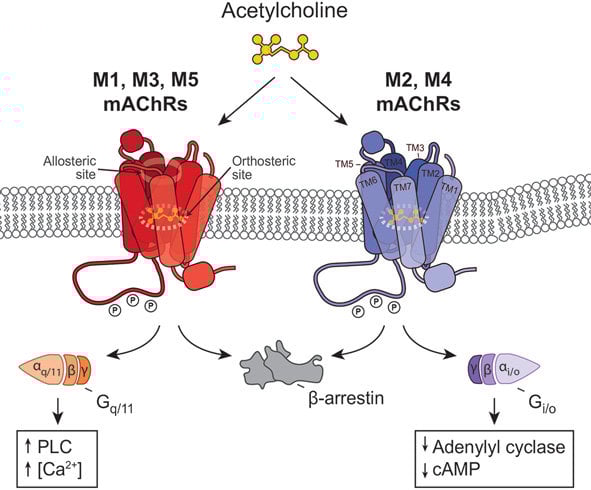
Muscarinic acetylcholine receptors (mAChRs) are a class of G protein-coupled receptors (GPCRs) found in the central and peripheral nervous systems, as well as in various other tissues and organs throughout the body. These receptors are named after muscarine, a natural alkaloid compound found in certain mushrooms, which was one of the first substances discovered to activate them.
There are five subtypes of muscarinic receptors, designated as M1 through M5, each with distinct tissue distribution and functions. Here's an overview of their roles:
- M1 Receptors: Predominantly found in the central nervous system, particularly in regions associated with cognitive functions. Activation of M1 receptors is linked to memory and learning.
- M2 Receptors: Found in the heart, where they play a crucial role in regulating heart rate and cardiac contractility. Activation of M2 receptors slows heart rate and reduces the force of cardiac contractions.
- M3 Receptors: Present in smooth muscle tissues, such as those in the gastrointestinal tract, urinary bladder, and bronchial airways. Activation of M3 receptors leads to smooth muscle contraction.
- M4 Receptors: Distributed mainly in the central nervous system and involved in modulating neurotransmitter release. Their role in cognition and neuropsychiatric disorders is of interest.
- M5 Receptors: Located in certain areas of the brain and implicated in the modulation of dopamine release. Research suggests they may be relevant to Parkinson's disease and addiction.
Muscarinic receptors are activated by the neurotransmitter acetylcholine and play a vital role in regulating a wide range of physiological processes, including heart rate, smooth muscle contraction, glandular secretion, and neurotransmitter release. They are targets for various drugs, including anticholinergic agents, which block their activity, and drugs used to treat conditions like bradycardia and neurodegenerative disorders.
Understanding the functions and regulation of muscarinic acetylcholine receptors is essential for developing therapies that modulate their activity and for advancing our knowledge of how they contribute to various physiological and pathological processes in the body.
