






-
M4 mAChR PAM
M4 mAChR Modulator-2 is a selective positive allosteric modulator (PAM) of the M4 muscarinic acetylcholine receptor (M4 mAChR) with an EC50 of 513 nM. This compound exhibits a high degree of target selectivity, demonstrating minimal affinity for non-target receptors, such as D1R/D2R/D3R, various 5-HT subtypes, opioid receptors, and M1/M2 receptors. M4 mAChR Modulator-2 is effective in reversing hyperlocomotion induced by Dizocilpine (MK-801) in murine models and is utilized in research focused on schizophrenia. -
M3 Muscarinic Receptor Antagonist
J-104129 is a selective antagonist of the M3 muscarinic receptor, exhibiting a Ki value of 4.2 nM. This compound demonstrates significant bronchodilatory effects, making it useful in studying respiratory disorders. Its oral bioactivity supports its application in pharmacological research focusing on muscarinic receptor modulation. -
M4 Receptor Positive Allosteric Modulator
Muscarinic M4 modulator-1 is a positive allosteric modulator of the M4 muscarinic receptor. It enhances receptor activity with allosteric potencies indicated by EC50 values of 14 nM in CHO-K1 cells and 3 nM in HEK293 cells. This compound exhibits antipsychotic-like effects, making it a valuable tool for research into psychiatric and neurological disorders. -
Muscarinic-3 Agonist
Methacholine iodide is a potent agonist of the muscarinic-3 (M3) receptor. By directly stimulating acetylcholine receptors on smooth muscle, it induces bronchoconstriction and airway narrowing. Methacholine iodide is particularly effective for assessing bronchial hyperresponsiveness (BHR) and is utilized as a diagnostic tool in evaluating airway hyperreactivity in patients with asthma-like symptoms and normal resting expiratory flow rates. -
M1 mAChR PAM
ML169 is a potent and selective positive allosteric modulator (PAM) of the M1 muscarinic acetylcholine receptor (mAChR), demonstrating an EC50 of 1.38 µM. This compound exhibits significant brain penetrance and is a valuable tool for research in Alzheimer's disease. Its modulation of M1 mAChR enhances cholinergic signaling, making it an important probe for studying cognitive function and potential therapeutic strategies in neurodegenerative disorders. -
mAChR Inhibitor
BTM-1042 is a selective muscarinic acetylcholine receptor (mAChR) inhibitor with notable antispasmodic properties. It effectively inhibits electrical stimulation-induced contraction in the guinea pig ileum and demonstrates a dose-dependent reduction in spontaneous movement of the rabbit stomach. BTM-1042 displays similar activity to atropine in blocking muscarinic receptors while having a minimal impact on other receptor types. Additionally, it suppresses ileal responses triggered by nicotine and 5-hydroxytryptamine, highlighting its potential utility in gastrointestinal research applications and studies related to smooth muscle contraction modulation. -
Stable Isotope
Fesoterodine-d7 fumarate is a deuterium-labeled derivative of Fesoterodine fumarate, serving as a stable isotope for research applications. Fesoterodine fumarate acts as a competitive antagonist of muscarinic acetylcholine receptors (mAChRs), demonstrating non-subtype selectivity with pKi values of 8.0, 7.7, 7.4, 7.3, and 7.5 for M1, M2, M3, M4, and M5, respectively. It is primarily utilized in studies related to overactive bladder (OAB) and provides valuable insight into muscarinic receptor function and pharmacology. -
M1/M2/M4 Muscarinic Agonist
M1/M2/M4 muscarinic agonist 3 is a selective agonist for muscarinic acetylcholine receptors M1, M2, and M4, exhibiting EC50 values of 3.2 nM, 32 nM, and 1.7 nM, respectively. This compound is effective in modulating neurotransmission and has significant implications for research in cognitive function, neuropharmacology, and potential therapeutic applications in neurological disorders. Its activity profile makes it a valuable tool for studying muscarinic signaling pathways and receptor interactions. -
M1 mAChR Agonist
GSK1034702 hydrochloride is a potent allosteric agonist of the M1 muscarinic acetylcholine receptor (mAChR), with a pEC50 value of 8.1, capable of crossing the blood-brain barrier. This compound activates the Gq/11 protein-mediated signaling pathway, leading to enhanced neuronal firing and long-term potentiation (LTP) in the hippocampal CA1 region. GSK1034702 hydrochloride is valuable for investigating cognitive impairments associated with neurological conditions, such as Alzheimer's disease, and demonstrates pro-cognitive effects in animal models, especially relevant in studies of nicotine withdrawal-induced cognitive dysfunction. Potential side effects related to peripheral M receptor activation, such as gastrointestinal reactions, should be considered in research applications. -
mAChR Antagonist
Oxyphencyclimine is an orally active antagonist of muscarinic acetylcholine receptors (mAChR). This compound is demonstrated to reduce ulceration index and enhance pepsin activity in rat models of gastric ulcers. Oxyphencyclimine is suitable for investigation in studies related to peptic ulcer disease and gastrointestinal spasms, providing a valuable tool for understanding these conditions. -
M Cholinergic Receptor Antagonist
Petiline is a steroidal alkaloid that serves as a selective antagonist of M cholinergic receptors. By competitively inhibiting these receptors, Petiline demonstrates significant anticholinergic effects, including a reduction in vagal influence on cardiac function. Additionally, it exhibits central excitatory, cardiotonic, and spasmolytic activities, making it a valuable tool for investigating cholinergic system-related disorders such as arrhythmias and intestinal spasms. -
Muscarinic Receptor Agonist
Milameline is a nonselective, partial agonist of muscarinic receptors, demonstrating significant potential in cognitive enhancement. It exhibits balanced affinity across various human muscarinic receptor subtypes, with IC50 values of approximately 1.3 µM for M1, 1.1 µM for M2, 1.5 µM for M3, and 1.9 µM for M4 receptors. In addition to its central and peripheral cholinergic effects, Milameline counteracts cognitive deficits induced by Scopolamine. This compound is valuable for researching Alzheimer's Disease and other cognitive disorders. -
mAChR Antagonist
Atropine hydrobromide is a competitive antagonist of muscarinic acetylcholine receptors (mAChRs), demonstrating IC50 values of 0.39 nM and 0.71 nM for human mAChR M4 and chicken mAChR M4, respectively. It effectively inhibits acetylcholine-induced relaxations in human pulmonary veins. This compound is valuable for research applications related to anti-myopia and the treatment of bradycardia. -
Muscarinic Receptor Antagonist
Biperiden lactate is a non-selective muscarinic receptor antagonist that competitively interacts with M1 muscarinic receptors. This compound inhibits acetylcholine activity, thus enhancing dopamine signaling within the central nervous system. Biperiden lactate is particularly useful for research into Parkinson's disease and related psychiatric disorders, providing insights into therapeutic strategies aimed at managing these conditions. -
Detrusor Muscle Contraction Inhibitor
FK 584 is a potent detrusor muscle contraction inhibitor that primarily exhibits antimuscarinic activity alongside weak calcium channel blocking properties. This compound has shown significant efficacy in inhibiting detrusor muscle contractions across various experimental models, making it a valuable tool for research on overactive bladder (OAB). FK 584 presents a manageable risk of mydriasis, enabling detailed exploration of its therapeutic potential in bladder function studies. -
Anticholinergic Agent
(R,R)-Glycopyrrolate is an anticholinergic agent that selectively inhibits the action of acetylcholine on muscarinic receptors. This compound is primarily utilized for its efficacy in reducing excessive salivation, particularly in individuals with developmental disabilities. Its application extends to various research contexts, including the assessment of cholinergic modulation in neurological studies. -
M1/M2 Receptor Agonist
Lu 26-046 is a selective agonist for the muscarinic M1 and M2 receptors, with reported affinities (Ki values) of 0.51 nM and 26 nM, respectively, while exhibiting weak antagonistic activity at the M3 receptor (Ki 5 nM). This compound demonstrates a specific stimulating effect that has been recognized in behavioral assays with rats. Lu 26-046 serves as a valuable tool in research investigating cholinergic signaling pathways and receptor subtype functions. -
AChE/mAChR Antagonist
CI-1002, a potent antagonist of acetylcholinesterase (AChE) and muscarinic acetylcholine receptors (mAChR), is utilized in neuroscience research. Its ability to inhibit AChE activity makes it particularly valuable for investigating the underlying mechanisms of cognitive dysfunction associated with Alzheimer’s disease. CI-1002 serves as a crucial tool for studying neurodegenerative processes and potential therapeutic strategies. -
M1 Muscarinic Receptor Agonist
Nebracetam is an orally active agonist of the M1 muscarinic receptor, known for its ability to increase intracellular Ca2+ concentration, demonstrated with an EC50 value of 1.59 mM. This compound exhibits neuroprotective properties and has been shown to improve cognitive impairment. Nebracetam is applicable in research focused on neurological conditions, including Alzheimer's disease, making it a valuable tool for understanding and developing potential therapeutic strategies. -
Muscarinic Antagonist
Caramiphen hydrochloride is a muscarinic antagonist that exhibits anticonvulsant properties. It provides partial protection against seizures and neuropathological effects induced by Soman exposure. This compound is valuable for research focused on exploring therapeutic strategies for seizure disorders and understanding the underlying mechanisms of muscarinic receptor modulation. -
mAChR Antagonist
AF-DX 384 methanesulfonate is a selective antagonist of M2 and M4 muscarinic acetylcholine receptors, with inhibitory constants of 6.03 nM and 10 nM, respectively. This compound has demonstrated the ability to reverse cognitive deficits in novel object recognition and passive avoidance assays in both aged rats and young rats subjected to scopolamine-induced impairments. It serves as a valuable tool in neuroscientific research focused on memory and learning processes. -
Antiarrhythmic Agent
Pirmenol is an orally active antiarrhythmic agent that primarily targets the muscarinic acetylcholine receptor (mAChR), leading to the inhibition of the I(K.ACh) current (IC50: 0.1 μM). It demonstrates significant antiarrhythmic properties, making it valuable for investigating cardiovascular disorders, particularly atrial fibrillation. Pirmenol serves as a useful tool for research aimed at understanding and developing treatments for cardiac arrhythmias. -
M1 Agonist
LU-25-077 is a brain-penetrant N-demethyl metabolite of Lu 25-109, functioning primarily as a partial agonist of the M1 muscarinic acetylcholine receptor while exhibiting antagonistic properties toward M2 and M3 receptors. This compound is valuable for neurological research, enabling the exploration of cholinergic modulation in various pathophysiological conditions. It provides an important tool for studying cognitive processes and potential therapeutic strategies for neurodegenerative disorders. -
mAChR Antagonist
Tiemonium iodide is a muscarinic acetylcholine receptor (mAChR) antagonist that exhibits antispasmodic properties. It is primarily utilized in research related to the nervous system, where it helps investigate the modulation of cholinergic signaling and its effects on smooth muscle contraction. This reagent serves as a valuable tool for understanding the physiological and pharmacological roles of mAChRs in various biological contexts. -
mAChR Inhibitor
(S)-Tolterodine is a selective muscarinic acetylcholine receptor (mAChR) inhibitor, exhibiting an IC50 value of 588 nM. This compound is primarily used in studies related to bladder overactivity and other cholinergic signaling pathways. Its pharmacological properties make it a valuable tool for investigating the mechanisms of mAChR modulation in both clinical and preclinical research. -
Muscarinic Antagonist
Darotropium bromide is a long-acting muscarinic antagonist that targets muscarinic acetylcholine receptors. Its primary biological activity is the blockade of these receptors, resulting in bronchodilation and reduced airway resistance. This compound is primarily used in research related to chronic obstructive pulmonary disease (COPD), aiding in the investigation of its therapeutic potential and effects on pulmonary function. -
M1 Muscarinic Agonist
AC-42 is a selective allosteric agonist for the M1 muscarinic receptor, exhibiting potent activity with EC50 values of 805 nM for the human wild-type and 220 nM for the Y381A mutant receptor. This compound enhances inositol phosphate (IP) accumulation and calcium mobilization in CHO cells, making it a valuable tool for studying M1 receptor signaling pathways. Its unique mechanism of action facilitates research into neuropharmacology and cognitive function modulation. -
M1 Ligand
M1 ligand 1 is a selective ligand for the muscarinic acetylcholine receptor M1. It is an N-desmethyl derivative of arecoline, designed for use in research applications focused on neurological studies. M1 ligand 1 serves as a potential PET (positron emission tomography) radiotracer, providing insights into receptor activity and distribution in brain imaging studies. -
mAChR Antagonist
Cyclodrine is a selective antagonist of muscarinic acetylcholine receptors (mAChR). It exhibits biological activity by inhibiting cholinergic signaling, which has implications in neuropharmacology and the study of various neurological disorders. Research applications include exploring cholinergic system modulation and assessing the role of mAChR in cognitive function and behavior. -
Muscarinic M3 Antagonist
J 104129 fumarate is a selective muscarinic M3 antagonist, demonstrating a Ki value of 4.2 nM for M3 and 490 nM for M2, indicating a high degree of selectivity. This compound effectively antagonizes acetylcholine-induced bronchoconstriction, making it a valuable tool for investigating obstructive airway diseases. Its oral activity and specificity present opportunities for research in pulmonary pharmacology and the treatment of respiratory conditions. -
M(3) Receptor Antagonist
Bencycloquidium bromide is a muscarinic M(3) receptor antagonist that functions as an anticholinergic bronchodilator. It shows significant potential in modulating airway smooth muscle tone and can be utilized in research focusing on respiratory conditions such as rhinitis. This compound is valuable for exploring therapeutic strategies aimed at relieving bronchoconstriction and improving airflow in pulmonary studies. -
Antimuscarinic Agent
Propiverine is a potent antimuscarinic agent that targets muscarinic receptors in the urinary bladder. By inhibiting cellular calcium influx, it reduces muscle spasms, demonstrating both neurotropic and musculotropic effects on smooth muscle. Propiverine is primarily utilized in research related to overactive bladder (OAB) and offers insights into bladder dysfunction therapies. -
mAChR Agonist
L-687306 is a high-affinity partial agonist of the muscarinic M1 receptor, demonstrating significant activity in rat ganglia. Additionally, it acts as a competitive antagonist at M2 and M3 muscarinic receptors in guinea pig cardiac and ileal tissues, respectively. This compound is valuable for investigating muscarinic receptor reserve and exploring muscarinic signaling pathways in various physiological contexts. -
mAChR Antagonist
L-Hyoscyamine hydrobromide is a competitive antagonist of muscarinic acetylcholine receptors (mAChRs). It exhibits significant anticholinergic activity, making it useful in research related to gastrointestinal motility and neurological disorders. This compound is employed in various pharmacological studies to assess its effects on cholinergic signaling and its impact on lactation dynamics when considering long-term use. -
Muscarinic Antagonist
ASP9133 is a long-acting muscarinic antagonist that effectively inhibits bronchoconstriction. This compound is primarily researched for its potential applications in the treatment of chronic obstructive pulmonary disease (COPD), providing insights into the management of airway obstruction and related respiratory disorders. Its mechanism of action makes it a valuable reagent for studies focusing on respiratory physiology and pharmacology. -
mAChR Antagonist
Eucatropine is a potent antagonist of muscarinic acetylcholine receptors (mAChRs) with an IC50 value of 0.583 μM. This anticholinergic agent is effective in modulating acetylcholine signaling pathways, making it valuable for research applications in neuropharmacology and studies related to cholinergic system modulation. Its specificity for mAChRs allows for potential insights into the therapeutic effects and mechanisms underlying various neurological disorders. -
mAChR4 Allosteric Modulator
VU6009048 is a positive allosteric modulator of the M4 muscarinic acetylcholine receptor (mAChR4) that exhibits effective central nervous system penetration. This compound is useful for investigating neurological disorders such as Parkinson's disease, Huntington's disease, and schizophrenia, facilitating the exploration of therapeutic options targeting cholinergic signaling pathways. Its mechanism of action enhances receptor activity, making it a valuable tool for research in neuropharmacology. -
mAChR Inhibitor
Phenglutarimid hydrochloride is identified as a muscarinic acetylcholine receptor (mAChR) inhibitor. This compound exhibits anticholinergic properties and is primarily utilized in research related to Parkinson's disease and other neurological disorders. Its ability to modulate cholinergic signaling makes it a valuable tool for investigating therapeutic approaches for movement disorders and cognitive function. -
Muscarinic M2 Receptor Antagonist
SCH 57790 is a selective antagonist of the muscarinic M2 receptor, promoting enhanced acetylcholine release that can lead to improved cognitive performance. This compound has demonstrated efficacy in reversing memory deficits induced by Scopolamine in murine models, showcasing its potential in cognitive enhancement research. Notably, SCH 57790 exhibits a favorable toxicity profile at doses up to 100 mg/kg. -
Anticholinergic/ Antiparkinsonian Agent
Metixene is an anticholinergic and antiparkinsonian agent that primarily targets muscarinic receptors. It exerts its activity by potently inhibiting the binding of quinuclidinyl benzilate (QNB), with IC50 and Ki values of 55 nM and 15 nM, respectively. Metixene is utilized in research related to Parkinson's disease for understanding its mechanisms and potential therapeutic effects. -
Muscarinic Agonist
SR-46559A is a potent muscarinic agonist, primarily targeting muscarinic acetylcholine receptors. This compound has demonstrated key biological activity in modulating neurotransmission and is particularly useful in research focused on social olfactory recognition and related neurobiological pathways. SR-46559A offers valuable insights into the role of cholinergic signaling in olfactory processing and social behavior studies. -
Anticholinergic/Antispasmodic Agent
Octamylamine acts primarily as an anticholinergic agent by inhibiting acetylcholine receptors, thereby reducing involuntary muscle contractions. This compound exhibits significant antispasmodic activity, making it useful in the study of gastrointestinal disorders and conditions characterized by smooth muscle spasms. Its role in neuromuscular research further highlights its potential applications in pharmacological testing and therapeutic development. -
mAChR Agonist
RS-86 is a potent and selective agonist of muscarinic acetylcholine receptors (mAChRs). This compound elicits cholinergic excitatory effects, including smooth muscle contraction, ganglion depolarization, and central hypothermia. RS-86 is utilized in research focused on the pathophysiology of Alzheimer's disease and the underlying mechanisms of cholinergic signaling. -
M1/M3 Muscarinic Receptors Agonist
L 689660 maleate is a selective agonist for M1 and M3 muscarinic receptors, exhibiting potent cholinomimetic activity. Specifically, it demonstrates full agonist properties at the M1 muscarinic receptor in the rat superior cervical ganglion with a pEC50 of 7.3. Additionally, L 689660 maleate effectively activates M3 receptors in the guinea pig ileum myenteric plexus-longitudinal muscle and trachea, with pEC50 values of 7.5 and 7.7, respectively. This compound is valuable for research applications targeting muscarinic receptor signaling pathways. -
mAChR Agonist
Oxotremorine is a potent agonist of muscarinic acetylcholine receptors (mAChRs), specifically targeting the M1 and M3 subtypes. This compound demonstrates nicotine-like effects, making it valuable for research related to cholinergic signaling and neuropharmacology. Its unique pharmacological profile supports investigations into cognitive function, memory enhancement, and the role of acetylcholine in various neurological disorders. -
mAChR Modulator
VU0029767 is an allosteric enhancer of the M1 muscarinic acetylcholine receptor (mAChR). It modulates M1 receptor activity by increasing agonist affinity, thereby enhancing receptor function. This compound displays unique properties in various experimental conditions, including interactions with mutant M1 receptors and differential effects on downstream signaling pathways. VU0029767 is valuable for research applications involving receptor pharmacology and neuropharmacology. -
Anticholinergic/Antispasmodic Agent
Octamylamine hydrochloride is recognized as an anticholinergic and antispasmodic agent. It functions by inhibiting cholinergic activity, thereby providing relief from smooth muscle spasms. This compound is utilized in various research applications, particularly in studies focusing on gastrointestinal motility and related disorders. Its mechanism of action makes it a valuable tool in the exploration of antispasmodic therapies and neurological research. -
mAChR inhibitor
Heliosupine N-oxide is a potent inhibitor of muscarinic acetylcholine receptors (mAChR), exhibiting an IC50 value of 350 μM. As a metabolite of Heliosupine and classified as a pyrrolizidine alkaloid, Heliosupine N-oxide serves as a valuable tool for research into cholinergic signaling pathways and related neurological studies. Its inhibitory properties can aid in elucidating the role of mAChR in various physiological and pathological processes. -
Muscarinic M1-4 Receptor Antagonist
Diphenidol is a non-selective antagonist of muscarinic M1-M4 receptors, exhibiting anti-arrhythmic properties. Additionally, it acts as a potent inhibitor of voltage-gated ion channels, including sodium, potassium, and calcium channels, in neuronal cells. This compound is valuable for research in the mechanisms of antivertigo and antinausea treatments. -
Stable Isotope
Fesoterodine-d3 is a deuterium-labeled derivative of Fesoterodine, functioning as a competitive antagonist of muscarinic acetylcholine receptors (mAChRs). It exhibits non-subtype selective activity, with pKi values of 8.0, 7.7, 7.4, 7.3, and 7.5 for M1, M2, M3, M4, and M5 receptors, respectively. This reagent is primarily utilized in research related to overactive bladder (OAB) and studies involving receptor pharmacology. Its stable isotope form aids in biochemical assays and metabolic studies.
mAChR
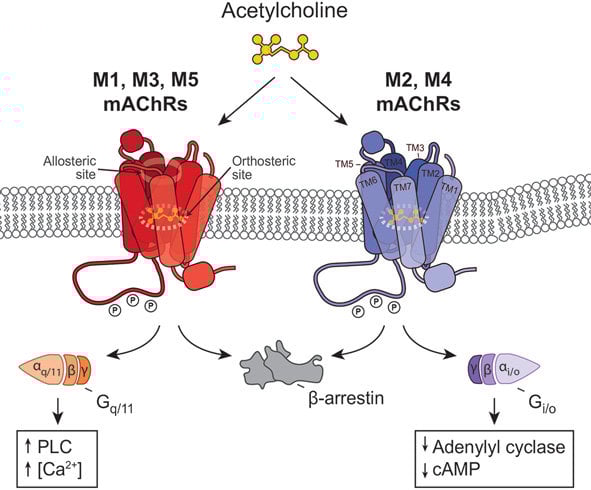
Muscarinic acetylcholine receptors (mAChRs) are a class of G protein-coupled receptors (GPCRs) found in the central and peripheral nervous systems, as well as in various other tissues and organs throughout the body. These receptors are named after muscarine, a natural alkaloid compound found in certain mushrooms, which was one of the first substances discovered to activate them.
There are five subtypes of muscarinic receptors, designated as M1 through M5, each with distinct tissue distribution and functions. Here's an overview of their roles:
- M1 Receptors: Predominantly found in the central nervous system, particularly in regions associated with cognitive functions. Activation of M1 receptors is linked to memory and learning.
- M2 Receptors: Found in the heart, where they play a crucial role in regulating heart rate and cardiac contractility. Activation of M2 receptors slows heart rate and reduces the force of cardiac contractions.
- M3 Receptors: Present in smooth muscle tissues, such as those in the gastrointestinal tract, urinary bladder, and bronchial airways. Activation of M3 receptors leads to smooth muscle contraction.
- M4 Receptors: Distributed mainly in the central nervous system and involved in modulating neurotransmitter release. Their role in cognition and neuropsychiatric disorders is of interest.
- M5 Receptors: Located in certain areas of the brain and implicated in the modulation of dopamine release. Research suggests they may be relevant to Parkinson's disease and addiction.
Muscarinic receptors are activated by the neurotransmitter acetylcholine and play a vital role in regulating a wide range of physiological processes, including heart rate, smooth muscle contraction, glandular secretion, and neurotransmitter release. They are targets for various drugs, including anticholinergic agents, which block their activity, and drugs used to treat conditions like bradycardia and neurodegenerative disorders.
Understanding the functions and regulation of muscarinic acetylcholine receptors is essential for developing therapies that modulate their activity and for advancing our knowledge of how they contribute to various physiological and pathological processes in the body.
