
- Cat. No.
- A11975
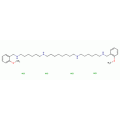
Methoctramine tetrahydrochloride
Methoctramine hydrate is a selective M2 muscarinic receptor antagonist at nM concentrations
Out of stock
All 4 sizesSearch by product name, CAS, target or catalog number. Press Down Arrow to reach product suggestions, Tab to move between links, and Escape to close suggestions.
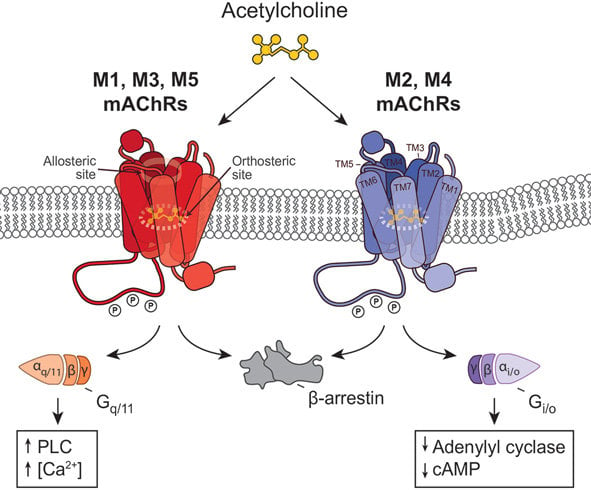
Muscarinic acetylcholine receptors (mAChRs) are a class of G protein-coupled receptors (GPCRs) found in the central and peripheral nervous systems, as well as in various other tissues and organs throughout the body. These receptors are named after muscarine, a natural alkaloid compound found in certain mushrooms, which was one of the first substances discovered to activate them.
There are five subtypes of muscarinic receptors, designated as M1 through M5, each with distinct tissue distribution and functions. Here's an overview of their roles:
Muscarinic receptors are activated by the neurotransmitter acetylcholine and play a vital role in regulating a wide range of physiological processes, including heart rate, smooth muscle contraction, glandular secretion, and neurotransmitter release. They are targets for various drugs, including anticholinergic agents, which block their activity, and drugs used to treat conditions like bradycardia and neurodegenerative disorders.
Understanding the functions and regulation of muscarinic acetylcholine receptors is essential for developing therapies that modulate their activity and for advancing our knowledge of how they contribute to various physiological and pathological processes in the body.
Methoctramine hydrate is a selective M2 muscarinic receptor antagonist at nM concentrations
Out of stock
All 4 sizes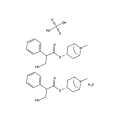
Synonyms: Atropisol; Atropt; Atropini sulfas; Tropine tropate
Atropine is a competitive antagonist for the muscarinic acetylcholine receptor types M1, M2, M3, M4 and M5.
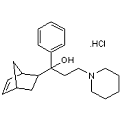
Synonyms: Akineton
Biperiden hydrochloride is a muscarinic receptor antagonist that displays some selectivity for the M1 subtype
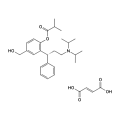
Synonyms: Toviaz
Fesoterodine fumarate is a medicine which is used in urinary urgency, reducing the frequency of passing urine and urge urinary incontinence
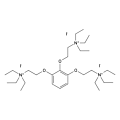
Gallamine Triethiodide is a mAChR M2 antagonist with pronounced cardioselectivity.
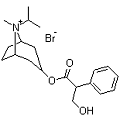
Synonyms: Atrovent; Apovent; Aerovent
Ipratropium bromide is a muscarinic antagonist, bronchodilator, N-Isopropyl salt of atropine.
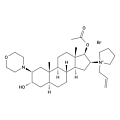
Synonyms: Zemuron; Esmeron
Rocuronium Bromide is a competitive AchR antagonist, used in modern anaesthesia.
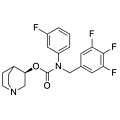
Synonyms: SVT40776
SVT-40776 is a novel M3 muscarinic receptor antagonist, for the treatment of overactive bladder.
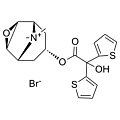
Synonyms: BA679 BR; BA 679
Tiotropium Bromide (BA679 BR) is a muscarinic acetylcholine receptor (mAChR) antagonist that blocks the binding of the acetylcholine ligand and subsequent opening of the ligand-gated ion channel.
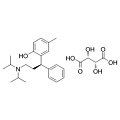
Synonyms: Detrol LA
Tolterodine tartrate (Detrol LA) is a muscarinic receptor antagonist which is used for the treatment of urinary incontinence.
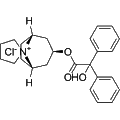
Trospium chloride is a selective and competitive antagonist of muscarinic acetylcholine receptors (mAChRs). It exhibits potent antimuscarinic activity by binding with high affinity to M1, M2, and M3 receptor subtypes, while showing no interaction with nicotinic cholinergic receptors. This compound is primarily utilized in research related to neurological conditions and to explore the pharmacological modulation of cholinergic signaling.
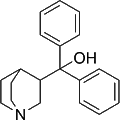
Quifenadine is a potent M3 receptor antagonist, exhibiting an IC50 value greater than 1000 nM. This compound is valuable for research into neurological diseases and related conditions. It serves as a tool for studying the role of M3 receptors in various biological systems and may contribute to the development of therapeutic strategies targeting these pathways.
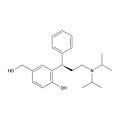
Synonyms: (R)-5-Hydroxymethyl tolterodine; PNU 200577
5-hydroxymethyl tolterodine is a metabolite of Tolterodine, a muscarinic receptor antagonist used in the treatment of urinary incontinence.
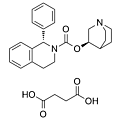
Synonyms: YM905; Vesicare
Solifenacin-succinate is a muscarinic M3 receptor antagoinst, used in treatment of urinary incontinence.
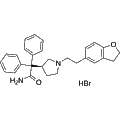
Synonyms: UK-88525 hydrobromide
Darifenacin (UK-88525) hydrobromide is a selective and orally active M3 muscarinic receptor (M3R) antagonist with a pKi of 8.9. Darifenacin hydrobromide binds >20-fold more specifically to M3R than to other muscarinic receptors. Darifenacin hydrobromide can be used in the study of urinary incontinence and other symptoms of overactive bladder. Darifenacin hydrobromide inhibits tumor growth in colorectal cancer cells and has anti-tumor effects.
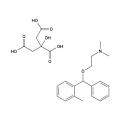
Synonyms: Norflex
Orphenadrine citrate is a NMDA receptor antagonist with Ki of 6.0 +/- 0.7 μM, HERG potassium channel blocker.
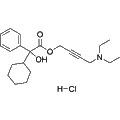
Oxybutynin chloride is a competitive antagonist of muscarinic acetylcholine receptors (mAChRs), exhibiting binding affinities with Ki values of 14.3 nM and 5.55 nM for [3H]NMS in mouse bladder and cerebral cortex, respectively. It effectively inhibits vascular Kv channels with an IC50 of 11.51 μM, independent of its anticholinergic effects. Oxybutynin chloride is primarily utilized for the management of overactive bladder syndrome (OAB) and alleviating bladder and urinary tract muscle spasms. Additionally, it serves as a click chemistry reagent due to its alkyne functionality, enabling copper-catalyzed azide-alkyne cycloaddition (CuAAc) reactions with azide-containing molecules.
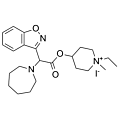
Synonyms: SX 810
Beperidium iodide shows a competitive antagonistic effect against acetylcholine receptor with a pA2 of 7.93.
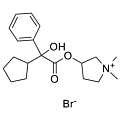
Synonyms: Glycopyrrolate bromide; Glycopyrronium bromide
Glycopyrrolate is a muscarinic competitive antagonist used as an antispasmodic.
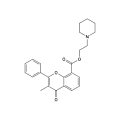
Synonyms: BML-278; Urispas; Bladuril; Spasuret; Uronid
Flavoxate binds and inhibits muscarinic receptors, thereby suppressing the micturition reflex and increases urinary bladder capacity by modifying the micturition center in the brain stem.
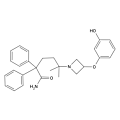
PF-3635659 is a potent muscarinic M(3) receptor antagonist.
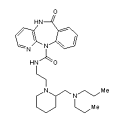
AF-DX 384 is a drug which acts as a selective antagonist of the muscarinic acetylcholine receptors.
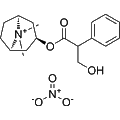
Synonyms: Methylatropine nitrate
Atropine methyl nitrate is a muscarinic acetylcholine receptor (mAChR) antagonist, primarily utilized for its ability to induce pupil dilation (mydriasis) during ophthalmic examinations. This quaternary ammonium derivative is specifically formulated for the treatment of pyloric spasms in infants due to its high polarity, which limits its central nervous system penetration compared to its parent compound, atropine. Research applications include studying cholinergic signaling pathways and exploring therapeutic strategies for gastrointestinal disorders.
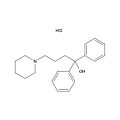
Diphenidol HCl is a potent antagonist of muscarinic M2 and M3 receptor with pKb of 6.72 and 7.02.
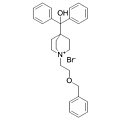
Synonyms: GSK573719A
Umeclidinium bromide(GSK573719A) is a muscarinic receptor antagonist which is useful in treatment of chronic obstructive pulmonary disease (COPD).