






Epigenetics
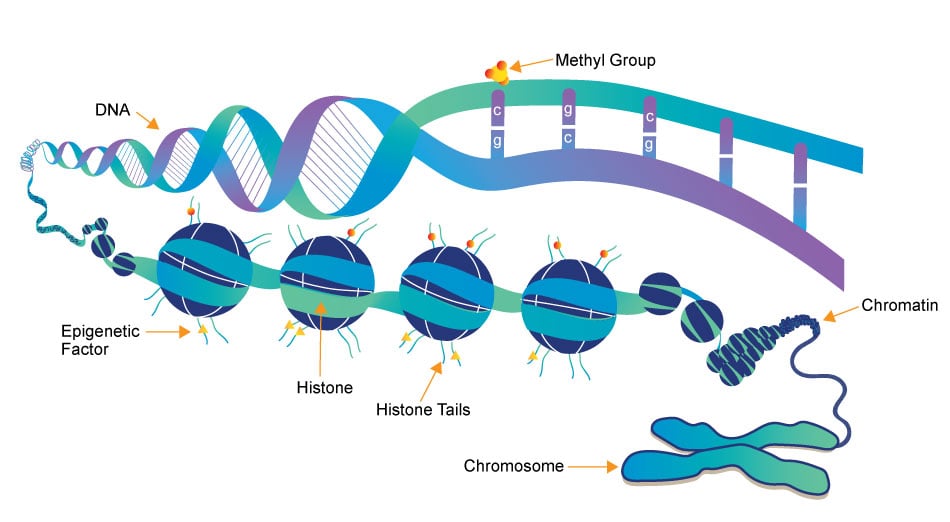
Epigenetics research delves into the molecular mechanisms that control gene expression and cellular traits without altering the underlying DNA sequence. One crucial aspect of this field is the role of small molecules, which act as powerful regulators of epigenetic modifications. These small compounds, typically comprising a few dozen to a few hundred atoms, have emerged as essential tools in understanding and manipulating the epigenome.
- DNA Methylation Inhibitors: Small molecules like 5-azacytidine and 5-aza-2'-deoxycytidine are DNA methyltransferase inhibitors. They block the addition of methyl groups to DNA, leading to DNA demethylation. This can reactivate silenced genes, potentially offering therapeutic avenues for conditions like cancer.
- HDAC inhibitors: HDACs remove acetyl groups from histone proteins, contributing to gene repression. Small molecule HDAC inhibitors, such as Vorinostat and Romidepsin, can reverse this process by increasing histone acetylation, allowing genes to be more accessible for transcription. These inhibitors are being explored for cancer therapy and other conditions.
- Histone Methyltransferase Inhibitors: Small molecules like GSK126 inhibit specific histone methyltransferases, affecting histone methylation patterns. This can alter gene expression, making them promising candidates for cancer and other diseases with epigenetic dysregulation.
- RNA Modulators: Small molecules can also target non-coding RNAs involved in epigenetic regulation. For instance, small molecules called small interfering RNAs (siRNAs) can be designed to target and degrade specific long non-coding RNAs, influencing gene expression.
- Epigenetic Reader Domain Inhibitors: These small molecules target proteins that recognize and bind to specific epigenetic marks. Examples include inhibitors of bromodomain-containing proteins (BET inhibitors), which can disrupt gene regulation by interfering with protein-DNA interactions.
Small molecules in epigenetics research not only provide insights into the fundamental biology of gene regulation but also hold immense promise for developing novel therapeutics. Their ability to selectively modulate specific epigenetic marks and pathways has led to ongoing clinical trials and drug development efforts for various diseases, including cancer, neurological disorders, and inflammatory conditions. Understanding and harnessing the power of these small molecules is at the forefront of modern epigenetics research, offering new hope for precision medicine and targeted therapies.
3 key components involved in the regulation of epigenetic modifications
Epigenetics Writer
Epigenetics writers are enzymes responsible for adding chemical marks or modifications to DNA or histone proteins. These marks include DNA methylation (addition of methyl groups to DNA) and histone modifications (such as acetylation, methylation, phosphorylation, etc.).
Epigenetics Reader
Function: Epigenetics readers are proteins that can recognize and bind to specific epigenetic marks on DNA or histones. These reader proteins interpret the epigenetic code and facilitate downstream cellular processes, such as gene activation or repression.
Epigenetics Eraser
Function: Epigenetics erasers are enzymes responsible for removing or reversing epigenetic marks on DNA or histones. This process allows for the dynamic regulation of gene expression and the resetting of epigenetic states during various stages of development and in response to environmental changes.
-
NAD+ competitive inhibitor of PARP7
RBN-2397 is a potent, accross species and orally active NAD+ competitive inhibitor of PARP7 (IC50<3 nM). -
peptidylarginine deminase (PAD) inhibitor
Cl-amidine TFA is an orally active peptidylarginine deminase (PAD) inhibitor, with IC50 values of 0.8 μM, 6.2 μM and 5.9 μM for PAD1, PAD3, and PAD4, respectively. -
epigenetic modifier
L-2-Hydroxyglutaric acid disodium ((S)-2-Hydroxyglutaric acid disodium, L-2-Hydroxyglutarate disodium, LGA, L-2HG) is an epigenetic modifier and a putative oncometabolite in kidney cancer that inhibits histone demethylases and hence promotes histone methylation. -
EZH2 inhibitor
Gambogenic acid is an active ingredient in gamboge, with anticancer activity. Gambogenic acid acts as an effective inhibitor of EZH2, specifically and covalently binds to Cys668 within the EZH2-SET domain, and induces EZH2 ubiquitination. -
anticancer agent
5,7,4'-Trimethoxyflavone is isolated from Kaempferia parviflora (KP) that is a famous medicinal plant from Thailand. 5,7,4'-Trimethoxyflavone induces apoptosis, as evidenced by increments of sub-G1 phase, DNA fragmentation, annexin-V/PI staining, the Bax/Bcl-xL ratio, proteolytic activation of caspase-3, and degradation of poly (ADP-ribose) polymerase (PARP) protein.5,7,4'-Trimethoxyflavone is significantly effective at inhibiting proliferation of SNU-16 human gastric cancer cells in a concentration dependent manner. -
HDAC6 inhibitor
Tubastatin A is a potent HDAC6 inhibitor with an IC50 value of 15 nM. -
antidepressant agent
Gardenia yellow is an active member of crocin, increases mRNA expression of SIRT3, and acts as an orally active antidepressant agent. -
pan-HDAC inhibitor
Quisinostat dihydrochloride (JNJ-26481585 dihydrochloride) is an orally available, potent pan-HDAC inhibitor with IC50s of 0.11 nM, 0.33 nM, 0.64 nM, 0.46 nM, and 0.37 nM for HDAC1, HDAC2, HDAC4, HDAC10 and HDAC11, respectively. Quisinostat dihydrochloride has a broad spectrum antitumoral activity. -
Pdia3/ERp57 activator, STAT3 inhibitor
Diosgenin palmitate, also known as Diosgenin hexadecanoate, is the hexadecanoic ester of Diosgenin. Diosgenin, a phytosteroid sapogenin, is the product of hydrolysis by acids, strong bases, or enzymes of saponins, extracted from the tubers of Dioscorea wild yam, such as the Kokoro. -
Menin-MLL inhibitor
SNDX-5613 is a potent and specific Menin-MLL inhibitor. -
HDAC1 and HDAC3 inhibitor
Suberoyl bis-hydroxamic acid (Suberohydroxamic acid; SBHA) is a competitive and cell-permeable HDAC1 and HDAC3 inhibitor with ID50 values of 0.25 μM and 0.30 μM, respectively. -
SIRT1/SIRT3 inhibitor
4'-bromo-Resveratrol is a potent inhibitor of the deacetylases sirtuin 1 (SIRT1) and 3 (SIRT3).
-
HuR-ARE Interaction Inhibitor
CMLD-2 is an inhibitor of the HuR-ARE interaction that competitively binds to the HuR protein, disrupting its binding to adenine-uridine rich elements (ARE) within mRNAs (Ki=350 nM). This compound induces apoptosis and exhibits notable antitumor activity across various cancer cell lines, including colon, pancreatic, thyroid, and lung cancers. HuR (Hu antigen R) is a critical RNA-binding protein involved in the regulation of mRNA stability and translation, making CMLD-2 a valuable tool for studying post-transcriptional regulation in cancer research. -
METTL3 Inhibitor
METTL3-IN-9 is an inhibitor of the methyltransferase-like protein METTL3, which functions as an RNA methyltransferase to catalyze the N6-methyladenosine (m6A) modification of mRNA in eukaryotic cells. This compound demonstrates significant biological activity in regulating gene expression through m6A modification. METTL3-IN-9 is essential for research applications focused on RNA biology, epitranscriptomics, and the study of mRNA modifications. -
METTL3-METTL14 Inhibitor
STM2120 is a selective inhibitor of the METTL3-METTL14 complex, exhibiting an IC50 of 64.5 μM. This compound disrupts the methyltransferase activity of METTL3, impacting RNA methylation processes. STM2120 is valuable for investigating the roles of RNA modifications in cellular functions and disease mechanisms, particularly in cancer research. -
Mettl3 Activator
METTL3 activator-1 (2-Piperazinecarboxylic acid methyl ester dihydrochloride) is an activator of the Mettl3 enzyme, enhancing its expression. This compound plays a critical role in research applications focused on liver fibrosis, providing insights into the underlying molecular pathways and potential therapeutic targets. -
METTL3 Inhibitor
UZH2 is a potent and selective inhibitor of the METTL3 enzyme, demonstrating an IC50 value of 5 nM. This compound is crucial for research focusing on mRNA methylation and epitranscriptomics, providing insights into gene regulation and potential therapeutic targets in various diseases. UZH2 is ideal for studies investigating the role of METTL3 in cellular processes and its implications in cancer biology. -
METTL3 Inhibitor
STC-15 is a selective inhibitor of the RNA methyltransferase METTL3, known for its potential in modulating anti-tumor immunity and altering the tumor microenvironment. By inhibiting METTL3, STC-15 enhances anti-cancer immune responses through increased interferon signaling and shows synergy with T-cell checkpoint blockade. This compound is relevant for research in proliferative diseases, including various forms of cancer and autoimmune disorders. -
METTL3 Inhibitor
STM3006 is a highly potent and selective inhibitor of METTL3, exhibiting an IC50 of 5 nM. This compound reduces m6A methylation levels, promotes double-stranded RNA formation, and triggers a cell-intrinsic interferon response, thereby enhancing T cell-mediated tumor cell elimination. STM3006 demonstrates significant anti-tumor activity and shows improved efficacy when combined with anti-PD-1 immunotherapy, making it a valuable tool for cancer research and therapeutic development. -
Fluorometric HDAC Substrate
Boc-Lys(Ac)-AMC is a cell-permeable fluorometric substrate for histone deacetylases (HDACs). When cleaved by HDAC enzymes, it releases a fluorescent signal with excitation and emission maxima at 355 nm and 460 nm, respectively. This compound is valuable for studying HDAC activity in various biological contexts and can be utilized in high-throughput screening assays to evaluate enzyme inhibitors. -
SMARCA2 Degrader
ACBI2 is a potent VHL PROTAC designed for the targeted degradation of SMARCA2. With an EC50 of 7 nM and a DC50 of 1 nM in RKO cells, ACBI2 selectively modulates SMARCA2 levels, making it a valuable tool for studying SMARCA2-related pathways. This compound is particularly relevant in lung cancer research, facilitating investigations into therapeutic strategies targeting SMARCA2 degradation. -
EZH2 Degrader
MS8815 is a selective enhancer of the enhancer of zeste homolog 2 (EZH2) and functions as a PROTAC degrader. With an IC50 value of 8.6 nM, MS8815 demonstrates potent inhibitory activity against EZH2. This compound is valuable for research applications focused on triple-negative breast cancer (TNBC) and other conditions influenced by EZH2 activity. -
PROTAC AURORA-A Degrader
JB170 is a potent PROTAC-mediated degrader targeting AURORA-A kinase, with a DC50 of 28 nM. By conjugating Alisertib with the Cereblon-binding molecule Thalidomide, JB170 selectively binds AURORA-A (EC50=193 nM) over AURORA-B (EC50=1.4 µM). The compound induces S-phase cell cycle arrest specifically via the depletion of AURORA-A and effectively inhibits its non-catalytic functions. JB170 serves as a valuable tool for studying AURORA-A's roles in cellular processes and therapeutic applications in cancer research. -
PROTAC PRMT5 Degrader
MS4322 is a selective PROTAC degrader targeting PRMT5, effectively reducing PRMT5 protein levels in MCF-7 cells with a DC50 of 1.1 μM. This compound inhibits the methyltransferase activity of PRMT5, exhibiting an IC50 value of 18 nM. MS4322 facilitates the ubiquitination and subsequent degradation of PRMT5, making it a valuable tool for research into breast cancer, lung cancer, and hepatocellular cancer. -
JAK2/3 PROTAC Degrader
SJ10542 is a potent and selective PROTAC degrader targeting JAK2 and JAK3. With DC50 values of 14 nM for JAK2 and 11 nM for JAK3 in patient-derived xenograft cells (PDX), SJ10542 demonstrates significant antitumor activity. This compound is valuable for research in hematological malignancies and autoimmune diseases, facilitating the exploration of targeted degradation mechanisms in these therapeutic areas. -
PROTAC JAK2 Degrader
SJ988497 is a potent PROTAC JAK2 degrader that targets JAK2 for degradation, playing a critical role in the inhibition of CRLF2-rearranged (CRLF2r) cell proliferation. Functionally, SJ988497 induces degradation of the neosubstrate GSPT1 through its architecture consisting of a Ruxolitinib derivative, a linker, and the CRBN ligand Pomalidomide. This compound is particularly valuable for research focused on acute lymphoblastic leukemia (ALL). -
PARP1 Degrader
iRucaparib-AP6 is a potent PROTAC compound that selectively targets PARP1 for degradation. This non-trapping degrader inhibits both the catalytic activity and scaffolding functions of PARP1, effectively disrupting its role in DNA repair pathways. iRucaparib-AP6 is useful in studying the biology of PARP1 and its implications in cancer research, particularly in understanding resistance mechanisms to PARP inhibitors. -
PROTAC BRD4 Degrader
GAL-02-221 is a PROTAC designed to target and degrade BRD4 through ligands that recruit von Hippel-Lindau (VHL) E3 ligase. This compound effectively promotes the degradation of BRD4 in both HER2-positive and negative breast cancer cell lines, demonstrating potential utility in the study of tumor biology and therapeutic approaches. Its ability to selectively eliminate BRD4 highlights its relevance in cancer research and provides a valuable tool for investigating mechanisms of oncogenesis and treatment resistance. -
Multi-Kinase PROTAC
SK-3-91 is a multi-kinase degrader functioning through the ubiquitin biotinylation (E-STUB) pathway to induce the degradation of over 125 unique kinases. This PROTAC effectively reduces the levels of YTHDF2, contributing to the inhibition of cell proliferation and morphological alterations in treated cells. Its design facilitates the selective targeting and degradation of diverse kinases, making it a valuable tool for studying kinase function and exploring therapeutic applications in cancer research. -
PROTAC CBP/P300 Degrader
PROTAC CBP/P300 Degrader-1 is a highly effective PROTAC designed to selectively degrade the CBP and p300 proteins. This compound exhibits significant potency in reducing cell viability across various cancer cell lines, making it a valuable tool for research in cancer biology and therapeutic development. Its ability to modulate the activity of these key transcription coactivators facilitates investigations into oncogenic pathways and potential treatment strategies. -
EZH2 Degrader
NUCC-0226272 is a potent PROTAC that facilitates the targeted degradation of EZH2. This compound exhibits significant anti-proliferative effects, making it a valuable tool for investigating the role of EZH2 in cancer biology. Its application in cancer research provides insights into potential therapeutic strategies for malignancies associated with EZH2 dysregulation. -
SMARCA2 PROTAC Degrader
YD23 is a selective SMARCA2 PROTAC degrader with DC50 values of 64 nM and 297 nM in H1792 and H1975 cell lines, respectively. This reagent induces the degradation of SMARCA2, exhibiting synthetic lethality towards SMARCA4-deficient cells and selectively inhibiting growth in SMARCA4 mutant lung cancer cells. YD23 also reduces chromatin accessibility in SMARCA4 deficient cells, impacting genes associated with cell cycle and growth regulation. It is a valuable tool for researching non-small cell lung cancer (NSCLC) and evaluating tumor growth in SMARCA4-mutant xenograft models. -
METTL3 Inhibitor
EP652 is a potent METTL3 inhibitor, demonstrating an IC50 of 2 nM in the SPA assay, with additional IC50 values of less than 10 nM and 37 nM in intracellular and ATPlite assays, respectively. This compound is essential for research related to liquid and solid tumors, providing a valuable tool for investigating the role of METTL3 in cancer biology and therapeutic development. -
UZH1a Enantiomer
UZH1b is an enantiomer of UZH1a, characterized by its minimal activity against the METTL3 methyltransferase, exhibiting an IC50 value of 28 µM. Although it serves as a structural analog of UZH1a, UZH1b does not effectively inhibit METTL3 and may be utilized in research to explore the comparative effects of enantiomers on biological pathways. Its unique properties allow for further investigation in studies related to RNA methylation and gene regulation. -
METTL3 Inhibitor
METTL3-IN-8 is a potent inhibitor of the methyltransferase METTL3. This compound significantly alleviates colitis induced by Dextran sulfate sodium salt (DSS), highlighting its potential application in the study of inflammatory bowel disease (IBD). METTL3-IN-8 serves as a valuable tool for research aimed at understanding the mechanistic role of METTL3 in IBD and related inflammatory conditions. -
Hu Antigen R Inhibitor
KH-3 is an effective inhibitor of the RNA-binding protein Hu antigen R (HuR), exhibiting an IC50 value of 0.35 μM. This compound demonstrates notable anti-proliferative activity and is capable of suppressing breast cancer cell invasion. Additionally, KH-3 delays the initiation of lung colonies by disrupting the interaction between HuR and FOXQ1 mRNA, making it a valuable tool for research in cancer biology. -
VUBI1 Analogue
VUBI1 analogue-1 is an analogue of VUBI1, functioning as a selective activator of the SOS1 pathway with a Kd of 44 nM. This compound is valuable for studying SOS1 activation mechanisms and provides a basis for the synthesis of (4S)-PROTAC SOS1 degrader-1. Its applications include investigations into targeted degradation and modulation of cellular pathways involving SOS1, offering insights into cellular signaling and potential therapeutic strategies. -
PRMT5 Degrader
MS4322 (isomer) is a specific degrader of the protein arginine methyltransferase 5 (PRMT5), exhibiting a DC50 of 1.1 μM for reducing PRMT5 protein levels in MCF-7 cells. It inhibits the methyltransferase activity of PRMT5 with an IC50 of 18 nM, facilitating ubiquitination and subsequent degradation of the target protein. This reagent is valuable for researching breast cancer, lung cancer, and hepatocellular carcinoma, allowing for exploration of PRMT5's role in tumorigenesis.
