






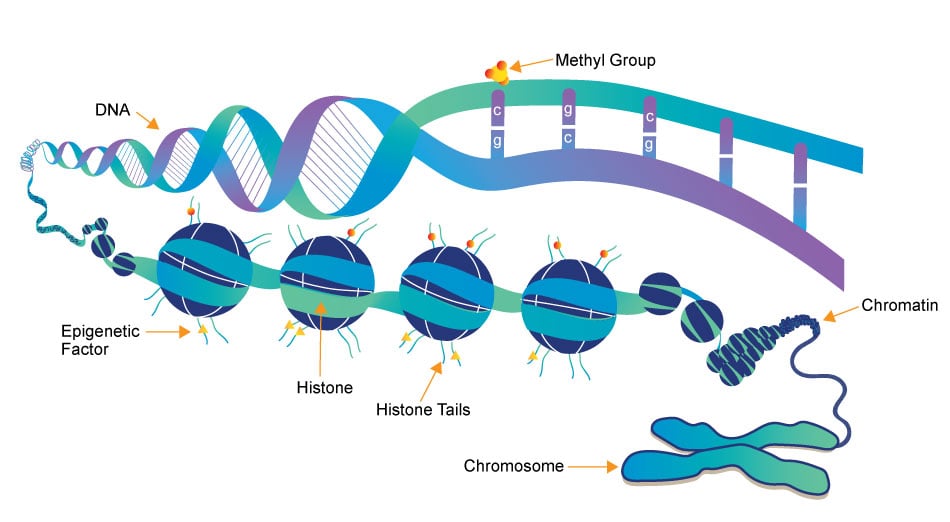
Epigenetics

Epigenetics research delves into the molecular mechanisms that control gene expression and cellular traits without altering the underlying DNA sequence. One crucial aspect of this field is the role of small molecules, which act as powerful regulators of epigenetic modifications. These small compounds, typically comprising a few dozen to a few hundred atoms, have emerged as essential tools in understanding and manipulating the epigenome.

  • DNA Methylation Inhibitors: Small molecules like 5-azacytidine and 5-aza-2'-deoxycytidine are DNA methyltransferase inhibitors. They block the addition of methyl groups to DNA, leading to DNA demethylation. This can reactivate silenced genes, potentially offering therapeutic avenues for conditions like cancer.
  • HDAC inhibitors: HDACs remove acetyl groups from histone proteins, contributing to gene repression. Small molecule HDAC inhibitors, such as Vorinostat and Romidepsin, can reverse this process by increasing histone acetylation, allowing genes to be more accessible for transcription. These inhibitors are being explored for cancer therapy and other conditions.
  • Histone Methyltransferase Inhibitors: Small molecules like GSK126 inhibit specific histone methyltransferases, affecting histone methylation patterns. This can alter gene expression, making them promising candidates for cancer and other diseases with epigenetic dysregulation.
  • RNA Modulators: Small molecules can also target non-coding RNAs involved in epigenetic regulation. For instance, small molecules called small interfering RNAs (siRNAs) can be designed to target and degrade specific long non-coding RNAs, influencing gene expression.
  • Epigenetic Reader Domain Inhibitors: These small molecules target proteins that recognize and bind to specific epigenetic marks. Examples include inhibitors of bromodomain-containing proteins (BET inhibitors), which can disrupt gene regulation by interfering with protein-DNA interactions.

Small molecules in epigenetics research not only provide insights into the fundamental biology of gene regulation but also hold immense promise for developing novel therapeutics. Their ability to selectively modulate specific epigenetic marks and pathways has led to ongoing clinical trials and drug development efforts for various diseases, including cancer, neurological disorders, and inflammatory conditions. Understanding and harnessing the power of these small molecules is at the forefront of modern epigenetics research, offering new hope for precision medicine and targeted therapies.


3 key components involved in the regulation of epigenetic modifications

Epigenetics Writer

Epigenetics writers are enzymes responsible for adding chemical marks or modifications to DNA or histone proteins. These marks include DNA methylation (addition of methyl groups to DNA) and histone modifications (such as acetylation, methylation, phosphorylation, etc.).

Epigenetics Reader

Function: Epigenetics readers are proteins that can recognize and bind to specific epigenetic marks on DNA or histones. These reader proteins interpret the epigenetic code and facilitate downstream cellular processes, such as gene activation or repression.

Epigenetics Eraser

Function: Epigenetics erasers are enzymes responsible for removing or reversing epigenetic marks on DNA or histones. This process allows for the dynamic regulation of gene expression and the resetting of epigenetic states during various stages of development and in response to environmental changes.

Items 2101-2150 of 2626

Page
per page
Set Descending Direction
Catalog No.
Product Name
Application
Product Information
Citations
  1. SIRT1 Activator

    SRT 1720 dihydrochloride is a selective activator of SIRT1, exhibiting an EC50 of 0.10 μM. This compound demonstrates lower activity toward SIRT2 and SIRT3, making it an important tool for investigating SIRT1-related biological pathways. Its ability to modulate SIRT1 activity is particularly relevant in studies of metabolism, aging, and neuroprotection.
  2. SMARCA2 PROTAC Degrader

    PROTAC SMARCA2 degrader-35 is a selective degrader targeting SMARCA2 with a DC50 potency of less than 0.1 μM. This compound exhibits significant anticancer activity by regulating cell proliferation and growth, primarily through mechanisms of cell cycle arrest and inhibition of DNA replication in SMARCA4-deleted cancer cells. It is a valuable tool for research focused on targeted protein degradation and its implications in cancer therapy.
  3. DNA/RNA Synthesi

    PROTAC WDR5 degrader 1 is a bifunctional degrader that selectively targets WDR5, promoting its proteasomal degradation via a VHL-type E3 ligase mechanism. This compound consists of a WDR5 ligand, a VHL ligand, and a PROTAC linker, facilitating the targeted degradation of WDR5 in cellular environments. Its distinct mechanism of action makes it a valuable tool for investigating WDR5-related biological pathways and their involvement in various diseases, including cancer and developmental disorders. Researchers can utilize this reagent for studies in targeted protein degradation and gene regulation.
  4. PIM-3 Inhibitor

    M-110 is a selective, ATP-competitive inhibitor of PIM kinases, prominently targeting PIM-3 with an IC50 of 47 nM. This compound exhibits inhibitory activity against PIM-1 and PIM-2 with IC50 values around 2.5 μM. M-110 has demonstrated efficacy in curtailing the proliferation of prostate cancer cell lines, exhibiting IC50 values ranging from 0.6 to 0.9 μM. This makes M-110 a valuable tool for studying PIM kinase signaling pathways and their role in cancer biology.
  5. Pim-2 Inhibitor

    HJ-PI01, a potent Pim-2 inhibitor, effectively induces apoptosis and autophagic cell death in cancer cells. This compound demonstrates significant anti-tumor activity in vivo, notably inhibiting tumor growth in MDA-MB-231 xenograft mouse models. HJ-PI01 serves as a valuable tool for cancer research, facilitating investigations into the therapeutic implications of Pim-2 inhibition.
  6. PIM Inhibitor

    Uzansertib is a potent, orally active pan-PIM kinase inhibitor that operates through ATP-competitive mechanisms, exhibiting IC50 values of 0.24 nM, 30 nM, and 0.12 nM for PIM1, PIM2, and PIM3, respectively. This compound demonstrates significant anti-proliferative activity across a range of hematologic tumor cell lines, making it a valuable tool for research in cancer biology and therapeutic development. Researchers can utilize Uzansertib to explore the roles of PIM kinases in tumorigenesis and potential treatment strategies.
  7. Pim-1/2 Kinase Inhibitor

    Pim-1/2 kinase inhibitor 1 is a selective inhibitor of Pim-1 and Pim-2 kinases, targeting their phosphorylation activity. This compound effectively disrupts the phosphorylation of key substrates, including 4E-BP1 and p27Kip1, which are crucial for cell cycle regulation and protein synthesis. Pim-1/2 kinase inhibitor 1 is primarily utilized in cancer research, particularly in studies focusing on the mechanisms underlying prostate cancer progression.
  8. PIM Inhibitor

    AZD1897 is a potent inhibitor of PIM1, PIM2, and PIM3 kinases, demonstrating IC50 values of less than 3 nM for each target. This compound exhibits significant anticancer activity, particularly in acute myeloid leukemia (AML) cells, where it shows a synergistic effect when used in combination with Capivasertib. The mechanism of action involves the inhibition of critical cellular pathways, including mTOR and MCL1, making AZD1897 a valuable tool for cancer research.
  9. Pim Inhibitor

    K00135 is a potent and selective inhibitor of PIM kinases, primarily targeting PIM1, PIM2, and PIM3. This compound demonstrates significant inhibition of cell survival and clonogenic growth in acute leukemia cells. Additionally, K00135 effectively reduces the phosphorylation of downstream targets of the PIM signaling pathway, making it a valuable tool for cancer research focusing on PIM kinase-related mechanisms.
  10. Pim/DAPK3 Inhibitor

    HS56 is an ATP-competitive dual inhibitor of Pim kinases and DAPK3, demonstrating Ki values of 0.26 μM for DAPK3, 0.208 μM for Pim-3, and over 100 μM for Pim-2 and Pim-1. This compound effectively inhibits LC20 phosphorylation and smooth muscle contraction, leading to a reduction in blood pressure in spontaneously hypertensive mouse models. HS56 is suitable for research investigating the mechanisms and potential treatments for hypertension.
  11. Pim-1 Kinase Inhibitor

    Pim-1 Kinase Inhibitor 13 is a selective inhibitor of Pim-1 kinase, exhibiting an IC50 of 4.41 μM. This compound is instrumental in the study of immunological processes and cancer biology, providing valuable insights into Pim-1's role in cell survival and proliferation. Its application in research may facilitate the development of targeted therapies for malignancies associated with aberrant Pim-1 activity.
  12. Pim Inhibitor

    DHPCC-9 is a selective inhibitor of Pim kinase, a critical regulator of cell survival and proliferation. This compound demonstrates potent biological activity in modulating cancer cell growth and has significant implications for cancer research, particularly in the investigation of therapeutic strategies targeting the Pim signaling pathway. Researchers can utilize DHPCC-9 to explore its effects on cellular responses and potential applications in developing anti-cancer therapies.
  13. Pim Inhibitor

    R8-T198wt is a cell-permeable peptide that functions as a Pim-1 kinase inhibitor. By targeting the carboxyl-terminal region of p27Kip1, it exhibits significant anti-tumor activity. This reagent is ideal for research applications involving cancer biology and cellular signaling pathways associated with cell cycle regulation and apoptosis.
  14. Pan-PIM Inhibitor

    GDC-0570 is a potent and selective pan-PIM inhibitor designed for oral administration. It exhibits pronounced antitumor activity and has shown synergistic effects when combined with Sotorasib in models of acquired KRAS-resistant non-small cell lung cancer (NSCLC). This compound serves as a valuable tool for investigating the role of PIM kinases in cancer biology and therapeutic resistance.
  15. PIM-1 Inhibitor

    PIM1-IN-7 is a potent inhibitor of the PIM-1 kinase, exhibiting an IC50 of 0.67 μM. This compound demonstrates significant cytotoxicity against HCT-116 and MCF-7 cancer cell lines, with IC50 values of 42.9 μM and 7.68 μM, respectively. Its ability to selectively inhibit PIM-1 makes it a valuable tool for investigating the role of this kinase in cancer biology and for exploring potential therapeutic strategies.
  16. Pim-1 Inhibitor

    Pim-1 kinase inhibitor 5 is a selective inhibitor of Pim-1 kinase, exhibiting an IC50 value of 0.61 μM. This compound demonstrates significant cytotoxicity across various cancer cell lines, including HepG2, MCF-7, PC3, and HCT-116, with IC50 values ranging from 6.95 to 20.19 μM. It serves as a valuable tool for researching the modulation of Pim-1 in cancer biology and therapeutic applications.
  17. PIM Inhibitor

    FD1024 is a potent PIM inhibitor with IC50 values of 1.96 nM, 38.9 nM, and 4.17 nM for PIM1, PIM2, and PIM3, respectively. This compound exhibits strong antiproliferative activity against various acute myeloid leukemia (AML) cell lines, showing effective concentrations of 0.16 μM, 0.12 μM, 1.05 μM, and 1.39 μM for EOL-1, MV-4-11, KG-1, and MOLM-16 cells. Additionally, FD1024 demonstrates significant antitumor efficacy in in vivo mouse models, making it a valuable tool for research into AML therapeutic strategies.
  18. PIM-1 Inhibitor

    PIM1-IN-6 is a potent inhibitor of Pim-1 kinase, exhibiting an IC50 of 0.60 μM. This compound demonstrates significant cytotoxic activity in HCT-116 and MCF-7 cancer cell lines, with IC50 values of 1.51 μM and 15.2 μM, respectively. PIM1-IN-6 holds promise for research applications in cancer biology, particularly in studies aimed at elucidating the role of Pim-1 in tumor proliferation and survival.
  19. Pim-1 Kinase Inhibitor

    10-DEBC is a selective inhibitor of Pim-1 kinase, demonstrating potent inhibitory activity with an IC50 of 1.28 μM. This compound plays a critical role in regulating cell proliferation and survival, making it a valuable tool for research in cancer biology and therapeutic interventions. Its specificity for Pim-1 kinase supports its use in studies exploring signal transduction pathways and the development of targeted cancer therapies.
  20. PIM1 Inhibitor

    PIM1-IN-4 is a selective inhibitor of PIM1 kinase, demonstrating potent activity in blocking PIM1-mediated signaling. In addition to PIM1, PIM1-IN-4 exhibits significant inhibition of several other kinases, including SGK-1, PKA, CaMK-1, GSK3β, and MSK1. This compound is valuable for investigating its role in cancer biology and therapeutic strategies targeting PIM1-related pathways.
  21. Pim-1 Inhibitor

    Pim-1 kinase inhibitor 3 (Compound H5) is a selective inhibitor of Pim-1 kinase, exhibiting an IC50 of 35.13 nM. This compound effectively modulates the activity of Pim-1, a serine/threonine kinase involved in cell growth and survival signaling pathways. It is valuable for studying the role of Pim-1 in cancer and other diseases where its dysregulation is implicated.
  22. Pim Inhibitor

    MNK/PIM-IN-1 is a dual inhibitor targeting MNK and PIM kinases, showcasing a favorable pharmacokinetic profile. This reagent exhibits significant antitumor activity and is applicable in studying the roles of MNK and PIM signaling pathways in cancer biology. It is an essential tool for researchers investigating the mechanisms of cell proliferation and survival in various malignancies.
  23. PIM1 Inhibitor

    NMS-P645 is a potent PIM1 inhibitor that exhibits anti-proliferative activity, particularly when used in combination with GDC-0941 in both TMPRSS2/ERG positive and negative prostate cancer cells. By reversing PIM1-induced pro-survival signals, NMS-P645 contributes valuable insights into the mechanisms underlying prostate cancer resistance and cell survival. This compound is suitable for research applications focused on prostate cancer treatment and the exploration of PIM1 signaling pathways.
  24. Pim-1 Kinase Inhibitor

    Pim-1 kinase inhibitor 4 is a potent inhibitor of Pim-1 kinase, with an inhibitory concentration (IC50) of 17.01 nM. This compound exhibits antioxidant activity and inhibits DPPH, contributing to its biological profile. Additionally, Pim-1 kinase inhibitor 4 induces apoptosis in PC-3 prostate cancer cells, demonstrating an IC50 of 16 nM for growth inhibition. This reagent is valuable for research focused on prostate cancer and cellular apoptosis mechanisms.
  25. Pim-2 Inhibitor

    PIM-IN-2 is a potent inhibitor of Pim-2 kinases, exhibiting an IC50 of 25 nM. This compound has demonstrated significant antiapoptotic properties and promotes cell survival, making it a valuable tool in cancer research. Its elevated expression in various human tumors positions PIM-IN-2 as a relevant reagent for studies on tumor biology and therapeutic strategies targeting the Pim kinase pathway.
  26. Pim-1 Inhibitor

    Pim-1 kinase inhibitor 6 is a selective inhibitor of Pim-1 kinase, demonstrating an IC50 value of 0.46 μM. This compound exhibits significant cytotoxic activity against various cancer cell lines, making it a valuable tool for cancer research. Its ability to target and inhibit Pim-1 kinase contributes to its potential applications in investigating therapeutic strategies for malignancies.
  27. Pim Inhibitor

    PIM-IN-4 is a potent inhibitor of Pim kinases, exhibiting Ki values of 2 nM, 3 nM, and 0.5 nM for Pim-1, Pim-2, and Pim-3, respectively. By inhibiting the phosphorylation of the pro-apoptotic protein Bad, PIM-IN-4 effectively induces apoptosis in leukemic cells. This compound is valuable for research into leukemia and related signaling pathways, contributing to the understanding of therapeutic strategies in hematological malignancies.
  28. PIM-1/PIM-2 Inhibitor

    Pim-1/2 kinase inhibitor 2 is a selective competitive inhibitor of PIM-1 and PIM-2 kinases, with IC50 values of 1.31 μM and 0.67 μM, respectively. This compound exhibits low cytotoxicity in normal human lung fibroblast Wi-38 cells while demonstrating potent anticancer activity against various cancer cell lines, including myeloid leukemia (NFS-60), liver (HepG-2), prostate (PC-3), and colon (Caco-2). It serves as a valuable tool for studying the therapeutic potential of PIM inhibition in cancer research.
  29. BAZ2A Bromodomain Inhibitor

    4-Chloro-N-methylpicolinamide is a selective inhibitor of the BAZ2A bromodomain, exhibiting a Kd of over 500 μM. This compound interacts through a weak hydrogen bond with the carbonyl oxygen of Pro1817, offering insights into bromodomain-targeted therapies. It is applicable in the study of invasive prostate cancer, contributing to research focused on cancer biology and therapeutic strategies.
  30. PB1(5)/SMARCA2/4 Inhibitor

    SGC-SMARCA-BRDVIII is a potent and selective inhibitor targeting SMARCA2/4 and PB1(5) with dissociation constants (Kds) of 35 nM, 36 nM, and 13 nM, respectively. This compound also demonstrates inhibitory activity against PB1(2) and PB1(3), with Kds of 3.7 μM and 2.0 μM, respectively. SGC-SMARCA-BRDVIII effectively inhibits adipogenesis in 3T3-L1 murine fibroblasts, making it a valuable tool for research in epigenetics and obesity-related studies.
  31. BRD4 Inhibitor

    Biotinylated-JQ1 is a biotinylated derivative of JQ1 that selectively inhibits BRD4 by binding with high affinity to its bromodomain. This compound exhibits significant anti-proliferative activity in MM1.S multiple myeloma cells, with an EC50 value of 0.4 μM. Biotinylated-JQ1 is suitable for research applications targeting BRD4-mediated pathways in cancer biology and epigenetic regulation studies.
  32. BRD9 Degradation Agent

    dBRD9 is a targeted proteolysis-tethering compound that selectively induces the degradation of BRD9. By enhancing bromodomain binding, dBRD9 demonstrates reduced binding activity across the entire BET family of proteins. This compound serves as a valuable tool for researchers studying the role of BRD9 in various biological processes and its implications in diseases such as cancer.
  33. BET Inhibitor

    Trotabresib is a reversible and orally active Bromodomain and Extra-Terminal (BET) inhibitor. It demonstrates significant inhibition of BET proteins, which play a crucial role in regulating gene expression associated with cancer progression. Trotabresib is primarily utilized in research focused on advanced solid tumors, providing insights into potential therapeutic strategies for tackling malignancies driven by aberrant transcriptional regulation.
  34. SMARCA4/SMARCA2/PBRM1 Inhibtor

    GNE-064 is a selective inhibitor targeting the bromodomains of SMARCA4, SMARCA2, and PBRM1. This compound exhibits an IC50 of 0.035 μM for SMARCA4 and an EC50 of 0.10 μM for SMARCA2, demonstrating potent inhibition. With binding affinities (Kd) of 0.01 μM, 0.016 μM, 0.018 μM, and 0.049 μM for SMARCA4, SMARCA2, and the two bromodomains of PBRM1 respectively, GNE-064 serves as an effective chemical probe for investigating chromatin regulation and related biological processes in research settings.
  35. BRD4 Inhibitor

    MS645 is a bivalent inhibitor targeting the bromodomains of BRD4 with a Ki value of 18.4 nM for BRD4-BD1/BD2. This compound effectively spatially constrains bivalent inhibition, leading to sustained repression of BRD4 transcriptional activity in solid tumor cells. MS645 is suitable for research applications exploring the regulation of gene expression and potential therapeutic strategies in oncology.
  36. PBRM1 Bromodomain Inhibitor

    PBRM1-BD2-IN-5 is a selective inhibitor targeting the bromodomain of the PBRM1 protein, demonstrating Kd values of 1.5 μM for PBRM1-BD2 and 3.9 μM for PBRM1-BD5. It exhibits an IC50 of 0.26 μM for PBRM1-BD2, effectively disrupting the interaction between PBRM1 and acetylated histone peptides within the PBAF complex in cell lysates. This compound is valuable for investigating the role of PBRM1 in cancer biology and may contribute to the development of novel anticancer therapeutics.
  37. Pan-BD2 BET Inhibitor

    GSK973 is a highly selective pan-BD2 bromodomain and extraterminal (BET) inhibitor that targets the second bromodomains of the BET protein family. It exhibits potent inhibitory activity with a pIC50 of 7.8 for BRD4 BD2 and notable selectivity, showing a 1600-fold preference for BRD4 BD2 over BRD4 BD1. Additionally, GSK973 demonstrates efficacy against BRD2 BD2, BRD3 BD2, and BRDT BD2, with pIC50 values ranging from 7.4 to 7.8. This compound is valuable for research applications focused on epigenetic regulation and BET protein functions in various disease models, including cancer.
  38. BET Inhibitor

    PROTAC BRD4 ligand-1 functions as a potent inhibitor of Bromodomain and Extra-Terminal (BET) proteins, targeting the BRD4 protein. This compound is utilized in research applications aimed at investigating BET inhibition and its implications in various cancers and inflammatory diseases. By facilitating the targeted degradation of BRD4, PROTAC BRD4 ligand-1 serves as a valuable tool for studying the role of BET proteins in gene regulation and cellular processes.
  39. BRD4 BD1 Inhibitor

    ZL0590 is a potent, orally bioavailable inhibitor of the bromodomain-containing protein 4 (BRD4) BD1 with an IC50 value of 90 nM for human BRD4 BD1. This compound demonstrates significant anti-inflammatory properties, effectively reducing mucosal inflammation in animal models of inflammatory bowel disease and restoring tissue architecture. ZL0590 is suitable for research applications targeting inflammatory diseases, particularly those associated with the gastrointestinal tract.
  40. BD2-Selective BET Inhibitor

    RVX-297 is a selective bromodomain inhibitor targeting the BD2 domain of BET proteins. This compound demonstrates potent inhibition with IC50 values of 0.08 μM for BRD2, 0.05 μM for BRD3, and 0.02 μM for BRD4 at the BD2 site. RVX-297 effectively suppresses inflammatory gene expression in various immune cell types and shows promise in models of acute inflammation and autoimmune disorders, making it a valuable tool for research in inflammatory diseases.
  41. BRD7/9 Inhibitor

    BRD7-IN-1 is a selective inhibitor of the bromodomain-containing protein 7 (BRD7) and bromodomain-containing protein 9 (BRD9). This compound effectively disrupts BRD7/9 interactions and exhibits notable biological activity with DC50 values of 4.5 nM and 1.8 nM, respectively. BRD7-IN-1 serves as a valuable tool for research focused on understanding the roles of BRD7 and BRD9 in cellular processes and is applicable in studies related to epigenetic regulation and cancer therapy.
  42. Molecular Glue BRD4 Degrader

    BRD4 degrader-1 is a monovalent, covalent molecular glue that specifically targets BRD4, a key regulator in various cellular processes. By engaging DCAF16, an E3 ubiquitin ligase, this compound facilitates the degradation of both long and short isoforms of BRD4 within the cellular context. Its mechanism of action makes BRD4 degrader-1 a valuable tool for research applications aimed at understanding and manipulating BRD4-related pathways in cancer and other diseases.
  43. BRD4 Degrader

    MMH1 is a novel BRD4 molecular glue degrader that effectively recruits the CUL4 and DCAF16 ligases to the second bromodomain of BRD4 (BRD4BD2). This targeted degradation mechanism allows for the selective reduction of BRD4 levels, which is crucial for studying its role in various biological processes. MMH1 is particularly useful in research applications focusing on cancer biology and epigenetic regulation, enabling the exploration of therapeutic strategies targeting BRD4-associated pathways.
  44. BRD4 Ligand

    BRD4 ligand 6 TFA is the trifluoroacetic acid (TFA) salt form of a potent BRD4 ligand, specifically designed for investigating the bromodomain and extraterminal (BET) family of proteins. This compound serves as a valuable building block for the synthesis of targeted protein degraders, including BRD4 PROTACs like PROTAC BRD4 Degrader-26. It is instrumental in research related to epigenetic regulation and cancer biology.
  45. BRD4 Degrader

    BRD4 degrader-3 is a selective bromodomain-containing protein 4 (BRD4) degrader, showcasing potent activity with IC50 values of 15.5 nM and 12.3 nM for BRD4-BD1 and BRD4-BD2, respectively. This compound employs the PROTAC technology to facilitate targeted degradation of BRD4. Additionally, it features an alkyne functional group that enables copper-catalyzed azide-alkyne cycloaddition (CuAAc), making it a valuable tool for chemical biology applications in studying BRD4-related pathways and functions.
  46. BRD9 PROTAC Degrader

    dBRD 9-A is a selective BRD9 PROTAC degrader that targets the E3 ubiquitin ligase CRBN for the near-complete degradation of BRD9. This compound disrupts BRD9 chromatin binding on a genome-wide scale, leading to downregulation of oncogenic transcriptional programs driven by SS18-SSX and the depletion of GBAF complex members from SS18-SSX complexes. dBRD 9-A also induces cell cycle arrest and promotes apoptosis in synovial sarcoma cells, making it a valuable tool for research focused on synovial sarcoma.
  47. PROTAC BRD4 Degrader

    TD-428 is a potent PROTAC designed to target and degrade the BRD4 protein via its connection to Cereblon ligands. With a DC50 value of 0.32 nM, TD-428 exhibits high specificity for BRD4 degradation. This compound combines TD-106, a ligand for CRBN, with JQ1, a BET inhibitor, facilitating effective degradation of BET proteins. TD-428 is valuable for research applications involving cancer biology and epigenetic regulation.
  48. BRD4/FKBP Binding Agent

    HLDA-221 is a non-covalent regulated induced proximity targeting agent (RIPTAC) that selectively binds to BRD4-BD1 upon pre-incubation with FKBP. This compound facilitates protein-protein interactions, making it a valuable tool for studying cellular signaling pathways and gene regulation. HLDA-221 has potential applications in cancer research, particularly in understanding the role of BRD4 in tumorigenesis and therapeutic targeting.
  49. YTH domain Inhibitor

    YTH-IN-1 is a pan-YTH domain inhibitor that targets various YTH domain-containing proteins. It exhibits IC50 values of 39 μM, 34 μM, 35 μM, 48 μM, and 30 μM for human YTHDF1, YTHDF2, YTHDF3, YTHDC1, and YTHDC2 respectively. This compound is utilized in research to explore the role of YTH domain proteins in RNA metabolism and epitranscriptomics, making it a valuable tool for studying gene regulation and cellular responses.
  50. BRD4 PROTAC Degrader

    L1BC8 is a BRD4 PROTAC degrader that exhibits significant anticancer activity through targeted degradation of the BRD4 protein. This compound functions as a drug-linker conjugate for antibody-drug conjugates (ADCs), enabling the synthesis of BRD4-degrader antibody conjugates. The resulting conjugates demonstrate potent, antigen-dependent BRD4 degradation and antiproliferative effects in cellular assays, making L1BC8 a valuable tool for cancer research and therapeutic development.

Items 2101-2150 of 2626

Page
per page
Set Descending Direction