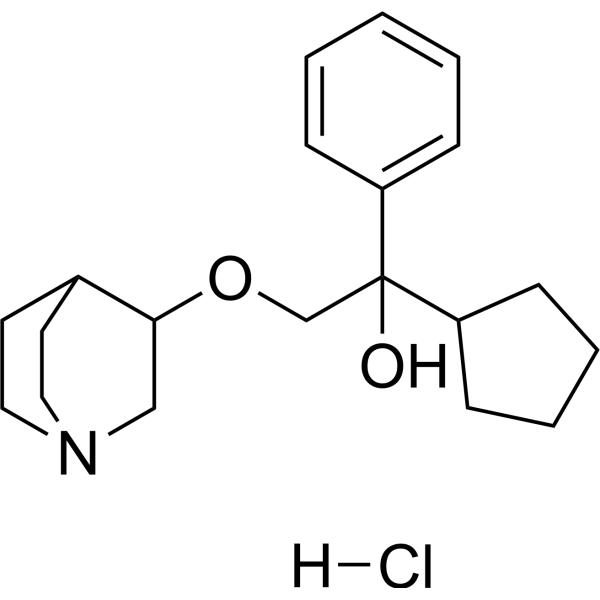
Penehyclidine hydrochloride (also known as Penequinine hydrochloride) is a selective anticholinergic agent that acts as an antagonist of muscarinic M1 and M3 receptors. It exerts anti-inflammatory effects by modulating immune signaling in lung tissue, notably through activation of the NF-κB pathway and inhibition of pro-inflammatory cytokine release.
In preclinical studies, Penehyclidine hydrochloride has been shown to alleviate pulmonary inflammation in rat models of chronic obstructive pulmonary disease (COPD), particularly under conditions of mechanical ventilation. These properties suggest its potential utility in managing respiratory inflammatory conditions and improving outcomes in mechanically ventilated patients with COPD.
Penehyclidine hydrochloride (also known as Penequinine hydrochloride) is a selective anticholinergic agent that acts as an antagonist of muscarinic M1 and M3 receptors. It exerts anti-inflammatory effects by modulating immune signaling in lung tissue, notably through activation of the NF-κB pathway and inhibition of pro-inflammatory cytokine release.
In preclinical studies, Penehyclidine hydrochloride has been shown to alleviate pulmonary inflammation in rat models of chronic obstructive pulmonary disease (COPD), particularly under conditions of mechanical ventilation. These properties suggest its potential utility in managing respiratory inflammatory conditions and improving outcomes in mechanically ventilated patients with COPD.
Product Information
Catalog Num
A24149
Formula
C20H30ClNO2
Molecular Weight
351.91
CAS Number
151937-76-7
SMILES
OC(C1CCCC1)(COC2CN3CCC2CC3)C4=CC=CC=C4.[H]Cl
Synonyms
Penequinine hydrochloride
Storage
Store lyophilized at -20ºC, keep desiccated. In lyophilized form, the chemical is stable for 36 months. In solution, store at -20ºC and use within 1 months to prevent loss of potency. Aliquot to avoid multiple freeze/thaw cycles.
This calculator helps you calculate mass of compound based on solution concentration, volume and molecular weight in a specific solution using the formula: