
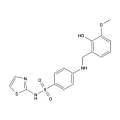
- Cat. No.
- A22517
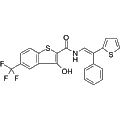
CAY10698
CAY10698 is an inhibitor of 12-LO with an IC50 value of 5.1 μM.
In stock
View Details
Search by product name, CAS, target or catalog number. Press Down Arrow to reach product suggestions, Tab to move between links, and Escape to close suggestions.
Lipoxygenase (LOX) inhibitors block enzymes that insert molecular oxygen into arachidonic acid and related fatty acids. 5-Lipoxygenase (5-LOX) starts leukotriene synthesis, while 12-LOX and 15-LOX form hydroxylated lipid mediators linked to inflammation and ferroptosis. In 1990, leukotriene synthesis in intact cells was shown to require 5-lipoxygenase-activating protein (FLAP), a membrane partner of 5-LOX. The category covers both points of attack on the leukotriene pathway. Zileuton inhibits 5-LOX directly, whereas MK 886 suppresses leukotriene biosynthesis by binding FLAP. PD146176 is a 15-LOX inhibitor that also appears in ferroptosis research, where lipid peroxidation drives cell death. Baicalein, a flavone from Scutellaria baicalensis roots, is a plant-derived lipoxygenase inhibitor used across several of these models.
CAY10698 is an inhibitor of 12-LO with an IC50 value of 5.1 μM.
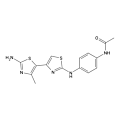
LXG6403 is a highly potent and irreversible lysyl oxidase (LOX) inhibitor that efficiently suppresses cellular LOX activity in MDA-MB-231 cells with an IC50 of 1.3 μM. It exhibits over 3-fold selectivity for LOX over LOXL2 and shows no inhibitory activity against LOXL1, making it a valuable tool for studying LOX-specific functions in cancer and fibrosis research.
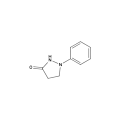
Phenidone is an orally active dual inhibitor of cyclooxygenase (COX) and lipoxygenase (LOX) pathways, exhibiting anti-inflammatory and immunomodulatory effects. It has been shown to ameliorate paralysis in rat models of experimental autoimmune encephalomyelitis (EAE), a model for multiple sclerosis. Phenidone also acts as a potent hypotensive agent in spontaneously hypertensive rats. Additionally, it has a long-standing application as a photographic developer due to its redox properties.
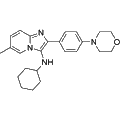
EP6 is a selective 5-Lipoxygenase (5-LO) inhibitor that exhibits potent anti-tumor activity. It effectively reduces the viability of various tumor cell lines while demonstrating a lack of mutagenic properties. This compound is valuable for research applications focused on cancer therapy and the modulation of inflammatory pathways.
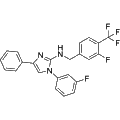
FerroLOXIN-1 is a potent inhibitor of the enzyme 15-lipoxygenase-2 (15LOX-2) that effectively reduces the production of pro-ferroptotic lipid species, specifically HOO-ETE-PE. This compound has demonstrated protective effects against RSL3-induced ferroptosis, making it a valuable tool in studying ferroptotic pathways. The selective interaction of FerroLOXIN-1 with the active site residues Y154, N155, and W158 of 15LOX-2 underscores its targeted mechanism of action, positioning it as a valuable reagent for research into lipid metabolism and ferroptosis.
Out of stock
All 3 sizes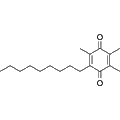
Synonyms: PTC857
Utreloxastat (PTC857) is a selective inhibitor of 15-lipoxygenase, capable of crossing the blood-brain barrier. This compound demonstrates a significant ability to reduce oxidative stress, inhibit the depletion of reduced glutathione, and prevent ferroptosis. Utreloxastat is particularly relevant in the research of neurodegenerative diseases associated with elevated oxidative stress and mitochondrial dysfunction, including conditions such as amyotrophic lateral sclerosis.
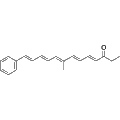
Asperenone is a potent inhibitor of 15-lipoxygenase (15-LOX), with an IC50 value of 0.3 mM, and effectively inhibits platelet aggregation at an IC50 of 0.23 mM. This compound also exhibits antifungal properties, demonstrating the ability to inhibit the growth of pathogenic fungi such as Ophiostoma crassivaginatum and O. piliferum. Asperenone is valuable for research in cardiovascular disease and antifungal therapy, providing a multifaceted approach to studying inflammatory processes and infection control.
Out of stock
All 3 sizes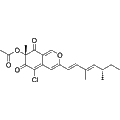
Sclerotiorin is a reversible uncompetitive inhibitor of soybean lipoxygenase-1 (LOX-1), with an IC50 value of 4.2 μM. This compound exhibits significant antioxidant activity by scavenging free radicals (ED50: 0.12 μM) and inhibiting nonenzymatic lipid peroxidation. Additionally, Sclerotiorin demonstrates antifungal properties and the ability to inhibit platelet aggregation. It can be isolated from the fermented broth of Penicillium frequentans, making it a valuable reagent for research in antifungal mechanisms and oxidative stress studies.
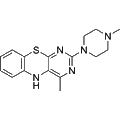
4-MMPB is a selective inhibitor of 15-lipoxygenase, exhibiting an IC50 of 18 μM. It demonstrates competitive inhibition with IC50 values of 19.5 μM for soybean 15-lipoxygenase and 19.1 μM for human 15-lipoxygenase-1. This compound may hold promise for research applications focused on prostate cancer, providing insights into the role of 15-lipoxygenase in tumor biology.
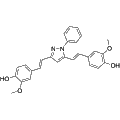
CNB-001 is a potent inhibitor of 5-lipoxygenase (5-LOX), demonstrating strong oral bioavailability. This compound effectively reduces 5-LOX expression and enhances proteasome activity, leading to the inhibition of soluble Amyloid-β accumulation and ubiquitinated protein aggregates. It also exhibits neuroprotective properties by inhibiting apoptosis and reactive oxygen species (ROS) production while stabilizing mitochondrial membrane potential. Additionally, CNB-001 addresses insulin resistance and enhances glucose uptake, making it valuable for research into inflammation, neurological disorders, and metabolic diseases such as Alzheimer's disease, stroke, and diabetes.
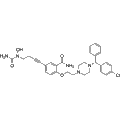
UCB-35440 is an orally active antagonist of the histamine H1 receptor and a selective inhibitor of 5-lipoxygenase. It demonstrates significant inhibition of leukotriene B4 (LTB4) formation in human whole blood, as well as a reduction in polymorphonuclear cell infiltration in mouse models. UCB-35440 also effectively inhibits histamine-induced bronchoconstriction and alleviates skin inflammation in guinea pig studies. This compound is suitable for research applications related to asthma and inflammatory skin conditions.
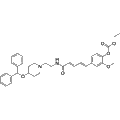
Linetastine is a potent, orally active inhibitor of 5-Lipoxygenase, an enzyme critical in the synthesis of leukotrienes. By inhibiting this pathway, Linetastine demonstrates significant antihistamine activity, effectively reducing leukotriene B4 and C4 release from calcium ionophore-stimulated human leukocytes. This compound is particularly useful in research applications focused on inflammatory processes and allergic responses, providing insights into the modulation of leukotriene-mediated pathways.
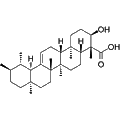
β-Boswellic acid, a potent inhibitor of 5-lipoxygenase (5-LO), is derived from the gum resin of Boswellia serrata. This compound exhibits significant anticancer, antioxidant, anti-inflammatory, and anti-arthritic properties. Its mechanism involves direct interaction with 5-LO or inhibition of its translocation, leading to reduced synthesis of DNA, RNA, and protein in human leukemia HL-60 cells, with IC50 values ranging from 0.6 to 7.1 μM. β-Boswellic acid holds potential for research into diabetes and inflammatory disorders, particularly those related to arthritis.
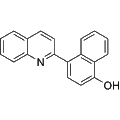
12R-LOX-IN-2 is a potent inhibitor of 12R-lipoxygenase (12R-LOX), demonstrating significant biological activity in the modulation of keratinocyte proliferation. This compound effectively inhibits imiquimod (IMQ)-induced hyperproliferation of psoriatic keratinocytes and suppresses colony formation. Additionally, 12R-LOX-IN-2 decreases protein levels of Ki67 and mRNA expression of IL-17A in IMQ-treated cells, making it a valuable reagent for research on psoriasis and related skin inflammatory conditions.
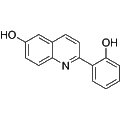
12R-LOX-IN-1 is a selective inhibitor of 12-lipoxygenase (12R-LOX), with an IC50 of 28.25 μM. This compound effectively reduces the hyper-proliferative state and colony-forming ability of Imiquimod-induced psoriatic keratinocytes. Additionally, 12R-LOX-IN-1 modulates key inflammatory markers by inhibiting the production of reactive oxygen species, Ki67, IL-17A, TNF-α, and IL-6. It is a valuable tool for antipsoriatic research and the investigation of related biological pathways.
Out of stock
All 3 sizes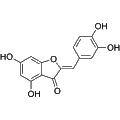
Aureusidin is a potent lipoxygenase inhibitor known for its significant antioxidant properties. It exhibits anti-inflammatory effects, making it a valuable compound for research focused on inflammatory pathways and oxidative stress responses. Aureusidin is applicable in studies investigating the modulation of lipoxygenase activity and its implications in various diseases.
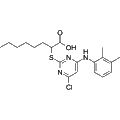
YS121 is a dual inhibitor targeting microsomal prostaglandin E2 synthase-1 (mPGES-1) and 5-lipoxygenase (5-LOX), with IC50 values of 3.4 μM and 6.5 μM, respectively. It demonstrates specific, reversible binding to mPGES-1, indicated by a KD of 10-14 μM. YS121 reduces PGE2 production in IL-1β-stimulated A549 cells with an EC50 of 12 μM and activates PPAR-α and PPAR-γ, with EC50 values of 1 μM and 3.6 μM, respectively. Additionally, YS121 exhibits significant anti-inflammatory effects in human whole blood and in vivo, making it a valuable tool for pleurisy research.
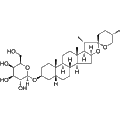
Timosaponin A1 is a natural steroidal saponin that acts as an inhibitor of 5-lipoxygenase (5-LO), cyclooxygenase-2 (COX-2), and dipeptidyl peptidase 4 (DPP-4), with IC50 values of 3.29 µM, 36.43 µM, and 33.25 µM, respectively. This compound exhibits anti-inflammatory properties and is relevant for research on conditions such as asthma and diabetes. Its inhibitory effects on key enzymes involved in inflammatory pathways make it a valuable tool for exploring therapeutic strategies in related biological studies.
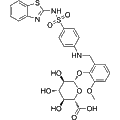
IMA-1 is an inhibitor of the interaction between arachidonic acid 12-lipoxygenase (ALOX12) and acetyl-CoA carboxylase 1 (ACC1). This compound has demonstrated significant efficacy in blocking the progression of diet-induced non-alcoholic steatohepatitis (NASH) in male mice and crab-eating monkeys, while not inducing hyperlipidemia. IMA-1 serves as a valuable tool for investigating the underlying mechanisms and potential treatments for NASH.
Out of stock
All 3 sizes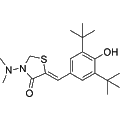
LY221068 is a potent inhibitor of iron-dependent lipid peroxidation and 5-lipoxygenase, exhibiting notable antioxidant properties. This compound demonstrates significant anti-inflammatory activity, particularly in preclinical models of arthritis, such as the Freund's Complete Adjuvant-induced arthritis model in rats, where it effectively reduces bone damage and paw swelling. LY221068 serves as a valuable tool for investigating inflammatory processes and potential therapeutic approaches in arthritis research.
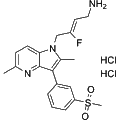
SNT-5382 is a potent lysyl oxidase (LOX) inhibitor, designed to disrupt the enzymatic activity of LOX, which plays a critical role in extracellular matrix remodeling. This compound demonstrates significant biological activity in inhibiting tumor progression and metastasis, making it a valuable tool for cancer research. SNT-5382 can be utilized in various studies aimed at understanding the implications of LOX in malignancies and assessing potential therapeutic strategies.
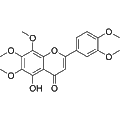
Synonyms: 5-Demethylnobiletin
5-O-Demethylnobiletin is an effective inhibitor of 5-lipoxygenase (5-LOX), exhibiting a potent IC50 of 0.1 μM without impacting COX-2 expression. This polymethoxyflavone, derived from Citrus jambhiri Lush., demonstrates notable anti-inflammatory properties by inhibiting leukotriene B4 (LTB4) production in rat neutrophils and elastase release in human neutrophils with an IC50 value of 0.35 μM. 5-O-Demethylnobiletin is valuable for research applications related to inflammation and leukotriene signaling pathways.
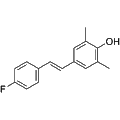
Synonyms: BI-L-239
Enofelast (BI-L-239) is a selective inhibitor of 5-lipoxygenase (5-LO) with an IC50 of 2.48 μM, effectively blocking calcium ionophore-induced leukotriene B4 (LTB4) production. Its ability to modulate lipid mediators makes it a valuable tool for studying inflammatory pathways and leukotriene signaling in various biological contexts. Enofelast is suitable for research applications investigating the role of 5-LO in diseases associated with inflammation and immune response.
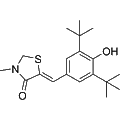
Synonyms: LY25684
LY256548 is a potent inhibitor of phospholipase A2, 5-lipoxygenase (5-LOX), and cyclooxygenase (COX), demonstrating significant anti-ischemic and anti-inflammatory properties. This compound effectively reduces leukotriene B4 production in response to A23187 stimulation. In preclinical models, LY256548 has shown efficacy in mitigating bone damage and paw swelling in rat models of Freund's complete adjuvant-induced arthritis (FCA), making it a valuable tool for research into inflammatory diseases and analgesic mechanisms.
L-652343 is a dual inhibitor of cyclooxygenase and lipoxygenase enzymes. It effectively inhibits the production of leukotriene B4 (LTB4) in isolated human polymorphonuclear leukocytes, demonstrating an IC50 value of 1.4 μM when challenged with Calcimycin. This compound is applicable in the study of inflammatory and immune diseases, providing insights into the mechanisms of these conditions and potential therapeutic interventions.
Out of stock
All 3 sizes