
- Cat. No.
- A11853
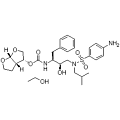
Darunavir Ethanolate
Synonyms: Prezista; TMC114
Darunavir Ethanolate (Prezista) is an HIV protease inhibitor.
In stock
View Details
Search by product name, CAS, target or catalog number. Press Down Arrow to reach product suggestions, Tab to move between links, and Escape to close suggestions.
Anti-infectives brings together compounds that act on bacteria, fungi and viruses in microbiology research. They are used to study microbial growth, drug resistance and host-pathogen interactions. Its seven subcategories are Antibiotic, Bacterial, Fungal, Mycobacterium tuberculosis, HIV (human immunodeficiency virus), Dengue Virus and Flavivirus. Antibacterial examples include the oxazolidinone linezolid, the carbapenems imipenem and meropenem, and the glycylcycline tigecycline. Bedaquiline, a diarylquinoline, and pretomanid, a nitroimidazole, are used in Mycobacterium tuberculosis research. Among the antivirals, nelfinavir inhibits HIV-1 protease, an enzyme required for viral maturation. Compounds for a single viral enzyme or virus, such as reverse transcriptase or influenza virus, also have their own Microbiology categories.
Synonyms: Prezista; TMC114
Darunavir Ethanolate (Prezista) is an HIV protease inhibitor.
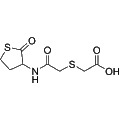
Synonyms: RV 144
Erdosteine functions as a bacterial inhibitor by inhibiting lipopolysaccharide (LPS)-induced activation of NF-κB. This compound exhibits muco-modulatory, anti-bacterial, anti-inflammatory, and antioxidant properties. Erdosteine is primarily utilized in research applications focused on respiratory disorders and inflammation, supporting the study of therapeutic interventions in these areas.
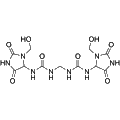
Imidazolidinyl urea functions as an antibacterial preservative by releasing formaldehyde through its decomposition. It exhibits broad-spectrum antibacterial activity, effectively inhibiting the growth of both gram-negative and gram-positive bacteria, as well as limiting yeast and mold proliferation. Additionally, it can be utilized in the formulation of multifunctional hydrogels for managing infectious wounds. Notably, Imidazolidinyl urea may also induce non-histaminergic allergic responses via the activation of MRGPRX2 in mast cells.
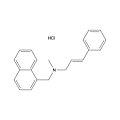
Synonyms: AW105843; SN105843; Naftin
Naftifine is an allylamine antifungal drug for the topical treatment of tinea pedis, tinea cruris, and tinea corporis (fungal infections).
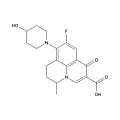
Synonyms: Nadixa
Nadifloxacin is a cell-permeable, synthetic, broad-spectrum fluoroquinolone antibiotic that inhibits the growth of both gram-positive and gram-negative microbes.
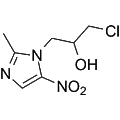
Synonyms: Ro 7-0207
Ornidazole is a nitroimidazole derivative primarily used as an antibacterial agent. It demonstrates anti-trichomonad activity and is effective against a range of anaerobic bacteria in vitro. Additionally, Ornidazole inhibits the Sonic hedgehog (Shh) signaling pathway and exhibits antitumor properties, making it a valuable tool in the investigation of conditions such as Crohn’s disease.
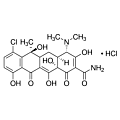
Chlortetracycline hydrochloride is a specific and potent calcium ionophore antibiotic.
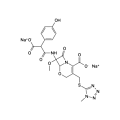
Synonyms: LY 127935
Moxalactam is a synthetically derived, structurally unique beta-lactam antibiotic. Its antimicrobial activity encompasses a wide spectrum and includes some strains of pseudomonal species.
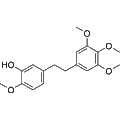
Erianin is a bacterial inhibitor that exhibits potent anticancer properties by inhibiting indoleamine 2,3-dioxygenase (IDO). This activity contributes to its ability to suppress tumor angiogenesis, making it a valuable compound in cancer research. Erianin's dual role as an antipyretic and analgesic further broadens its potential applications in therapeutic studies.
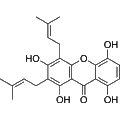
Gartanin is a natural xanthone derived from mangosteen, primarily functioning as an antifungal agent. It exhibits significant antioxidant and anti-inflammatory properties, alongside neuroprotective and antineoplastic effects. Gartanin has been shown to induce cell cycle arrest and autophagy, while also inhibiting migration in human glioma cells, making it a valuable compound for research in cancer and fungal pathologies.
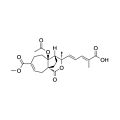
Pseudolaric Acid B, a natural diterpenoid compound isolated from the root and trunk bark of Pseudolaric kaempferi Gordon, has anti-fungal and anti-fertility properties.
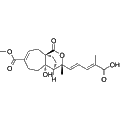
Pseudolaric Acid C is a bioactive diterpenoid derived from the root bark of Pseudolarix amabilis, primarily acting as a fungal inhibitor. It exhibits significant antifungal activity, making it a valuable tool for research focused on fungal pathogenesis and the development of antifungal therapies. Its ability to disrupt fungal growth positions it as an important compound in the study of mycology and related fields.
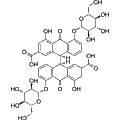
Sennoside A is an anthraquinone glycoside derived from the senna plant (Cassia angustifolia) that exhibits inhibitory activity against HIV-1. This compound demonstrates an IC50 value of 3.8 μM in preventing HIV-1 replication and effectively inhibits HIV-1 reverse transcriptase-related DNA polymerase and ribonuclease H, with IC50 values of 1.9 μM and 5.3 μM, respectively. Sennoside A serves as a valuable tool in antiviral research, particularly in studies of HIV-1 replication mechanisms and potential therapeutic interventions.
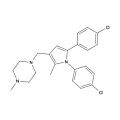
BM212 is inhibitory to drug-resistant mycobacteria and also exerted bactericidal activity against intracellular bacilli residing in the U937 human histiocytic lymphoma cell line.
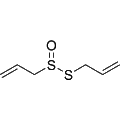
Synonyms: Diallyl thiosulfinate
Allicin (diallyl thiosulfinate) is a potent bacterial inhibitor derived from garlic extracts, primarily responsible for the antimicrobial properties of garlic. It demonstrates significant antimicrobial activity against a wide range of microorganisms, including antibiotic-resistant strains, making it a valuable reagent for research in microbiology and pharmacology. Allicin is commonly utilized in studies investigating natural antibacterial compounds and their mechanisms of action.
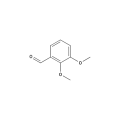
Synonyms: o-Veratraldehyde; 5,6-Dimethoxybenzaldehyde
2,3-Dimethoxybenzaldehyde (o-Veratraldehyde) is a benzaldehyde analog, with high antifungal activity (MIC=2.5 mM) .
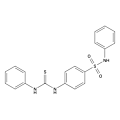
LED209 is a potent small molecule inhibitor of bacterial receptor QseC, is a potent prodrug that is highly selective for QseC.
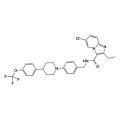
Synonyms: IAP6; Q-203
Q203 (IAP6) is a midazopyridine amide compound. Q203 is active against Mycobacterium tuberculosis H37Rv with an MIC50 of 2.7 nM in culture broth medium.
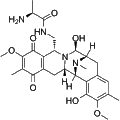
Safracin B, a tetrahydroisoquinoline (THIQ) alkaloid, is a naturally occurring antibiotic from Pseudomonas fluorescens. Safracin B exhibits broad spectrum antimicrobial and strong antitumor activities.
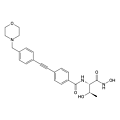
CHIR-090 is a potent, slow, tight-binding inhibitor of the LpxC deacetylase. It binds to E. coli LpxC with a Ki of 4.0 nM.
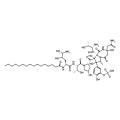
WF-11899A is a novel antifungal lipopeptide antibiotics were isolated from the culture broth of Coleophoma empetri F-11899
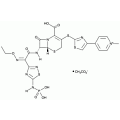
Synonyms: TAK-599
Ceftaroline fosamil is a cephalosporin antibacterial.
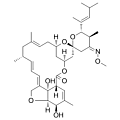
Synonyms: ProHeart 6; CL301423; Cydectin
Moxidectin is an anthelmintic drug which kills parasitic worms (helminths), and is used for the prevention and control of heartworm and intestinal worms.
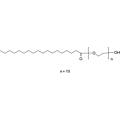
Synonyms: POES
Polyoxyethylene stearate (POES) is a non-ionic emulsifying agent.
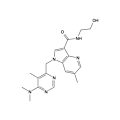
DprE1-IN-2 (compound 18) is a potent DprE1 inhibitor with an IC50 of 28 nM. DprE1-IN-2 has antituberculosis effect.