
- Cat. No.
- A17155
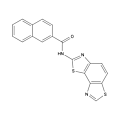
KIN-1148
KIN-1148, a small-molecule IRF3 agonist, functions as an influenza vaccine adjuvant by modulating the antiviral immune response.
In stock
View Details
Search by product name, CAS, target or catalog number. Press Down Arrow to reach product suggestions, Tab to move between links, and Escape to close suggestions.
Anti-infectives brings together compounds that act on bacteria, fungi and viruses in microbiology research. They are used to study microbial growth, drug resistance and host-pathogen interactions. Its seven subcategories are Antibiotic, Bacterial, Fungal, Mycobacterium tuberculosis, HIV (human immunodeficiency virus), Dengue Virus and Flavivirus. Antibacterial examples include the oxazolidinone linezolid, the carbapenems imipenem and meropenem, and the glycylcycline tigecycline. Bedaquiline, a diarylquinoline, and pretomanid, a nitroimidazole, are used in Mycobacterium tuberculosis research. Among the antivirals, nelfinavir inhibits HIV-1 protease, an enzyme required for viral maturation. Compounds for a single viral enzyme or virus, such as reverse transcriptase or influenza virus, also have their own Microbiology categories.
KIN-1148, a small-molecule IRF3 agonist, functions as an influenza vaccine adjuvant by modulating the antiviral immune response.
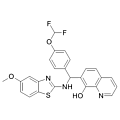
KIN1408 is an antiviral small molecule compound, as agonists of the RLR pathway.
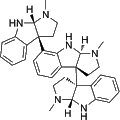
Hodgkinsine B acts as an opioid receptor agonist, providing notable analgesic effects and demonstrating anti-injurial properties. Additionally, it functions as an NMDA receptor antagonist and possesses antiviral, antibacterial, and antifungal activities. This compound is valuable for research applications focused on pain management, neuroprotection, and antimicrobial studies.
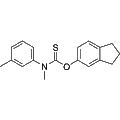
Tolindate is a potent PXR agonist, exhibiting an EC50 value of 8.3 μM. This compound demonstrates significant antifungal activity, making it a valuable tool for research in pharmacology and toxicology. Its ability to modulate the pregnane X receptor (PXR) may provide insights into drug metabolism and interactions with xenobiotics.
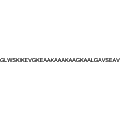
Synonyms: Dermaseptin b2
Adenoregulin, also known as Dermaseptin b2, is an antimicrobial peptide antibiotic that targets a broad spectrum of microorganisms. It exhibits activity against both Gram-negative and Gram-positive bacteria, as well as yeast and fungi. Additionally, Adenoregulin enhances the binding of agonists to the A1 adenosine receptor, making it valuable for research applications in microbiology and pharmacology.
Out of stock
All 3 sizes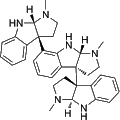
Hodgkinsine is an opioid receptor agonist that exhibits significant analgesic properties while also functioning as an NMDA receptor antagonist. This compound demonstrates anti-injurial effects, making it relevant for pain management research. Additionally, Hodgkinsine possesses antiviral, antibacterial, and antifungal activities, highlighting its potential utility in various pharmacological studies.
Out of stock
All 3 sizes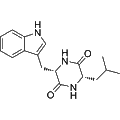
Synonyms: Cyclo(Leu-Trp)
Cyclo(L-leucyl-L-tryptophyl) is a cyclic dipeptide known for its antibacterial and antifungal properties. It functions as a melatonin receptor agonist, contributing to its diverse biological activities. This reagent is often utilized in studies focusing on microbial inhibition and its potential therapeutic applications in infectious diseases.
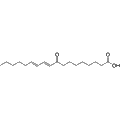
Synonyms: 9-oxo-ODA
(10E,12E)-9-Oxo-10,12-octadecadienoic acid (9-oxo-ODA) serves as an antifungal agent and is recognized for its role as a PPARα agonist. Isolated from the basidiomycete Gomphus floccosus, it enhances fatty acid oxidation through PPARα activation, thereby inhibiting triglyceride accumulation. This compound is suitable for research applications focused on metabolic processes and fungal inhibition.
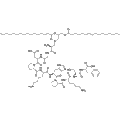
FSL-1 is a bacterial-derived agonist of toll-like receptor 2/6 (TLR2/6). It exhibits immunostimulatory activity that enhances resistance against experimental Herpes Simplex Virus Type 2 (HSV-2) infection. This compound is valuable for research applications focused on innate immunity and the development of therapeutic strategies for viral infections.
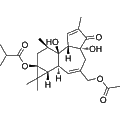
12-Deoxyphorbol-13-isobutyrate-20-acetate is a diterpene ester that functions as a selective agonist of protein kinase C (PKC). It effectively activates PKC to facilitate the phosphorylation of troponin I and troponin T, contributing to key regulatory pathways in cardiac function. Additionally, this compound has been shown to induce dermal irritation and necrosis in murine models while demonstrating no cocarcinogenic activity. Furthermore, 12-Deoxyphorbol-13-isobutyrate-20-acetate exhibits inhibitory effects on the growth of Aspergillus carbonarius, making it valuable for research in heart failure, cardiomyopathies, and fungal infections.
Out of stock
All 3 sizes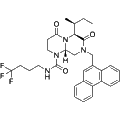
ZG297 is an agonist of Staphylococcus aureus ClpP (SaClpP) with an EC50 of 0.26 μM. This compound effectively degrades SaFtsZ and inhibits bacterial cell division, demonstrating potent antistaphylococcal activity against S. aureus 8325-4 and MRSA strains, with a minimum inhibitory concentration (MIC) ranging from 0.063 to 256 μg/mL. Additionally, ZG297 has shown efficacy in anti-infectious applications in mouse models, making it a valuable tool for research in antibiotic development.
Out of stock
All 3 sizes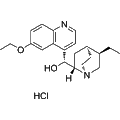
Synonyms: Optochin hydrochloride
Ethylhydrocupreine hydrochloride is a quinine derivative recognized for its antimicrobial properties, particularly against Streptococcus pneumoniae. Additionally, it exhibits antimalarial activity against Plasmodium falciparum, with an IC50 of 25.75 nM. This compound acts as an agonist for Gallus gallus taste 2 receptors (ggTas2r1, ggTas2r2, and ggTas2r7), making it valuable for research in microbiology and pharmacology.
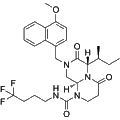
ZY39 is an agonist of SaClpP that enhances the enzymatic hydrolysis of both SaClpP and HsClpP in vitro. Its efficacy has been demonstrated by the inhibition of Staphylococcus aureus growth, leading to a significant reduction in bacterial load within organs and ascites in mouse peritonitis and zebrafish infection models. Additionally, ZY39 improves the survival rates of animals in these models, making it a valuable tool for research on Staphylococcus aureus infections, particularly in peritonitis studies.
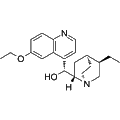
Synonyms: Optochin
Ethylhydrocupreine is a quinine derivative that serves as an effective antimicrobial agent targeting Streptococcus pneumoniae. In addition to its antibacterial properties, it also exhibits antimalarial activity against Plasmodium falciparum, demonstrating an IC50 of 25.75 nM. Furthermore, Ethylhydrocupreine acts as an agonist for Gallus gallus taste 2 receptors (ggTas2r1, ggTas2r2, and ggTas2r7), making it valuable for various research applications in microbiology and pharmacology.
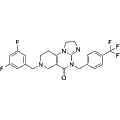
ClpP Agonist 1 targets Staphylococcus aureus ClpP (SaClpP) with an EC50 of 1.44 μM, showcasing Kd values of 2.95 μM and 18 μM as determined by isothermal titration calorimetry and bio-layer interferometry, respectively. This compound effectively reduces bacterial load, diminishes the infected area, and enhances histopathological outcomes in mouse models of skin infections. ClpP Agonist 1 is particularly relevant for research focused on methicillin-resistant Staphylococcus aureus (MRSA) skin infections.
Out of stock
All 3 sizes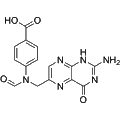
Synonyms: Formylpteroic acid
Rhizopterin is a bacterial agonist that plays a critical role in promoting plant growth by facilitating the synthesis of rhizobactin in folate-deficient synthetic media. Its unique mechanism enhances nutrient availability and supports the growth of beneficial rhizobacteria. This reagent is valuable for research applications in microbiology, plant biology, and the study of plant-microbe interactions.
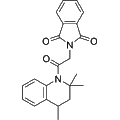
ML-SA1 is a selective agonist of TRPML channels, promoting lysosomal acidification and enhancing protease activity, which leads to the inhibition of Dengue virus 2 (DENV2) and Zika virus (ZIKV). The compound exhibits IC50 values of 8.3 μM for DENV2 RNA and 52.99 μM for ZIKV RNA. Additionally, ML-SA1 stimulates autophagy, making it a valuable tool for research into broad-spectrum antiviral strategies.
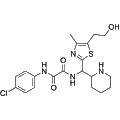
NBD-10007 is a CD4 agonist that specifically targets HIV-1. It demonstrates significant anti-HIV-1 viral activity, making it a valuable reagent for studying HIV pathogenesis and testing potential therapeutic interventions. Its unique mechanism of action may provide insights into CD4 receptor modulation and immune responses in HIV infection research.
Out of stock
All 3 sizes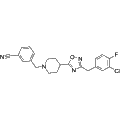
SL44 is a potent agonist of human caseinolytic protease P (HsClpP), demonstrating an EC50 of 1.30 μM. It effectively inhibits LM3 cell proliferation with an IC50 of 3.1 μM and induces apoptosis in hepatocellular carcinoma (HCC) cells by promoting the degradation of respiratory chain complex subunits. In vivo studies indicate SL44 exhibits significant antitumor efficacy in mouse models while maintaining a favorable safety profile (LD50=400 mg/kg). Additionally, SL44 shows promising pharmacokinetic properties in rat models, making it a valuable tool for cancer research.