






Epigenetics
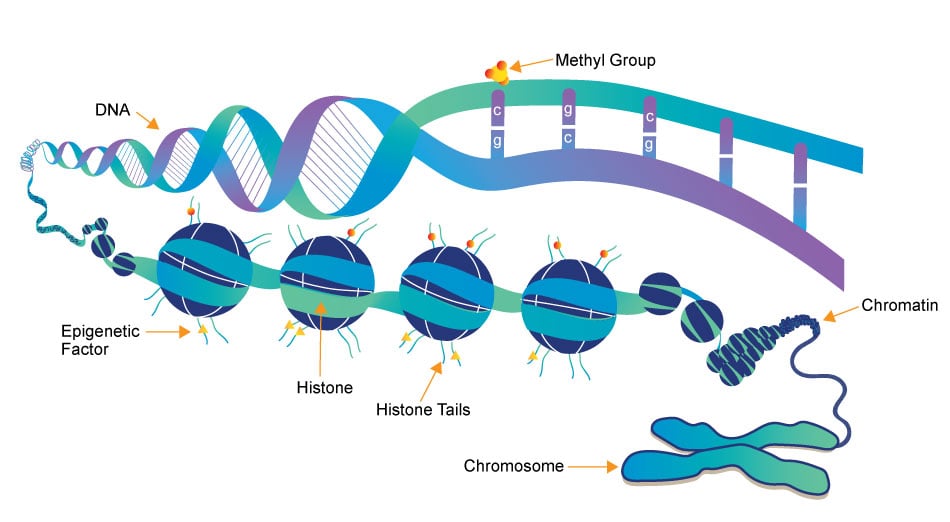
Epigenetics research delves into the molecular mechanisms that control gene expression and cellular traits without altering the underlying DNA sequence. One crucial aspect of this field is the role of small molecules, which act as powerful regulators of epigenetic modifications. These small compounds, typically comprising a few dozen to a few hundred atoms, have emerged as essential tools in understanding and manipulating the epigenome.
- DNA Methylation Inhibitors: Small molecules like 5-azacytidine and 5-aza-2'-deoxycytidine are DNA methyltransferase inhibitors. They block the addition of methyl groups to DNA, leading to DNA demethylation. This can reactivate silenced genes, potentially offering therapeutic avenues for conditions like cancer.
- HDAC inhibitors: HDACs remove acetyl groups from histone proteins, contributing to gene repression. Small molecule HDAC inhibitors, such as Vorinostat and Romidepsin, can reverse this process by increasing histone acetylation, allowing genes to be more accessible for transcription. These inhibitors are being explored for cancer therapy and other conditions.
- Histone Methyltransferase Inhibitors: Small molecules like GSK126 inhibit specific histone methyltransferases, affecting histone methylation patterns. This can alter gene expression, making them promising candidates for cancer and other diseases with epigenetic dysregulation.
- RNA Modulators: Small molecules can also target non-coding RNAs involved in epigenetic regulation. For instance, small molecules called small interfering RNAs (siRNAs) can be designed to target and degrade specific long non-coding RNAs, influencing gene expression.
- Epigenetic Reader Domain Inhibitors: These small molecules target proteins that recognize and bind to specific epigenetic marks. Examples include inhibitors of bromodomain-containing proteins (BET inhibitors), which can disrupt gene regulation by interfering with protein-DNA interactions.
Small molecules in epigenetics research not only provide insights into the fundamental biology of gene regulation but also hold immense promise for developing novel therapeutics. Their ability to selectively modulate specific epigenetic marks and pathways has led to ongoing clinical trials and drug development efforts for various diseases, including cancer, neurological disorders, and inflammatory conditions. Understanding and harnessing the power of these small molecules is at the forefront of modern epigenetics research, offering new hope for precision medicine and targeted therapies.
3 key components involved in the regulation of epigenetic modifications
Epigenetics Writer
Epigenetics writers are enzymes responsible for adding chemical marks or modifications to DNA or histone proteins. These marks include DNA methylation (addition of methyl groups to DNA) and histone modifications (such as acetylation, methylation, phosphorylation, etc.).
Epigenetics Reader
Function: Epigenetics readers are proteins that can recognize and bind to specific epigenetic marks on DNA or histones. These reader proteins interpret the epigenetic code and facilitate downstream cellular processes, such as gene activation or repression.
Epigenetics Eraser
Function: Epigenetics erasers are enzymes responsible for removing or reversing epigenetic marks on DNA or histones. This process allows for the dynamic regulation of gene expression and the resetting of epigenetic states during various stages of development and in response to environmental changes.
-
Brd4 degrader
BRD4 degrader AT1 is a highly selective Brd4 degrader based on PROTAC technology, with a Kd of 44 nM for Brd4BD2 in cells. -
Sirt2 degrader
PROTAC Sirt2 Degrader-1 is a SirReal-based PROTAC, acts as a Sirt2 degrader, composed of a highly potent and isotype-selective Sirt2 inhibitor, a linker, and a bona fide cereblon ligand for E3 ubiquitin ligase. -
BET degrader
PROTAC BET Degrader-1 is a potent BET degrader based on PROTAC, decreasing BRD2, BRD3, and BRD4 protein levels at low concentration. -
PROTAC BRD9 degrader
PROTAC BRD9 Degrader-1 is a lead PROTAC BRD9 chemical degrader (IC50=13.5 nM), which can be used as a selective probe useful for the study of BAF complex biology. -
PROTAC CBP/p300 Degrader
CBPD-409 is an orally active PROTAC degrader targeting CBP/p300, with a DC₅₀ of 0.2–0.4 nM. It shows potent antiproliferative activity in AR⁺ prostate cancer cell lines (VCaP, LNCaP, 22Rv1) with IC₅₀ values of 1.2–2.0 nM and demonstrates significant antitumor efficacy. -
PROTAC CBP/p300 degrader
JET-209 is a potent PROTAC degrader targeting CBP and p300, with DC₅₀ values of 0.05 nM and 0.2 nM, respectively. It is composed of lenalidomide, a linker, and the bromodomain inhibitor GNE-207. JET-209 is a valuable tool for cancer research involving epigenetic regulation. -
PROTAC SMARCA2/SMARCA4 degrader
AU-15330 is a PROTAC degrader targeting the SWI/SNF chromatin remodeling ATPase subunits SMARCA2 and SMARCA4. It effectively suppresses tumor growth in prostate cancer xenograft models and enhances the therapeutic efficacy of the AR antagonist enzalutamide. AU-15330 also induces remission in castration-resistant prostate cancer models, demonstrating strong antitumor activity with a favorable safety profile. -
SMARCA2/SMARCA4/PBRM1 Degrader
AU-24118 is an orally bioavailable PROTAC degrader targeting the mSWI/SNF chromatin remodeling complex ATPases SMARCA2 and SMARCA4, as well as PBRM1. It offers a powerful approach for modulating epigenetic regulation and holds promise for the treatment of cancers driven by alterations in SWI/SNF complex components.
