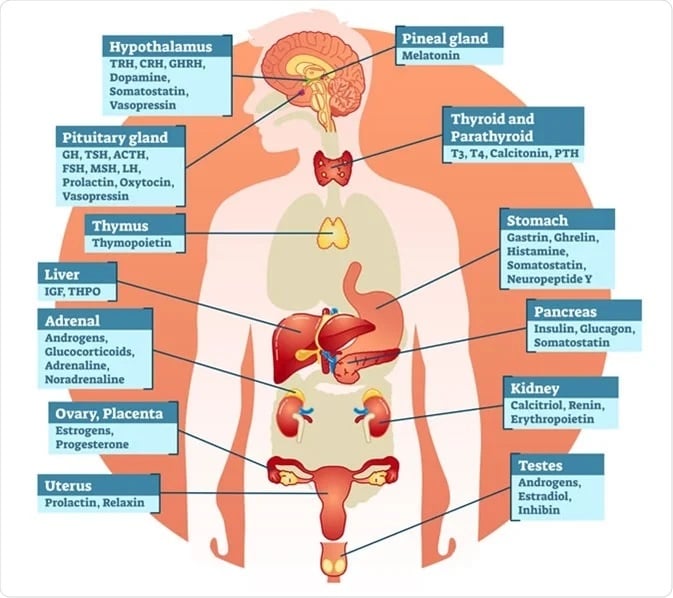
Small molecules play a pivotal role in Endocrinology Research. These are low molecular weight compounds that have a significant impact on the endocrine system, hormones, and their receptors. Here are some key aspects of how small molecules are involved in this field:
Hormone Mimetics and Inhibitors: Small molecules are used to develop synthetic compounds that mimic the actions of hormones or inhibit their effects. For example, drugs like metformin for diabetes management and selective estrogen receptor modulators (SERMs) for breast cancer treatment are used to either mimic or block hormonal activity.
Receptor Modulation: Small molecules can bind to hormone receptors and modulate their activity. This is crucial in developing drugs that target specific hormone receptors, like the use of small molecule agonists and antagonists to regulate thyroid hormone receptors.
Metabolism Regulation: Endocrinology research often focuses on metabolism and how hormones like insulin regulate it. Small molecules are employed to understand and develop drugs targeting enzymes involved in metabolism, such as glucagon-like peptide-1 (GLP-1) agonists for diabetes treatment.
Steroid Hormone Production: Small molecules may be utilized to influence the production of steroid hormones in the adrenal glands or gonads. This is essential for conditions like Cushing's syndrome or polycystic ovary syndrome (PCOS).
Hormone Assays: In laboratory research, small molecules are used as tracers or markers in hormone assays. For instance, small molecule fluorophores can be attached to antibodies to detect hormone levels in blood samples.
Drug Development: Endocrinology research relies on small molecules as potential drug candidates. Researchers design and test small molecules for their effectiveness in modulating hormonal pathways, with the goal of developing new therapies for endocrine disorders. In summary, small molecules are indispensable tools in Endocrinology Research, enabling scientists to better understand the endocrine system's intricacies and develop novel treatments for a wide range of hormonal disorders and conditions. Their versatility and specificity make them valuable assets in advancing our knowledge of endocrinology and improving patient care.
Nestoron is a 19-norprogesterone derivative and steroidal progestin which is used as a hormonal contraceptive; a high-affinity agonist of the progesterone receptor.
SR1078 is an agonist of retinoic acid receptor-related orphan receptors (ROR) RORα/γ; increases transcription of RORα target genes; thought to increase p53 stability.
SR3335 is a selective RORα synthetic ligand, directly binds to RORα, but not other RORs, and functions as a selective partial inverse agonist of RORα in cell-based assays.
Tanaproget is a novel nonsteroidal progesterone receptor agonist which can bind to the PR from various species with a higher relative affinity than reference steroidal progestins.
AEZS-108 is a peptide agonist of the gonadotropin releasing hormone-1 receptor (GnRH-1R) that is conjugated to the anthracycline antibiotic doxorubicin with potential antineoplastic activity.
AR-231453 is a potent and selective small molecule agonis of GPR119 that enhances glucose dependent insulin secretion and glucagon like peptide-1 (GLP-1) release.
PSN632408 is an optimized agonist of GPR119 receptors that shows similar potency to OEA at both recombinant mouse and human GPR119 receptors, exhibiting EC50 values of 5.6 and 7.9 uM, respectively.
AMG 837 is a potent GPR40 agonist (EC50=13 nM) with a superior pharmacokinetic profile and robust glucose-dependent stimulation of insulin secretion in rodents.