






Epigenetics
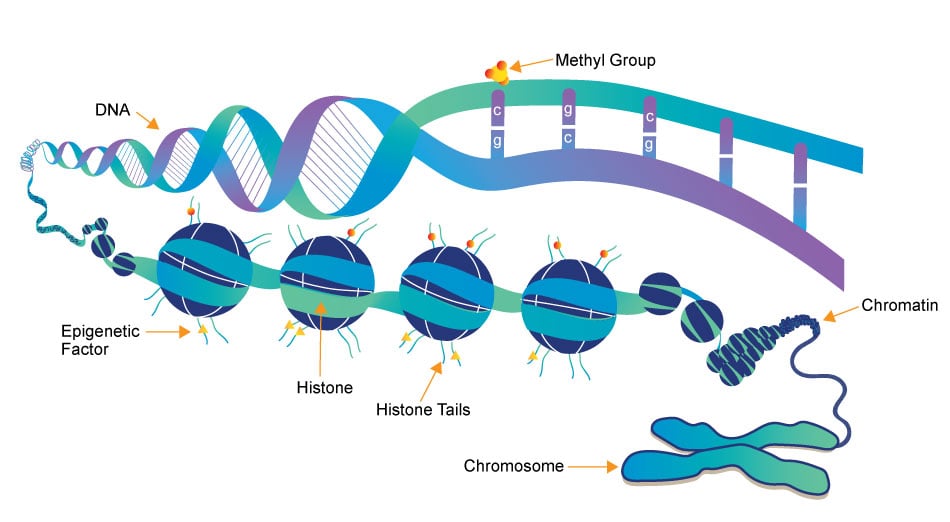
Epigenetics research delves into the molecular mechanisms that control gene expression and cellular traits without altering the underlying DNA sequence. One crucial aspect of this field is the role of small molecules, which act as powerful regulators of epigenetic modifications. These small compounds, typically comprising a few dozen to a few hundred atoms, have emerged as essential tools in understanding and manipulating the epigenome.
- DNA Methylation Inhibitors: Small molecules like 5-azacytidine and 5-aza-2'-deoxycytidine are DNA methyltransferase inhibitors. They block the addition of methyl groups to DNA, leading to DNA demethylation. This can reactivate silenced genes, potentially offering therapeutic avenues for conditions like cancer.
- HDAC inhibitors: HDACs remove acetyl groups from histone proteins, contributing to gene repression. Small molecule HDAC inhibitors, such as Vorinostat and Romidepsin, can reverse this process by increasing histone acetylation, allowing genes to be more accessible for transcription. These inhibitors are being explored for cancer therapy and other conditions.
- Histone Methyltransferase Inhibitors: Small molecules like GSK126 inhibit specific histone methyltransferases, affecting histone methylation patterns. This can alter gene expression, making them promising candidates for cancer and other diseases with epigenetic dysregulation.
- RNA Modulators: Small molecules can also target non-coding RNAs involved in epigenetic regulation. For instance, small molecules called small interfering RNAs (siRNAs) can be designed to target and degrade specific long non-coding RNAs, influencing gene expression.
- Epigenetic Reader Domain Inhibitors: These small molecules target proteins that recognize and bind to specific epigenetic marks. Examples include inhibitors of bromodomain-containing proteins (BET inhibitors), which can disrupt gene regulation by interfering with protein-DNA interactions.
Small molecules in epigenetics research not only provide insights into the fundamental biology of gene regulation but also hold immense promise for developing novel therapeutics. Their ability to selectively modulate specific epigenetic marks and pathways has led to ongoing clinical trials and drug development efforts for various diseases, including cancer, neurological disorders, and inflammatory conditions. Understanding and harnessing the power of these small molecules is at the forefront of modern epigenetics research, offering new hope for precision medicine and targeted therapies.
3 key components involved in the regulation of epigenetic modifications
Epigenetics Writer
Epigenetics writers are enzymes responsible for adding chemical marks or modifications to DNA or histone proteins. These marks include DNA methylation (addition of methyl groups to DNA) and histone modifications (such as acetylation, methylation, phosphorylation, etc.).
Epigenetics Reader
Function: Epigenetics readers are proteins that can recognize and bind to specific epigenetic marks on DNA or histones. These reader proteins interpret the epigenetic code and facilitate downstream cellular processes, such as gene activation or repression.
Epigenetics Eraser
Function: Epigenetics erasers are enzymes responsible for removing or reversing epigenetic marks on DNA or histones. This process allows for the dynamic regulation of gene expression and the resetting of epigenetic states during various stages of development and in response to environmental changes.
-
BRD9 Degrader
PROTAC BRD9 Degrader-7 is a selective BRD9-targeting PROTAC that induces BRD9 degradation through the ubiquitin-proteasome pathway, demonstrating a DC50 of 1.02 nM. This compound effectively inhibits cell proliferation in MV4-11 acute myeloid leukemia cells, making it a valuable tool for research in hematologic malignancies and related disorders. Its capacity to modulate BRD9 levels positions it as a promising candidate for studies aimed at understanding the role of this protein in cancer biology. -
BRD9 Inhibitor
GNE-375 is a highly selective inhibitor of BRD9, exhibiting an IC50 of 5 nM. It demonstrates more than 100-fold selectivity for BRD9 compared to BRD4, TAF1, and CECR2. GNE-375 effectively reduces the binding of BRD9 to chromatin, making it a valuable tool for studies of chromatin regulation and the role of BRD9 in epigenetic modulation. This compound is ideal for research applications involving cancer biology and cellular differentiation pathways. -
BRD4 Inhibitor
BRD4 Inhibitor-20 is a selective inhibitor of bromodomain protein 4 (BRD4), targeting both the BD1 and BD2 domains with IC50 values of 19 nM and 28 nM, respectively. This compound exhibits significant anti-proliferative effects in various cancer cell lines, making it useful for studying the role of BRD4 in oncogenesis. BRD4 Inhibitor-20 is particularly applicable in research focused on colon cancer and other malignancies associated with dysregulated BRD4 activity. -
BRD4 Inhibitor
dBRD4-BD1 is a selective BRD4 inhibitor that effectively induces degradation of the BRD4 protein, exhibiting a DC50 value of 280 nM (Dmax=77%). This compound not only selectively diminishes BRD4 levels but also promotes the upregulation of BRD2 and BRD3 protein levels, making it a valuable tool for studying the role of bromodomain proteins in cellular processes. Its low cytotoxicity profile compared to other BRD4 inhibitors highlights its potential for use in various research applications, including cancer biology and epigenetic regulation studies. -
PLK1/BRD4 Inhibitor
PLK1/BRD4-IN-3 is a selective dual inhibitor targeting bromodomain 4 (BRD4) and polo-like kinase 1 (PLK1). This compound effectively inhibits BRD4-BD1, PLK1, and BRDT-BD1, exhibiting IC50 values of 0.059 µM, 0.127 µM, and 0.245 µM, respectively. PLK1/BRD4-IN-3 can be employed in research applications focused on cancer biology, particularly in studies investigating cell proliferation and transcriptional regulation. -
SMARCA2/SMARCA4 Degrader
G-6599 is a monovalent degrader targeting SMARCA2 and SMARCA4, known for its role in regulating chromatin remodeling. This compound covalently binds to a specific cysteine residue in the E3 ligase FBXO22, facilitating the formation of a ternary complex with SMARCA2 and SMARCA4, leading to their efficient degradation through the ubiquitin-proteasome pathway. G-6599 is relevant for research in androgen-dependent prostate cancer and mutant non-small cell lung cancer, providing valuable insights into therapeutic interventions. -
BRD4 Ligand
PROTAC BRD4-binding moiety 1 is a ligand specifically designed to target BRD4 for degradation. This compound facilitates the formation of a PROTAC by linking to a cereblon ligand, effectively promoting the degradation of BRD4 through the cellular ubiquitin-proteasome pathway. Additionally, it contains an alkyne group, enabling it to participate in copper-catalyzed azide-alkyne cycloaddition (CuAAc) reactions, making it a versatile reagent for click chemistry applications in chemical biology research. -
SMARCA2 Degrader
YDR1 is a potent SMARCA2 degrader that functions as a PROTAC, exhibiting a DC50 of 7.7 nM. This compound is particularly relevant for research into SMARCA4 mutant cancers, facilitating targeted degradation of SMARCA2. It offers valuable insights into the molecular mechanisms underlying these cancers and aids in the development of novel therapeutic strategies. -
PROTAC BRD4 Degrader
CCW 28-3 is a PROTAC that specifically targets BRD4 for degradation through a proteasome- and RNF4-dependent mechanism. This compound facilitates the targeted removal of BRD4, a critical regulator of gene expression linked to various cancers. Its application in research includes studying the role of BRD4 in transcriptional regulation and therapeutic interventions aimed at modulating oncogenic pathways. -
CREB-CBP Complex Inhibitor
Naphthol AS-MX phosphate is an inhibitor of the CREB-CBP transcription factor complex, functioning to disrupt its activity. This compound exhibits significant antitumor effects against lung cancer cells, demonstrating an IC50 value of 3.701 μmol/L for inhibiting cell proliferation, as well as reducing colony formation and anchorage-independent growth in soft agar assays. Naphthol AS-MX phosphate serves as a valuable tool for research on KRAS-mutated lung cancer, particularly in instances characterized by poor chemotherapy resistance and unfavorable prognoses. -
BET Inhibitor
I-BET787 is an orally active inhibitor of bromodomain and extraterminal (BET) proteins, specifically targeting BRD4 with pIC50 values of 7.1 for BD1 and 5.9 for BD2. This compound exhibits anti-inflammatory properties in murine models, making it a valuable tool for studying inflammatory pathways and the role of BET proteins in various diseases. I-BET787 is utilized in research focused on cancer, cardiovascular diseases, and autoimmune disorders. -
PROTAC BRD4 Degrader
PROTAC BRD4 Degrader-9 is a bifunctional degrader targeting the BRD4 protein through a ligase-dependent mechanism using von Hippel-Lindau. It exhibits potent biological activity, effectively degrading BRD4 in PC3 prostate cancer cells with a DC50 of 0.86 nM when conjugated with STEAP1 antibodies and 7.6 nM with CLL1 antibodies. This compound is valuable for research into targeted protein degradation and therapeutic strategies against BRD4-mediated oncogenic processes. -
CBP/p300 PROTAC Degrader
Thalidomide-NH-CBP/p300 ligand 2 is a PROTAC-based degrader that targets the CBP and p300 proteins. This compound facilitates the selective degradation of these transcriptional coactivators, which are implicated in various cancers and other diseases. Its application in research includes the elucidation of the roles of CBP and p300 in transcriptional regulation and therapeutic development for conditions influenced by these proteins. -
PBRM1 Bromodomain Inhibitor
PBRM1-BD2-IN-2 is a selective inhibitor targeting the bromodomain of the polybromo-1 (PBRM1) protein. With a binding affinity characterized by a Kd of 9.3 μM and an IC50 of 1.0 μM, this compound exhibits potent inhibitory activity against PBRM1-BD2. PBRM1-BD2-IN-2 is suitable for research focused on cancer biology and the investigation of epigenetic regulation mechanisms in tumorigenesis. -
BET Inhibitor
Zavabresib is a potent inhibitor of bromodomain and extraterminal domain (BET) proteins. It exhibits significant anticancer activity, particularly in prostate cancer, demonstrated by IC50 values of 0.043 and 0.034 μM against LNCaP and 22Rv1 cell lines, respectively. This compound is a valuable tool for investigating the role of BET inhibition in cancer biology and therapeutic development. -
BRD4 Binder
Naringenin triacetate is a flavonoid compound that serves as a potent binder to the bromodomain protein BRD4, specifically targeting its first bromodomain (BRD4 BD1). This compound demonstrates strong binding affinity as evidenced by multiple crystal structure analyses. Due to its ability to modulate BRD4 activity, Naringenin triacetate is valuable for research applications focused on epigenetic regulation, cancer therapy, and various signaling pathways. -
BRD4 PROTAC
cis-MZ 1 is a negative control compound for MZ 1, acting as a PROTAC that targets BRD4. This compound serves as a valuable tool in research to assess the specificity and efficacy of BRD4-targeted PROTACs. Its primary application lies in studies focused on the modulation of protein levels and the exploration of therapeutic strategies in diseases associated with BRD4 activity. -
PLK1/BRD4 Inhibitor
PLK1/BRD4-IN-2 is a dual inhibitor targeting both Polo-like kinase 1 (PLK1) and the bromodomain of BRD4, with an IC50 of 40 nM and 28 nM, respectively. This compound is valuable for research into cancer therapeutics and epigenetic regulation, demonstrating potential in studies focused on cell proliferation and transcriptional control. Its ability to simultaneously inhibit these key oncogenic pathways positions PLK1/BRD4-IN-2 as a crucial tool for advancing cancer research and drug discovery initiatives. -
PROTAC BRD4 Degrader
PROTAC BRD4 Degrader-2 is a proteolysis-targeting chimera (PROTAC) that selectively targets BRD4 and Cereblon. With an IC50 of 14.2 nM against the BRD4 BD1 domain, this compound effectively induces proteasomal degradation of BRD4. It is valuable for research applications investigating the role of BRD4 in transcription regulation, cancer biology, and other diseases associated with aberrant gene expression. -
BRD4/AR Degrader
K2-B4-5e is an E3 ligase KLHDC2-based degrader targeting BRD4 and the androgen receptor (AR). This compound effectively induces rapid and robust degradation of BET family proteins and AR within cellular environments. K2-B4-5e holds potential for applications in research focused on cancer biology and androgen signaling pathways. -
PROTAC BRD4BD1L94V Degrader
XY-06-007 is a selective and potent bump-and-hole (B&H) PROTAC that degrades BRD4BD1L94V. It exhibits a degradation concentration (DC50) of 10 nM at 6 hours, effectively targeting BRD4BD1L94V without degrading off-target proteins. With favorable pharmacokinetic properties, XY-06-007 is suitable for in vivo studies and serves as a valuable tool for research into BRD4-related pathways and therapeutic applications. -
BET Inhibitor
BET-IN-14 is a potent pan BET inhibitor with an IC50 of 5.35 nM, designed to inhibit bromodomain and extraterminal (BET) proteins. It exhibits significant anti-cancer activity, making it a valuable tool for cancer research. Its application spans various studies investigating the role of BET proteins in tumorigenesis and the development of targeted cancer therapies. -
BET Inhibitor
ET-JQ1-OH is a selective BET inhibitor that specifically targets bromodomain-containing protein 4 (Brd4). This compound serves as an effective ligand in the design and development of PROTACs, facilitating the targeted degradation of Brd4 and enhancing research in epigenetic regulation and cancer biology. Its applications extend to studies investigating the role of BET proteins in various diseases, providing a valuable tool for researchers in drug discovery and therapeutic advancements. -
BRD4 Ligand
BRD4 ligand 6 is a selective BRD4 ligand that plays a crucial role in the development of BRD4-targeted PROTACs. It serves as a key building block for synthesizing PROTAC BRD4 Degrader-26, contributing to the advancement of research in targeted protein degradation and cancer therapies. This compound facilitates investigations into the inhibition of BRD4-related pathways, supporting studies focused on gene expression modulation and therapeutic interventions in oncological contexts. -
BRD4 Inhibitor
BRD4 Inhibitor-24 is a selective inhibitor of the bromodomain-containing protein 4 (BRD4). It exhibits significant antitumor activity, demonstrated by IC50 values of 33.7 μM against MCF7 cells and 45.9 μM against K652 cells. This compound is valuable for research exploring the role of BRD4 in cancer biology and therapeutic development. -
BRD4 Inhibitor
TAT-PiET-PROTAC is a BRD4 inhibitor designed as a proteolysis-targeting chimera (PROTAC) that incorporates the cell-penetrating peptide TAT-PiET. This compound effectively reduces the levels of BRD4 and JMJD6, demonstrating significant inhibition of cell proliferation. TAT-PiET-PROTAC is particularly relevant for investigating endocrine resistance in ERα-positive breast cancer cells, making it a valuable tool for cancer research. -
BRD4 Bromodomain Inhibitor
iBRD4-BD1 diTFA is a selective inhibitor of the BRD4 bromodomain, demonstrating potent inhibitory activity with an IC50 of 12 nM. This compound is valuable for research on inflammation and oncology, particularly in studies aimed at understanding the role of BRD4 in gene regulation and cancer progression. Its specificity and efficacy make it a useful tool for exploring therapeutic strategies targeting the BRD4 pathway. -
BRD7/9 Inhibitor
(2S,3R)-LP99 is a highly selective inhibitor of BRD7 and BRD9, exhibiting a KD of 99 nM for BRD9. This compound effectively disrupts the binding of BRD7 and BRD9 to acetylated histones both in vitro and in cellular environments. (2S,3R)-LP99 is instrumental for research into the regulatory roles of BRD7 and BRD9 in pro-inflammatory cytokine secretion, making it a valuable tool for studies investigating inflammation and epigenetic regulation. -
BET Inhibitor
(+) -JQ-1-aldehyde is an aldehyde derivative of the BET inhibitor (+)-JQ1, specifically targeting the BET bromodomains. This compound serves as a crucial precursor for the synthesis of PROTACs, facilitating the targeted degradation of proteins associated with various cancers and other diseases. Its application in chemical biology research advances the understanding of epigenetic regulation and therapeutic development. -
BRD4 Inhibitor
OXFBD04 is a selective inhibitor of BRD4 with an IC50 of 166 nM. This compound acts as a potent ligand for the BET bromodomain, also exhibiting modest affinity for the CREBBP bromodomain. OXFBD04 demonstrates significant anti-cancer activity, making it a valuable tool for research in cancer biology and therapeutic development targeting epigenetic regulation. -
BRD4 Ligand
BRD4 Inhibitor-13 is a selective ligand targeting the bromodomain-containing protein 4 (BRD4). It exhibits potent inhibitory activity against BRD4, making it a valuable tool for investigating its role in cancer and inflammation. This compound is of particular interest in research focused on epigenetic regulation and potential therapeutic strategies for various diseases. -
BET Inhibitor
FT001 is a selective inhibitor of bromodomain and extraterminal (BET) proteins. It exhibits significant anti-proliferative activity against MV-4-11 leukemia cells, making it a valuable tool for cancer research. FT001 can facilitate studies aimed at understanding the role of BET proteins in tumorigenesis and exploring potential therapeutic strategies for hematological malignancies. -
SMARCA2 PROTAC Degrader
SMD-3236 is a SMARCA2 PROTAC degrader that effectively induces the degradation of the SMARCA2 protein through proteasome- and ubiquitin-dependent mechanisms, achieving a DC50 of 0.5 nM and Dmax of 98%. It demonstrates an IC50 of 42.2 nM against human SMARCA2, providing significant growth inhibition in SMARCA4-deficient cancer cells. SMD-3236 has shown profound and sustained depletion of SMARCA2 in tumor tissues and suppresses tumor growth in relevant xenograft models. This reagent is valuable for research focusing on SMARCA4-deficient cancers, including melanoma, non-small cell lung cancer, and acute myeloid leukemia. -
PROTAC BRD4 Degrader
PROTAC BRD4 Degrader-10 is a proteolysis-targeting chimera (PROTAC) designed to selectively degrade the BRD4 protein via recruitment of the von Hippel-Lindau (VHL) E3 ligase. This compound exhibits significant biological activity in degrading BRD4 in PC3 prostate cancer cells, demonstrating effective DC50 values of 1.3 nM when conjugated with STEAP1 antibodies and 18 nM with CLL1 antibodies. This reagent is valuable for studying the role of BRD4 in cancer biology and exploring targeted degradation strategies in therapeutic applications. -
BET Bromodomains Inhibitor
I-BET282E is a selective pan-inhibitor of all eight BET bromodomains, effectively targeting BRD2, BRD3, and BRD4 with pIC50 values ranging from 6.4 to 7.7. This compound demonstrates potent inhibition and selectivity over other bromodomain-containing proteins, making it a valuable tool for investigating the role of BET proteins in cellular processes. I-BET282E is suited for research applications in cancer biology and epigenetic regulation. -
BRPF Bromodomain Inhibitor
GSK9311 hydrochloride is a bromodomain inhibitor targeting BRPF proteins, specifically designed as a less active analogue of GSK6853 for use as a negative control in research. It exhibits inhibitory activity against the BRPF bromodomain, with pIC50 values of 6.0 for BRPF1 and 4.3 for BRPF2. This compound is valuable for studies investigating the role of bromodomain interactions in cellular processes and for validating the effects of more potent bromodomain inhibitors. -
BRD4 D1 Inhibitor
BRD4 D1-IN-1 is a selective inhibitor of the BRD4 D1 domain, demonstrating an IC50 of less than 0.092 µM and an affinity of 18 nM. This compound exhibits over 500-fold selectivity for BRD4 D1 compared to BRD2 D1 and BRD4 D2, as determined by isothermal titration calorimetry (ITC). BRD4 D1-IN-1 is primarily used in research related to cancer and inflammatory diseases, providing insights into the role of BRD4 in transcriptional regulation. -
BRD2/3/4 Inhibitor
I-BET151 dihydrochloride is a selective inhibitor of the bromodomain and extraterminal (BET) family, targeting BRD2, BRD3, and BRD4 with pIC50 values of 6.1, 6.3, and 6.6, respectively. This compound effectively disrupts the interaction between BET proteins and acetylated lysines, leading to a reduction in transcriptional activity of key oncogenes. I-BET151 dihydrochloride is primarily utilized in cancer research and studies related to inflammatory diseases, making it a valuable tool for elucidating the role of BET proteins in various biological processes. -
BRD4 Inhibitor
BRD4 Inhibitor-23 is a selective inhibitor targeting Bromodomain-containing protein 4 (BRD4), demonstrating potent inhibition with IC50 values of 6.21 nM for BRD4 BD-1 and 1.44 nM for BRD4 BD-2. This compound is valuable for studying the role of BRD4 in various cellular processes, including transcriptional regulation and cell cycle progression. Its applications extend to research in cancer biology and epigenetic regulation, making it a powerful tool for exploring therapeutic interventions. -
BRD9 Degrader
BRD9 Degrader-4 is a bifunctional molecular glue that selectively targets and degrades BRD9 protein, exhibiting a DC50 of ≤25 nM. This compound demonstrates significant anti-cancer activity, making it a valuable tool for research in cancer biology and therapeutics. Its ability to modulate BRD9 levels provides a unique approach for investigating BRD9's role in tumorigenesis and potential therapeutic applications. -
BRD4 PROTAC Ligand
(S)-JQ-35-Boc is a selective BRD4 PROTAC ligand that facilitates the synthesis of BRD4 targeted degraders, specifically RAJQ14. This compound plays a key role in research applications focused on cancer, providing a mechanism to explore the therapeutic potential of targeted protein degradation. Its use in the generation of RAJQ14 enables investigations into novel strategies for cancer treatment through the modulation of BRD4 activity. -
BRD9 degrader
PROTAC BRD9 Degrader-6 is a highly effective degrader targeting BRD9, exhibiting an IC50 of 0.13 nM. This compound selectively induces proteolysis of BRD9, facilitating the study of diseases associated with the BAF complex. It is a valuable tool for researchers investigating the role of BRD9 in various biological contexts and its potential therapeutic applications. -
BPTF Bromodomain Inhibitor
(S)-GSK1379725A is a selective inhibitor of the bromodomain and PHD finger containing transcription factor (BPTF) with a Kd of 2.8 μM. This compound demonstrates specificity for BPTF and does not significantly inhibit BRD4 bromodomain. Additionally, (S)-GSK1379725A exhibits antimalarial activity, making it a valuable tool for studying transcriptional regulation and potential therapeutic applications against malaria. -
EP300/CBP Inhibitor
EP300/CBP-IN-2 is a potent inhibitor of the EP300 and CBP histone acetyltransferases, targeting the regulation of gene expression involved in cancer biology. This compound demonstrates significant biological activity in vivo, making it a valuable tool for investigating the role of these targets in tumorigenesis and potential therapeutic interventions. Its applications extend to cancer research, exploring novel strategies for epigenetic modulation in cancer treatment. -
BET Inhibitor
BET-IN-9 is a Bromodomain and Extra-Terminal (BET) protein inhibitor that disrupts the interaction between BET proteins and acetylated lysines. This compound exhibits significant biological activity in blocking transcriptional regulation mediated by BET proteins. BET-IN-9 is utilized in research applications investigating cancer biology, inflammation, and other diseases associated with aberrant gene expression. -
BRD4-BD1 Inhibitor
BRD4-BD1-IN-1 is a selective inhibitor of the BRD4-BD1 interaction, exhibiting an IC50 value of 38.20 μM. This compound disrupts the binding of bromodomain-containing protein 4 to acetylated lysines, thereby modulating transcriptional regulation. It is valuable for research into the role of BRD4 in cancer and other diseases, making it a useful tool for understanding epigenetic mechanisms and developing novel therapeutic strategies. -
SMARCA2/4 PROTAC Degrader
PROTAC SMARCA2/4-degrader-18 is a dual-target PROTAC degrader that selectively degrades the catalytic subunits SMARCA2 and SMARCA4 of the SWI/SNF complex. It exhibits potent degradation activity with DC50 values of less than 100 nM in A549 cells for SMARCA2 and MV411 cells for SMARCA4. This reagent is useful for investigating the functional roles of SMARCA2 and SMARCA4 in cellular processes and may provide new insights into therapeutic strategies targeting chromatin remodeling in cancer research. -
BRD PROTAC Degrader
PROTAC BRD4 Degrader-26 is a photo-regulated PROTAC designed to selectively degrade BRD4 through a photocleavable linker. This compound achieves an impressive 80% degradation of BRD4 at a concentration of 1 μM, demonstrating significant potency. The degradation process can be controlled by UV light, allowing for precise temporal regulation of BRD4 levels. It is an essential tool for researchers investigating the role of BRD4 in various biological pathways and its potential as a therapeutic target. -
SMARCA2 Degrader
PROTAC SMARCA2/4-degrader-10 targets the selective degradation of SMARCA2, exhibiting a DC50 value of less than 100 nM. This compound serves as a valuable tool in cancer research, facilitating studies on tumor biology and the therapeutic potential of targeting the BRG1/BRM-associated factor complex. The design incorporates a ligand linked to a VHL ligand, enhancing the efficacy of the degrader in cellular environments. -
BRD4 Inhibitor
BRD4 Inhibitor-31 is a potent inhibitor of the bromodomain-containing protein 4 (BRD4), exhibiting inhibitory constants (Kis) of 0.234 μM and 0.295 μM for BRD4 bromodomains BD1 and BD2, respectively. This compound is utilized in research investigating the roles of BRD4 in inflammatory diseases, cancer progression, and AIDS pathogenesis. Its effectiveness in modulating BRD4 activity makes it a valuable tool for understanding the therapeutic potential in various disease contexts.
