






Epigenetics
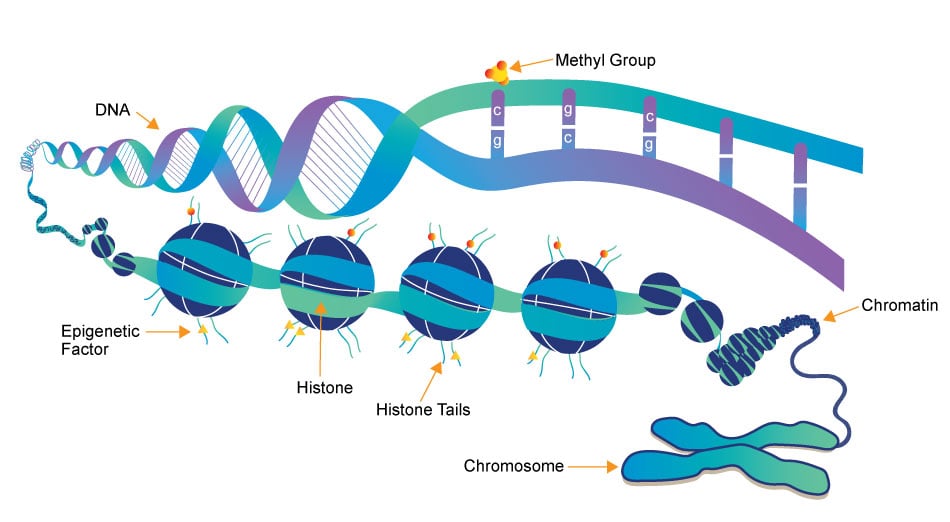
Epigenetics research delves into the molecular mechanisms that control gene expression and cellular traits without altering the underlying DNA sequence. One crucial aspect of this field is the role of small molecules, which act as powerful regulators of epigenetic modifications. These small compounds, typically comprising a few dozen to a few hundred atoms, have emerged as essential tools in understanding and manipulating the epigenome.
- DNA Methylation Inhibitors: Small molecules like 5-azacytidine and 5-aza-2'-deoxycytidine are DNA methyltransferase inhibitors. They block the addition of methyl groups to DNA, leading to DNA demethylation. This can reactivate silenced genes, potentially offering therapeutic avenues for conditions like cancer.
- HDAC inhibitors: HDACs remove acetyl groups from histone proteins, contributing to gene repression. Small molecule HDAC inhibitors, such as Vorinostat and Romidepsin, can reverse this process by increasing histone acetylation, allowing genes to be more accessible for transcription. These inhibitors are being explored for cancer therapy and other conditions.
- Histone Methyltransferase Inhibitors: Small molecules like GSK126 inhibit specific histone methyltransferases, affecting histone methylation patterns. This can alter gene expression, making them promising candidates for cancer and other diseases with epigenetic dysregulation.
- RNA Modulators: Small molecules can also target non-coding RNAs involved in epigenetic regulation. For instance, small molecules called small interfering RNAs (siRNAs) can be designed to target and degrade specific long non-coding RNAs, influencing gene expression.
- Epigenetic Reader Domain Inhibitors: These small molecules target proteins that recognize and bind to specific epigenetic marks. Examples include inhibitors of bromodomain-containing proteins (BET inhibitors), which can disrupt gene regulation by interfering with protein-DNA interactions.
Small molecules in epigenetics research not only provide insights into the fundamental biology of gene regulation but also hold immense promise for developing novel therapeutics. Their ability to selectively modulate specific epigenetic marks and pathways has led to ongoing clinical trials and drug development efforts for various diseases, including cancer, neurological disorders, and inflammatory conditions. Understanding and harnessing the power of these small molecules is at the forefront of modern epigenetics research, offering new hope for precision medicine and targeted therapies.
3 key components involved in the regulation of epigenetic modifications
Epigenetics Writer
Epigenetics writers are enzymes responsible for adding chemical marks or modifications to DNA or histone proteins. These marks include DNA methylation (addition of methyl groups to DNA) and histone modifications (such as acetylation, methylation, phosphorylation, etc.).
Epigenetics Reader
Function: Epigenetics readers are proteins that can recognize and bind to specific epigenetic marks on DNA or histones. These reader proteins interpret the epigenetic code and facilitate downstream cellular processes, such as gene activation or repression.
Epigenetics Eraser
Function: Epigenetics erasers are enzymes responsible for removing or reversing epigenetic marks on DNA or histones. This process allows for the dynamic regulation of gene expression and the resetting of epigenetic states during various stages of development and in response to environmental changes.
-
BRD4 inhibitor
BRD4 Inhibitor-30 (Compound 1) is a BRD4 inhibitor with an IC₅₀ value of 415 nM. -
menin-MLL interaction inhibitor
Menin-MLL Inhibitor 20 is an irreversible inhibitor of the menin-MLL interaction with demonstrated antitumor activity. It is referenced as Intermediate 6 in patent WO2020142557A1. -
BRD4/CK2 inhibitor
BRD4/CK2-IN-1 is the first highly potent and orally active dual inhibitor of BRD4 and casein kinase 2 (CK2), with IC₅₀ values of 180 nM and 230 nM, respectively. It exhibits strong anticancer activity with minimal toxicity, and induces apoptosis and autophagy-associated cell death in triple-negative breast cancer (TNBC) cells. -
KIX-KID interaction inhibitor
Naphthol AS-E is a potent, cell-permeable inhibitor of the KIX-KID interaction. It binds directly to the KIX domain of CBP with a Kd of 8.6 μM and inhibits the interaction between the KIX domain and the KID domain of CREB with an IC₅₀ of 2.26 μM. Naphthol AS-E is applicable in cancer research. -
PCAF inhibitor
L-Moses (L-45) dihydrochloride is the first potent, selective, and cell-permeable inhibitor of the p300/CBP-associated factor (PCAF) bromodomain, with a Kd of 126 nM. -
BET inhibitor
JQ1-TCO (JQ1-trans-cyclooctene) is a derivative of JQ1, a BET inhibitor, modified for click chemistry applications. It serves as a molecular probe for in vitro and in vivo studies. -
SPIN1 inhibitor
MS31 is a potent, highly selective fragment-like inhibitor of the methyllysine reader protein spindlin 1 (SPIN1). It strongly inhibits SPIN1 interactions with H3K4me3, with IC50 values of 77 nM (AlphaLISA) and 243 nM (FP). MS31 selectively binds to Tudor domain II of SPIN1 with a Kd of 91 nM and potently blocks binding of trimethyllysine-containing peptides to SPIN1. It exhibits no toxicity toward nontumorigenic cells. -
PRMT7 inhibitor
SGC8158 is a potent inhibitor of PRMT7, useful for investigating PRMT7's cellular functions. It reduces monomethylarginine levels on Hsp70, a key PRMT7 substrate. SGC8158 exhibits growth inhibitory effects in various cancer cells, including multidrug-resistant (MDR) cancer cells, with IC50 values ranging from 2 to 9 μM. -
SP140 Inhibitor
GSK761 is a selective inhibitor of speckled 140 kDa (SP140) protein, with an IC50 of 77.79 nM. It suppresses monocyte-to-inflammatory macrophage differentiation and lipopolysaccharide (LPS)-induced inflammatory activation. Additionally, GSK761 promotes the production of CD206+ regulatory macrophages by inhibiting SP140. -
ATAD2 bromodomain inhibitor
AZ13824374 is a highly potent and selective ATAD2 bromodomain inhibitor, demonstrating cellular target engagement and antiproliferative activity in various breast cancer models. It inhibits ATAD2 with pIC50 values of 8.2 in the ATAD2 FRET assay and 6.2 in the ATAD2 NanoBRET assay. -
BET inhibitor
Amredobresib (BI894999) is an orally active BET inhibitor that potently blocks the binding of BRD4-BD1 and BRD4-BD2 bromodomains to acetylated histones, with IC50 values of 5 nM and 41 nM, respectively. It demonstrates anticancer activity against acute myeloid leukemia (AML) and NUT carcinoma. -
BET/BRD4 bromodomain inhibitor
AZD5153 is a bivalent, selective, and orally active BET/BRD4 bromodomain inhibitor with an IC50 of 5 nM for full-length BRD4 (FL-BRD4). It simultaneously binds both bromodomains of BRD4, enhancing its inhibitory potency. AZD5153 is applicable for research into cancers, including acute myeloid leukemia, multiple myeloma, and diffuse large B-cell lymphoma. -
BET family bromodomain inhibitor
NHWD-870 is a potent, orally active, and selective BET family bromodomain inhibitor, specifically targeting BRD2, BRD3, BRD4 (IC50 = 2.7 nM), and BRDT. It exhibits strong tumor-suppressive effects, enhances tumor apoptosis, inhibits tumor proliferation, and disrupts cancer cell-macrophage interactions. -
Menin-MLL inhibitor
BMF-219 (Menin-MLL inhibitor 21) is a specific, irreversible inhibitor of the Menin-MLL interaction, suitable for research into autoimmune diseases, heteroimmune diseases, cancer, and other menin-MLL-dependent conditions. -
CECR2 inhibitor
NVS-CECR2-1 is a potent and selective non-BET family bromodomain (BRD) inhibitor targeting cat eye syndrome chromosome region, candidate 2 (CECR2). It binds CECR2 BRD with high affinity (IC50 = 47 nM; KD = 80 nM). NVS-CECR2-1 exhibits cytotoxic activity and induces apoptosis in various cancer cells through both CECR2-dependent and CECR2-independent mechanisms. -
ENL/AF9 YEATS domain inhibitor
SR-0813 is a potent and selective inhibitor of the ENL and AF9 YEATS domains. It exhibits IC50 and EC50 values of 25 nM and 205 nM, respectively, for the ENL YEATS domain, and 311 nM and 76 nM (CETSA) for the AF9 YEATS domain. SR-0813 binds MAP3K19 with significantly lower affinity (Kd = 3.5 μM) compared to ENL YEATS (Kd = 30 nM), demonstrating over 100-fold selectivity. It is suitable for research into acute leukemia. -
BPTF inhibitor
BPTF-IN-BZ1 is a highly potent BPTF inhibitor with a Kd of 6.3 nM. -
PBRM1 Bromodomain inhibitor
PBRM1-BD2-IN-8 (compound 34) is a potent inhibitor of the PBRM1 bromodomain, with a Kd of 4.4 μM and an IC50 of 0.16 μM for PBRM1-BD2, and a Kd of 25 μM for PBRM1-BD5. It exhibits anti-cancer activity. -
PRMT5-MTA complex inhibitor
MRTX9768 is a highly potent, selective, and orally bioavailable first-in-class inhibitor of the PRMT5-MTA complex, demonstrating targeted inhibition of protein arginine methyltransferase 5 (PRMT5) in MTAP-deleted tumors with potential antineoplastic activity. -
SMYD3 inhibitor
EM127 (compound 11c) is a highly selective, covalent SMYD3 inhibitor with a KD of 13 μM and site-specific binding. It potently inhibits ERK1/2 phosphorylation, suppresses transcriptional regulation of SMYD3 target genes, and provides sustained inhibition of methyltransferase activity. EM127 is suitable for cancer research, particularly in SMYD3-positive tumors. -
PRMT4 inhibitor
EPZ0025654 (GSK3536023) is a potent inhibitor of protein arginine methyltransferase 4 (PRMT4, also known as CARM1), with an IC50 of 3 nM. -
DNMT inhibitor
MC3343 is a DNMT inhibitor (EC50: 5.7 μM) and potent DNA binder that inhibits tumor proliferation by arresting osteosarcoma (OS) cells in the G1 or G2/M phases. It promotes osteoblastic differentiation by specifically reactivating genes involved in this physiological process. -
NSUN2 inhibitor
MY-1B is a covalent inhibitor of the RNA methyltransferase NSUN2 (IC50: 1.3 μM), stereoselectively targeting active-site cysteine residues (C271). It also covalently binds to PSME1, disrupting the proteasome regulatory complex and downregulating specific MHC-I subtype presentation.
