






-
GnRH-R Antagonist
WAY-207024 dihydrochloride is a potent antagonist of the gonadotropin-releasing hormone receptor (GnRH-R), exhibiting an IC50 of 12 nM for human GnRH and 71 nM for rat GnRH. This compound effectively inhibits the release of luteinizing hormone (LH) in rats, with an IC50 of 350 nM. WAY-207024 dihydrochloride is useful for studying the regulation of reproductive hormones and exploring therapeutic strategies for disorders related to GnRH signaling. -
Peptide
(D-His2)-Goserelin is a peptide analog derived from Goserelin, which mimics the structure of gonadotropin-releasing hormone (GnRH/LHRH). This compound serves primarily as an agonist of GnRH receptors, influencing the secretion of luteinizing hormone (LH) and follicle-stimulating hormone (FSH). Its biological activity makes it valuable in research focused on reproductive biology, endocrinology, and fertility treatments. -
Progesterone
Fluorogestone acetate is a synthetic progesterone analog that primarily targets the progesterone receptor. It effectively inhibits ovulation and regulates the estrous cycle in cattle by suppressing luteinizing hormone (LH) release from the pituitary gland. This compound is widely used in veterinary medicine for reproductive management and synchronization protocols. -
GnRH
LH-RH (7-10) targets the gonadotropin-releasing hormone (GnRH) pathway and serves as a significant degradation product of luteinizing hormone-releasing hormone. This tetrapeptide is produced by macrophages and type I and type II pneumocytes, playing a role in various physiological processes. Its applications in research include studies on reproductive health and endocrine regulation. -
LH/FSH Release Agonist
[Lys8] LH-RH is an agonist of luteinizing hormone-releasing hormone (LH-RH) that effectively stimulates the release of luteinizing hormone (LH) and follicle-stimulating hormone (FSH). This compound is valuable for research applications investigating reproductive endocrinology and hormonal regulation. Its ability to modulate LH and FSH levels makes it a useful tool for studies on fertility, reproductive health, and related therapeutic interventions. -
GnRH Antagonist
Azaline B is a potent antagonist of gonadotropin-releasing hormone (GnRH) with an IC50 of 1.37 nM. This compound exhibits significant biological activity in modulating reproductive hormone pathways, making it valuable for research into sex hormone-related disorders, ovulation induction, and male contraception. Its specificity and potency position Azaline B as a crucial tool for advancing the understanding of reproductive biology and therapeutic interventions in related pathological states. -
Recombinant Human Luteinizing Hormone
Lutropin alfa is a recombinant human luteinizing hormone (LH) that acts through the activation of LH receptors. Its biological activity closely resembles that of natural luteinizing hormone, promoting follicular development and ovulation. This reagent is primarily used in infertility treatments to support reproductive health and facilitate assisted reproductive technologies. -
LHRH Analogue
(D-Tyr5,D-Ser(tBu)6,Azagly10)-LHRH is a luteinizing hormone-releasing hormone (LHRH) analogue that functions by mimicking the natural hormone to regulate reproduction. It stimulates the secretion of pituitary luteinizing hormone (LH) and follicle-stimulating hormone (FSH), making it significant for research on reproductive endocrinology. This compound can be utilized in studies investigating various aspects of reproductive health and hormonal regulation. -
LHRH Derivatives
(D-His(Bzl)6)-LHRH (1-7) free acid is a synthetic derivative of luteinizing hormone-releasing hormone (LHRH) that features modifications to enhance stability and biological activity. By incorporating unnatural amino acids, this peptide exhibits improved half-life and reduced metabolism, facilitating increased efficacy in inhibiting cell proliferation. It is suitable for applications in cancer research and studies related to hormone regulation. -
GnRH Receptor Antagonist
Org-30850 is a potent GnRH receptor antagonist that effectively targets hormone-dependent disorders. Preclinical studies demonstrate its capability to inhibit ovulation in female rats and significantly lower testosterone levels in males for up to 48 hours following a single subcutaneous administration. Administration of daily doses in female rats resulted in suppression of estrous cycles and reduction of uterine and ovarian weights, accompanied by decreased estradiol and FSH serum levels. In male rats, prolonged treatment led to reversible declines in gonadal function and testosterone levels, with nearly complete recovery after treatment cessation. Org-30850 is characterized by minimal injection site irritation, indicating a potentially more favorable therapeutic profile. -
LHRH Antagonist
[D-Phe2,D-Ala6]-LH-RH is a potent antagonist of luteinizing hormone-releasing hormone (LH-RH). This compound effectively inhibits the release of luteinizing hormone (LH) and follicle-stimulating hormone (FSH), demonstrating significant antiovulatory activity. It is primarily utilized in reproductive biology research to explore mechanisms of hormone regulation and fertility control. -
GPR54/GnRH Receptor Activator
Kisspeptin 13 functions as an activator of the G protein-coupled receptor GPR54 and the gonadotropin-releasing hormone (GnRH) receptor. This peptide is known to inhibit glucose-induced insulin secretion with an IC50 of 1.2 nM and plays a role in activating the hypothalamic-pituitary-adrenal (HPA) axis, which can induce hyperthermia and influence motor behavior and anxiety in animal models. Additionally, Kisspeptin 13 has been implicated in enhancing memory, suggesting potential applications in Alzheimer's disease research. Its interactions with α2-adrenergic and 5-HT2 serotonin receptors further indicate its antidepressant-like properties. -
GnRH Analogs
(Des-Gly10,D-Ala6,Pro-NHEt9)-LHRH (salmon) is a GnRH analog that primarily targets gonadotropin-releasing hormone receptors. It is known to effectively induce ovulation and spawning in farmed fish, making it a valuable tool in aquaculture research. This compound aids in the study of reproductive processes and hormone regulation in aquatic species. -
LHRH Analogue
[D-Ala6]-LH-RH is a synthetic analogue of Luteinizing Hormone-Releasing Hormone (LHRH) that functions as a gonadotropin-releasing hormone (GnRH) receptor agonist. This compound is utilized in research to study the regulation of reproductive hormones and to investigate its potential roles in reproductive health and disorders. Its applications include the exploration of mechanisms underlying hormone signaling and the development of therapeutic strategies for conditions such as hormone-dependent cancers. -
GnRH-R Antagonist
GnRH-R Antagonist-2 is a selective antagonist of the Gonadotropin-Releasing Hormone Receptor (GnRH-R), exhibiting IC50 values of 43 nM for rat and 88 nM for human receptors. This compound is pivotal in studying hormone-dependent conditions, such as endometriosis and breast and prostate cancers. Its specificity makes it a valuable tool for elucidating the roles of GnRH signaling in various biological contexts and developing targeted therapies. -
Progesterone Derivatives
5α-Pregnane-3α,20α-diol is a progesterone derivative known as Allopregnanediol. It demonstrates significant biological activity by stimulating the release of luteinizing hormone (LH) in estrogen-pretreated castrated rats, while concurrently inhibiting follicle-stimulating hormone (FSH) secretion. This compound is valuable in research related to reproductive biology and hormonal regulation, providing insights into steroid hormone functions and their physiological effects. -
LHRH Antagonist
RS-18286 is a potent luteinizing hormone-releasing hormone (LHRH) antagonist that effectively blocks the pituitary LHRH receptor. By inhibiting this receptor, RS-18286 suppresses the secretion of luteinizing hormone (LH) from the pituitary gland, leading to decreased serum levels of gonadal steroids. This compound can be utilized in research applications related to reproductive biology and endocrinology. -
LHRH Agonist
Lutrelin is a luteinizing hormone-releasing hormone (LHRH) agonist that plays a critical role in regulating reproductive hormone levels. This compound has been shown to inhibit the growth of endometrial explants in rat models, making it valuable for research in reproductive biology and the study of endometrial disorders. Its applications extend to both basic research and therapeutic investigations related to hormonal regulation. -
Androgen Prodrug
Dimethandrolone undecanoate is an androgen prodrug that exhibits both androgenic and progestogenic activity. By inhibiting the production of gonadotropins, it suppresses testosterone synthesis, resulting in a decrease in sperm production. This compound holds significant promise for the development of male hormonal contraceptives and other applications in hormonal research. -
LHRH Antagonist
A-76154 is a potent LHRH antagonist that functions by inhibiting the action of luteinizing hormone-releasing hormone, thereby regulating gonadotropin secretion. This reduced-size octapeptide is valuable for research applications in reproductive biology and hormone regulation studies. It serves as an important tool for investigating therapeutic interventions in hormone-related disorders and conditions such as hormone-sensitive cancers. -
GnRH Antagonist
MI-1544 is a potent GnRH antagonist that effectively inhibits pituitary LH release and suppresses gonadal function. This compound is valuable for research applications focused on understanding antifertility mechanisms and exploring therapeutic approaches related to reproductive health. -
LHRH/GnRH Receptor Antagonist
BIM 21009 is a potent LHRH/GnRH receptor antagonist, primarily targeting the gonadotropin-releasing hormone pathway. It demonstrates significant inhibitory effects on tumor growth, making it an essential tool for research in oncology and reproductive biology. BIM 21009 is valuable for studies focused on hormone-dependent cancers and the modulation of reproductive functions. -
LHRH Antagonist
Antide acetate is a potent LHRH (luteinizing hormone-releasing hormone) antagonist that effectively modulates hormonal signaling pathways. This compound is primarily utilized in research applications focused on prostate cancer, where it plays a critical role in studying hormone-driven tumor progression and potential therapeutic interventions. -
LHRH Receptor Antagonist
T-98475 is a potent, orally active, non-peptide luteinizing hormone-releasing hormone (LHRH) receptor antagonist, exhibiting an IC50 of 0.2 nM. This compound effectively inhibits LHRH signaling, making it a valuable tool for studies related to reproductive endocrinology and hormone regulation. It is suitable for investigating the role of LHRH in various physiological and pathological conditions, including hormone-responsive cancers and infertility research. -
GnRH Receptor Antagonist
Opigolix is a GnRH receptor antagonist that plays a crucial role in the modulation of gonadotropin release. This compound exhibits significant biological activity in the context of hormonal regulation, making it a valuable tool for research applications related to endometriosis and rheumatoid arthritis. Its mechanism of action involves the inhibition of GnRH signaling pathways, thereby influencing reproductive hormone levels and related physiological processes. -
GPR109A Agonist
GSK256073 is a potent and selective agonist of the GPR109A receptor, also known as hydroxy-carboxylic acid receptor 2 (HCA2). With a pEC50 of 7.5 in human HCA2, this orally active compound acts as a full agonist without causing flushing. GSK256073 has demonstrated the ability to acutely enhance glucose homeostasis by inhibiting lipolysis, making it a valuable tool for research into type 2 diabetes mellitus (T2DM) and dyslipidemia. -
GPR109A Agonist
MK-1903 is a selective agonist of the hydroxycarboxylic acid receptor 2 (HCA2, GPR109A). This compound demonstrates strong activation of GPR109A, a receptor involved in regulating various metabolic processes. It is primarily used in research applications related to metabolic diseases and inflammation, providing insights into therapeutic pathways for conditions associated with dysregulated lipid metabolism. -
GPR109b Agonist
GPR109 receptor agonist-1 is a selective agonist for the human G-protein-coupled receptor GPR109b, exhibiting a pEC50 of 6.4. This compound plays a critical role in the modulation of metabolic processes and holds potential for research applications related to cardio-metabolic diseases. Its specificity and activity make it a valuable tool for elucidating the biological functions of GPR109b in various metabolic pathways. -
GPR109b Agonist
GPCR Agonist-2 is a selective agonist of the GPR109b receptor (HM74), exhibiting a pEC50 value of 6.51. This compound demonstrates potential for modulating lipid metabolism and is valuable in research focused on lipid disorders and related metabolic conditions. Its specificity for GPR109b makes it an important tool for investigating the receptor's role in various biological pathways. -
GPR109A Agonist
GPR109 receptor agonist-2 is a selective agonist of the GPR109A receptor, demonstrating a pEC50 of 5.53. This compound modulates the activity of GPR109A, which plays a crucial role in metabolic regulation and inflammation. It is suitable for use in research related to metabolic disorders and the therapeutic potential of GPR109A in various biological systems. -
GPR109A/GPR109B Agonist
Acifran is a potent agonist of GPR109A and GPR109B, which are receptors associated with the pharmacological effects of niacin. This compound has demonstrated efficacy as an antihyperlipidemic agent, making it valuable for studies focused on lipid metabolism and cardiovascular disease. Acifran is utilized in research applications related to the modulation of inflammatory responses and the regulation of energy homeostasis. -
GPR109 Receptor Agonist
GPR109 receptor agonist-3 is an orally active compound that selectively targets and activates the GPR109 receptor, exhibiting an IC50 of 310 nM. This agonist demonstrates significant antioxidative and cytoprotective properties similar to Lipoic acid. In preclinical studies, GPR109 receptor agonist-3 effectively reduces total cholesterol, triglycerides, and low-density lipoprotein cholesterol, while increasing high-density lipoprotein cholesterol in high-fat diet-fed rats. It serves as a valuable tool for investigating the mechanisms underlying atherosclerosis and lipid metabolism. -
GPR109A Agonist
GSK256073 tris is a selective and orally bioavailable agonist of GPR109A (HCA2), exhibiting a high potency with a pEC50 of 7.5 in human models. This compound acutely enhances glucose homeostasis through the inhibition of lipolysis, making it a valuable tool for research related to type 2 diabetes mellitus (T2DM) and dyslipidemia. Its long-lasting effect and non-flushing profile provide significant utility in metabolic disorder investigations. -
GPR119 Activator
YH18968 is an orally active GPR119 agonist, exhibiting an EC50 of 2.8 nM for cAMP accumulation. This compound enhances intracellular cyclic adenosine monophosphate levels, promotes glucagon-like peptide-1 secretion from intestinal L cells, and stimulates glucose-dependent insulin secretion from pancreatic β cells. YH18968 has been shown to improve glucose tolerance in both normal and diet-induced obese mouse models, making it a valuable reagent for research aimed at understanding and managing type 2 diabetes. -
GPR119 Agonist
MKP10241 is an orally active agonist of GPR119, a G protein-coupled receptor involved in the regulation of glucose metabolism. This compound significantly elevates cAMP levels in GPR119-expressing cell lines, demonstrating an EC50 of 3.7 nM. MKP10241 effectively lowers blood glucose levels and HbA1c in both acute and chronic diabetic mouse models, and exhibits promising preclinical efficacy in addressing obesity and metabolic associated steatotic hepatitis (MASH) in rodent studies. -
GPR120 Agonist
AZ13581837 is a potent GPR120 agonist, demonstrating human and mouse EC50 values of 5.2 nM and 4.3 nM, respectively. This compound activates Gαq, Gαs, and β-arrestin signaling pathways, effectively reducing cAMP levels, stimulating GLP-1 secretion, promoting glucose lowering, and enhancing insulin secretion. AZ13581837 is valuable for research related to type 2 diabetes, providing insights into potential therapeutic strategies targeting metabolic disorders. -
GPR119 Agonist
AS1269574 is a potent agonist of GPR119, exhibiting an EC50 of 2.5 μM in HEK293 cells expressing the human receptor. This compound activates TRPA1 cation channels, thereby facilitating the secretion of glucagon-like peptide-1 (GLP-1). Notably, AS1269574 induces glucose-dependent insulin secretion from pancreatic β-cells exclusively under high-glucose conditions, making it a valuable tool for research into type 2 diabetes. -
GPR119 Agonist
DA-1241 is a selective agonist of the GPR119 receptor. It effectively inhibits macrophage differentiation by downregulating NFκB signaling pathways through GPR119 activation. Additionally, DA-1241 demonstrates potential in conjunction with DPP4 inhibitors to alleviate liver inflammation and normalize inflammation-related gene expression in the liver. This compound is primarily utilized in research focused on metabolic dysfunction-associated steatohepatitis (MASH). -
GPR119 Agonist
PSN 375963 is a potent agonist of the GPR119 receptor, demonstrating EC50 values of 8.4 μM for human and 7.9 μM for mouse GPR119. This compound exhibits comparable potency to the endogenous agonist oleoylethanolamide (OEA). PSN 375963 may serve as a valuable tool for research into metabolic disorders and obesity by elucidating the role of GPR119 in glucose homeostasis and insulin secretion. -
GPR119 Agonist
GPR119 agonist 3 is a potent agonist of GPR119, exhibiting an EC50 value of 3.8 nM for human GPR119. This compound demonstrates significant hypoglycemic effects, making it a valuable tool for the investigation of type 2 diabetes and obesity in research settings. Its oral bioactivity facilitates ease of use in various experimental designs aimed at elucidating the role of GPR119 in metabolic regulation. -
GPR119 Agonist
K-833 is a potent GPR119 agonist with EC50 values of 39.8 nM in humans, 100 nM in mice, 75.4 nM in rats, and 12.6 nM in dogs. This compound enhances GLP-1 secretion and exhibits a synergistic effect on GLP-1 levels when administered alongside AM-5262 in acute gut peptide secretion assays in mice. K-833 is suitable for research focusing on weight loss and metabolic regulation. -
GPR119 Agonist
BMS-986034 is a selective agonist of the GPR119 receptor, which plays a significant role in glucose homeostasis and insulin secretion. This compound demonstrates notable efficacy in enhancing glucose-dependent insulin release and may contribute to the regulation of appetite and energy balance. BMS-986034 is primarily utilized in research related to metabolic disorders, including type 2 diabetes and obesity, making it a valuable tool for investigating therapeutic strategies targeting the GPR119 pathway. -
GPR119 Agonist
AS1907417 is a selective agonist of GPR119, demonstrating oral bioactivity. This compound exhibits antihyperglycemic properties, making it a valuable tool in the study of type 2 diabetes and related metabolic disorders. Its unique chemical structure enhances its potential for research applications targeting glucose homeostasis and insulin sensitivity. -
GPR119 Agonist
GSK1104252A is a potent and selective agonist of the GPR119 receptor. This compound demonstrates significant insulinotropic activity, making it relevant for research applications focused on type 2 diabetes and metabolic disorders. Its ability to enhance glucose-dependent insulin secretion positions GSK1104252A as a valuable tool for exploring therapeutic strategies in glycemic control. -
GPR-119 Agonist
MK-8282 is a potent, orally active agonist of the GPR-119 receptor. This compound has demonstrated the ability to improve glucose tolerance, making it a valuable tool for investigating metabolic disorders. MK-8282 is primarily utilized in research focused on type 2 diabetes and its associated pathways. -
GPR119 Agonist
PSN 375963 hydrochloride is a potent agonist of GPR119, exhibiting EC50 values of 8.4 μM and 7.9 μM for human and mouse GPR119, respectively. This compound demonstrates comparable efficacy to the endogenous agonist oleoylethanolamide (OEA). PSN 375963 hydrochloride is valuable for research applications targeting metabolic disorders and the modulation of glucose homeostasis. -
GPR119 Agonist
BMS-903452 is a selective agonist of GPR119, a G protein-coupled receptor implicated in glucose metabolism and insulin secretion. This compound enhances the release of incretin hormones, which play a crucial role in regulating blood sugar levels. BMS-903452 is primarily utilized in diabetes research to explore potential therapeutic avenues for the management of type 2 diabetes and related metabolic disorders. -
GPR119 Agonist
GSK2041706A is a potent agonist of the G protein-coupled receptor 119 (GPR119). This compound has demonstrated significant biological activity in modulating glucose metabolism and insulin secretion, making it a valuable tool in the research of type 2 diabetes. Its ability to activate GPR119 positions it as a promising candidate for studies focusing on metabolic disorders and potential therapeutic interventions. -
GPR119 Agonist
GSK-1292263 hydrochloride is a potent orally active agonist of GPR119, demonstrating a pEC50 of approximately 6.9 nM for human GPR119 and 6.7 nM for rat GPR119. This compound is primarily utilized in research focused on type 2 diabetes and dyslipidemia, contributing to a better understanding of metabolic regulation and potential therapeutic interventions. Its ability to activate GPR119 makes it a valuable tool for exploring signaling pathways and metabolic processes influenced by this receptor. -
GPR119 Agonists
GPR119 Agonist 2 is an orally active compound targeting the GPR119 receptor, known for its role in glucose metabolism. This reagent demonstrates favorable pharmacokinetic properties in rodent models and effectively enhances glucose tolerance in both mice and rats. GPR119 Agonist 2 is valuable for research focused on type 2 diabetes and metabolic disorders.
Endocrinology-Hormones
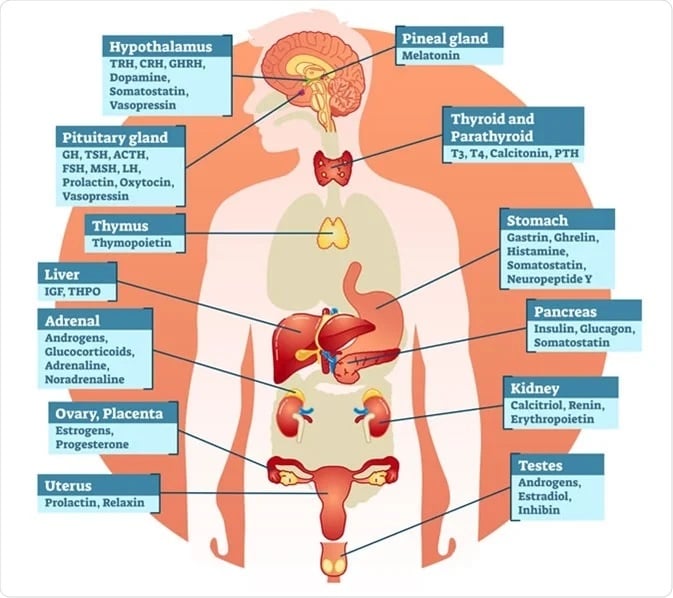
Small molecules play a pivotal role in Endocrinology Research. These are low molecular weight compounds that have a significant impact on the endocrine system, hormones, and their receptors. Here are some key aspects of how small molecules are involved in this field:
- Hormone Mimetics and Inhibitors: Small molecules are used to develop synthetic compounds that mimic the actions of hormones or inhibit their effects. For example, drugs like metformin for diabetes management and selective estrogen receptor modulators (SERMs) for breast cancer treatment are used to either mimic or block hormonal activity.
- Receptor Modulation: Small molecules can bind to hormone receptors and modulate their activity. This is crucial in developing drugs that target specific hormone receptors, like the use of small molecule agonists and antagonists to regulate thyroid hormone receptors.
- Metabolism Regulation: Endocrinology research often focuses on metabolism and how hormones like insulin regulate it. Small molecules are employed to understand and develop drugs targeting enzymes involved in metabolism, such as glucagon-like peptide-1 (GLP-1) agonists for diabetes treatment.
- Steroid Hormone Production: Small molecules may be utilized to influence the production of steroid hormones in the adrenal glands or gonads. This is essential for conditions like Cushing's syndrome or polycystic ovary syndrome (PCOS).
- Hormone Assays: In laboratory research, small molecules are used as tracers or markers in hormone assays. For instance, small molecule fluorophores can be attached to antibodies to detect hormone levels in blood samples.
Drug Development: Endocrinology research relies on small molecules as potential drug candidates. Researchers design and test small molecules for their effectiveness in modulating hormonal pathways, with the goal of developing new therapies for endocrine disorders.
In summary, small molecules are indispensable tools in Endocrinology Research, enabling scientists to better understand the endocrine system's intricacies and develop novel treatments for a wide range of hormonal disorders and conditions. Their versatility and specificity make them valuable assets in advancing our knowledge of endocrinology and improving patient care.
Endocrinology Disease Products
Endocrinology Research Products
Kisspeptin Receptor
Leptin Receptors
Melanocortin (MC) Receptors
Mineralocorticoid Receptors
Galanin Receptors
TRH Receptors
Ghrelin Receptors
Natriuretic Peptide Receptors
NPY Receptors
Motilin Receptor
PTH Receptor
