






Epigenetics
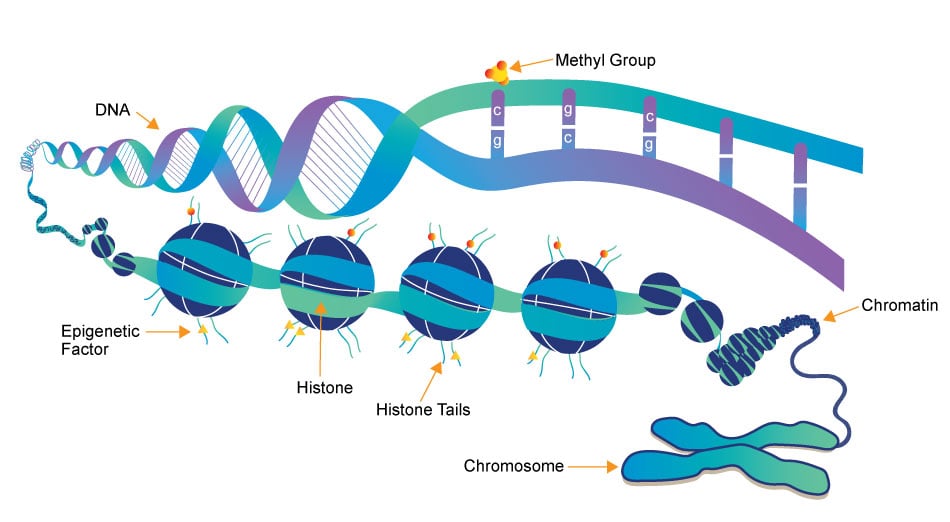
Epigenetics research delves into the molecular mechanisms that control gene expression and cellular traits without altering the underlying DNA sequence. One crucial aspect of this field is the role of small molecules, which act as powerful regulators of epigenetic modifications. These small compounds, typically comprising a few dozen to a few hundred atoms, have emerged as essential tools in understanding and manipulating the epigenome.
- DNA Methylation Inhibitors: Small molecules like 5-azacytidine and 5-aza-2'-deoxycytidine are DNA methyltransferase inhibitors. They block the addition of methyl groups to DNA, leading to DNA demethylation. This can reactivate silenced genes, potentially offering therapeutic avenues for conditions like cancer.
- HDAC inhibitors: HDACs remove acetyl groups from histone proteins, contributing to gene repression. Small molecule HDAC inhibitors, such as Vorinostat and Romidepsin, can reverse this process by increasing histone acetylation, allowing genes to be more accessible for transcription. These inhibitors are being explored for cancer therapy and other conditions.
- Histone Methyltransferase Inhibitors: Small molecules like GSK126 inhibit specific histone methyltransferases, affecting histone methylation patterns. This can alter gene expression, making them promising candidates for cancer and other diseases with epigenetic dysregulation.
- RNA Modulators: Small molecules can also target non-coding RNAs involved in epigenetic regulation. For instance, small molecules called small interfering RNAs (siRNAs) can be designed to target and degrade specific long non-coding RNAs, influencing gene expression.
- Epigenetic Reader Domain Inhibitors: These small molecules target proteins that recognize and bind to specific epigenetic marks. Examples include inhibitors of bromodomain-containing proteins (BET inhibitors), which can disrupt gene regulation by interfering with protein-DNA interactions.
Small molecules in epigenetics research not only provide insights into the fundamental biology of gene regulation but also hold immense promise for developing novel therapeutics. Their ability to selectively modulate specific epigenetic marks and pathways has led to ongoing clinical trials and drug development efforts for various diseases, including cancer, neurological disorders, and inflammatory conditions. Understanding and harnessing the power of these small molecules is at the forefront of modern epigenetics research, offering new hope for precision medicine and targeted therapies.
3 key components involved in the regulation of epigenetic modifications
Epigenetics Writer
Epigenetics writers are enzymes responsible for adding chemical marks or modifications to DNA or histone proteins. These marks include DNA methylation (addition of methyl groups to DNA) and histone modifications (such as acetylation, methylation, phosphorylation, etc.).
Epigenetics Reader
Function: Epigenetics readers are proteins that can recognize and bind to specific epigenetic marks on DNA or histones. These reader proteins interpret the epigenetic code and facilitate downstream cellular processes, such as gene activation or repression.
Epigenetics Eraser
Function: Epigenetics erasers are enzymes responsible for removing or reversing epigenetic marks on DNA or histones. This process allows for the dynamic regulation of gene expression and the resetting of epigenetic states during various stages of development and in response to environmental changes.
-
Pim inhibitor
INCB053914 phosphate is an inhibitor of Pim extracted from patent WO 2017044730 A1, compound 1; has an IC50 of less than 35 nM. -
HDAC inhibitor
Givinostat hydrochloride (ITF-2357 hydrochloride) is a HDAC inhibitor with an IC50 of 198 and 157 nM for HDAC1 and HDAC3, respectively. - BRD7-IN-1 free base, a modified derivative of BI7273 (BRD7/9 inhibitor), binds to a VHL ligand via a linker to form a PROTAC VZ185 (VZ185 against BRD7/9 with DC50s of 4.5 and 1.8 nM, respectively).
-
PARP1/PARP2 inhibitor
E7449 is a potent PARP1 and PARP2 inhibitor and also inhibits TNKS1 and TNKS2, with IC50s of 2.0, 1.0, ?50 and ?50 nM for PARP1, PARP2, TNKS1 and TNKS2, respectively, using 32P-NAD+ as substrate. -
multi-targeted kinase inhibitor
ENMD-2076 Tartrate is a multi-targeted kinase inhibitor with IC50s of 1.86, 14, 58.2, 15.9, 92.7, 70.8, 56.4 nM for Aurora A, Flt3, KDR/VEGFR2, Flt4/VEGFR3, FGFR1, FGFR2, Src, PDGFRα, respectively. -
BET binding to histones inhibitor
(R)-BAY1238097 is the R-isomer with lower activity of BAY1238097. BAY1238097 is a potent and selective inhibitor of BET binding to histones and has strong anti-proliferative activity in different AML (acute myeloid leukemia) and MM (multiple myeloma) models through down-regulation of c-Myc levels and its downstream transcriptome. -
BET inhibitor
(Rac)-BAY1238097 is a BET inhibitor, with an IC50 of 1.02 μM for BRD4. Used in cancer research. -
KDM1A/LSD1 inhibitor
Iadademstat dihydrochloride (ORY-1001 dihydrochloride) is a selective irreversible lysine (K)-specific demethylase 1A (KDM1A/LSD1) inhibitor.
-
HDAC inhibitor
Nanatinostat (CHR-3996) is a potent, class I selective and orally active histone deacetylase (HDAC) inhibitor with an IC50 of 8 nM. -
dual JAK1/TYK2 inhibitor
PF-06700841 P-Tosylate is a potent dual Janus kinase 1 (JAK1) and TYK2 inhibitor with IC50s of 17 nM and 23 nM, respectively. -
JAK1/JAK2 inhibitor
Momelotinib Mesylate (CYT387 Mesylate) is an ATP-competitive inhibitor of JAK1/JAK2 with IC50 of 11 nM/18 nM, appr 10-fold selectivity versus JAK3.- Ghazal Nabil, .et al. , Cancers (Basel), 2021, Feb 20;13(4):898 PMID: 33672756
-
Aurora inhibitor
SCH-1473759 hydrochloride is an aurora inhibitor with IC50s of 4 and 13 nM for aurora A and B, respectively. -
BET inhibitor
CPI-0610 carboxylic acid is a potent bromodomain and extra-terminal (BET) protein inhibitor. CPI-0610 carboxylic acid has the potential in the therapy of multiple myeloma. -
SMYD3 inhibitor
GSK2807 Trifluoroacetate is a potent, selective and SAM-competitive inhibitor of SMYD3, with a Ki of 14 nM and an IC50 of 130 nM. -
PRMT inhibitor
GSK3368715 dihydrochloride (EPZ019997 dihydrochloride) is an orally active, reversible, and S-adenosyl-L-methionine (SAM) uncompetitive type I protein arginine methyltransferases (PRMTs) inhibitor (IC50=3.1 nM (PRMT1), 48 nM (PRMT3), 1148 nM (PRMT4), 5.7 nM (PRMT6), 1.7 nM (PRMT8)). - β-Thujaplicin is a toxic tropolone derivative present in the heartwood of western red cedar (Thuja plicata) and is used as a preservative and antimicrobial additive in a number of commercial goods.
-
EZH2 inhibitor
Tazemetostat hydrobromide (EPZ-6438 hydrobromide) is a potent, selective and orally available EZH2 inhibitor. -
SHP2 inhibitor
SHP099 hydrochloride is a potent, selective and orally available SHP2 inhibitor with an IC50 of 70 nM. -
DOT1L inhibitor
EPZ004777 hydrochloride is a potent, selective DOT1L inhibitor with IC50 of 0.4 nM. -
HDAC inhibitor
Belinostat (PXD101; PX105684) is a potent HDAC inhibitor with an IC50 of 27 nM in HeLa cell extracts. -
PRMT6 inhibitor
EPZ020411 hydrochloride is a potent and selective inhibitor of PRMT6 with IC50 of 10 nM, has ??10 fold selectivity for PRMT6 over PRMT1 and PRMT8. -
histone lysine methyltransferase inhibitor
BIX-01338 hydrate is a histone lysine methyltransferase inhibitor. -
LSD1 inhibitor
GSK-LSD1 dihydrochloride is a potent, selective and irreversible lysine specific demethylase 1 (LSD1) inhibitor with an IC50 of 16 nM. -
PAD inhibitor
Cl-amidine (hydrochloride) is a peptidylarginine deminase (PAD) inhibitor, with an IC50 5.9 μM for PAD4. -
BET/BRD4 bromodomain inhibitor
AZD5153 6-Hydroxy-2-naphthoic acid is the 6-Hydroxy-2-naphthoic acid of AZD5153. AZD5153 is a potent, selective, and orally available BET/BRD4 bromodomain inhibitor; disrupts BRD4 with an IC50 of 1.7 nM. -
BET bromodomain inhibitor
Molibresib besylate (GSK 525762C; I-BET 762 besylate) is a BET bromodomain inhibitor with IC50 of 32.5-42.5 nM. -
PARP1 inhibitor
Niraparib R-enantiomer (MK-4827 R-enantiomer) is an excellent PARP1 inhibitor with IC50 of 2.4 nM. -
WDR5 and MLL protein-protein interaction inhibitor
MM-589 TFA is a potent inhibitor of WD repeat domain 5 (WDR5) and mixed lineage leukemia (MLL) protein-protein interaction. -
WDR5/MLL interaction inhibitor
MM-102 TFA (HMTase Inhibitor IX TFA) is a potent WDR5/MLL interaction inhibitor, achieves IC50 = 2.4 nM with an estimated Ki < 1 nM in WDR5 binding assay, which is >200 times more potent than the ARA peptide. -
HDAC inhibitor
Sulforaphane activates Nrf2 and inhibits high glucose-induced progression of pancreatic cancer via AMPK dependent signaling. Sulforaphane has shown anti-cancer and anti-inflammatory activities.- Satoshi Endo, .et al. , J Biochem, 2021, Mar 17 PMID: 33729485
-
PTP1B inhibitor
PTP1B-IN-1 is a potent protein tyrosine phosphatase-1B (PTP1B) inhibitor with IC50 of 1.6 mM; 1,2,5-thiadiazolidin-3-one-1,1-dioxide scaffold for derivatives synthesis. - Nicotinamide riboside chloride is a crystal form of Nicotinamide riboside (NR) chloride. Nicotinamide riboside chloride is used in dietary supplements.
- Shohei Maekawa, .et al. , Neurosci Lett, 2024, Jan 31:821:137623 PMID: 38184017
-
SETD8 inhibitor
UNC0379 TFA is a selective, substrate-competitive inhibitor of lysine methyltransferase SETD8 (KMT5A) with an IC50 of 7.3 μM; selective over 15 other methyltransferases. - GSK106 is a negative control compound that can be used in binding and functional assays for PAD4 inhibitors.
-
PAD4 inhibitor
GSK121 trifluoroacetate is a selective inhibitor of PAD4. -
Jumonji histone demethylase inihibitor
Z-JIB-04 (NSC 693627, JIB-04 Z-isomer) is an isomer of JIB-04. JIB-04 is a pan-selective Jumonji histone demethylase inihibitor with IC50 of 230 nM, 340 nM, 855 nM, 445 nM, 435 nM, 1100 nM and 290 nM for JARID1A, JMJD2E, JMJD3, JMJD2A, JMJD2B, JMJD2C, and JMJD2D, respectively.
