






Epigenetics
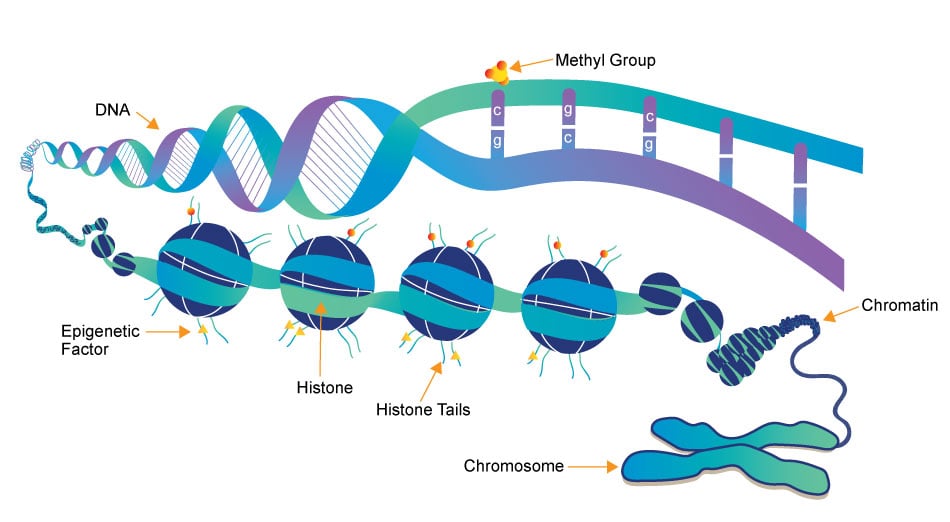
Epigenetics research delves into the molecular mechanisms that control gene expression and cellular traits without altering the underlying DNA sequence. One crucial aspect of this field is the role of small molecules, which act as powerful regulators of epigenetic modifications. These small compounds, typically comprising a few dozen to a few hundred atoms, have emerged as essential tools in understanding and manipulating the epigenome.
- DNA Methylation Inhibitors: Small molecules like 5-azacytidine and 5-aza-2'-deoxycytidine are DNA methyltransferase inhibitors. They block the addition of methyl groups to DNA, leading to DNA demethylation. This can reactivate silenced genes, potentially offering therapeutic avenues for conditions like cancer.
- HDAC inhibitors: HDACs remove acetyl groups from histone proteins, contributing to gene repression. Small molecule HDAC inhibitors, such as Vorinostat and Romidepsin, can reverse this process by increasing histone acetylation, allowing genes to be more accessible for transcription. These inhibitors are being explored for cancer therapy and other conditions.
- Histone Methyltransferase Inhibitors: Small molecules like GSK126 inhibit specific histone methyltransferases, affecting histone methylation patterns. This can alter gene expression, making them promising candidates for cancer and other diseases with epigenetic dysregulation.
- RNA Modulators: Small molecules can also target non-coding RNAs involved in epigenetic regulation. For instance, small molecules called small interfering RNAs (siRNAs) can be designed to target and degrade specific long non-coding RNAs, influencing gene expression.
- Epigenetic Reader Domain Inhibitors: These small molecules target proteins that recognize and bind to specific epigenetic marks. Examples include inhibitors of bromodomain-containing proteins (BET inhibitors), which can disrupt gene regulation by interfering with protein-DNA interactions.
Small molecules in epigenetics research not only provide insights into the fundamental biology of gene regulation but also hold immense promise for developing novel therapeutics. Their ability to selectively modulate specific epigenetic marks and pathways has led to ongoing clinical trials and drug development efforts for various diseases, including cancer, neurological disorders, and inflammatory conditions. Understanding and harnessing the power of these small molecules is at the forefront of modern epigenetics research, offering new hope for precision medicine and targeted therapies.
3 key components involved in the regulation of epigenetic modifications
Epigenetics Writer
Epigenetics writers are enzymes responsible for adding chemical marks or modifications to DNA or histone proteins. These marks include DNA methylation (addition of methyl groups to DNA) and histone modifications (such as acetylation, methylation, phosphorylation, etc.).
Epigenetics Reader
Function: Epigenetics readers are proteins that can recognize and bind to specific epigenetic marks on DNA or histones. These reader proteins interpret the epigenetic code and facilitate downstream cellular processes, such as gene activation or repression.
Epigenetics Eraser
Function: Epigenetics erasers are enzymes responsible for removing or reversing epigenetic marks on DNA or histones. This process allows for the dynamic regulation of gene expression and the resetting of epigenetic states during various stages of development and in response to environmental changes.
-
MGMT inhibitor
Lomeguatrib is a potent inhibitor of O6-alkylguanine-DNA-alkyltransferase. -
Pdia3/ERp57 activator, STAT3 inhibitor
Diosgenin glucoside, a saponin compound extracted from Tritulus terrestris L., provides neuroprotection by regulating microglial M1 polarization. Diosgenin glucoside protects against spinal cord injury by regulating autophagy and alleviating apoptosis . -
plant growth regulator
Daminozide(DMASA; DIMG; B 995), a plant growth regulator, selectively inhibits the KDM2/7 JmjC subfamily. -
Menin-MLL interaction inhibitor
MI-2 (Menin-MLL inhibitor 2) specifically binds to Menin and inhibits Menin??s interaction with MLL fusion proteins in cells. It can effectively reverse MLL fusion protein?Cmediated leukemic transformation by downregulating the expression of target genes downstream of MLL fusion protein oncogenic activity. MI-2 is a new tool for better understanding MLL-mediated leukemogenesis and represents a new approach for studying the role of Menin as an oncogenic cofactor of MLL fusion proteins. -
PAD4 inhibitor
GSK484 hydrochloride (GTPL8577) is a selective and reversible peptidylarginine deiminase 4 (PAD4) inhibitor. -
IGF-1R, Aurora, FGFR, ABL, SRC inhibitor
XL228 is a protein kinase inhibitor targeting IGF1R, the AURORA kinases, FGFR1-3, ABL and SRC family kinases. XL228 is an Aurora A inhibitor (IC50, f3 nmol/L) that has shown potent biochemical activity against ABL1 (Ki, 5 nmol/L), as well as the BCR-ABL1 T315I (Ki, 1.4 nmol/L) kinases. -
Lin28-let-7a antagonist
Lin28-let-7a antagonist 1 shows a clear antagonistic effect against the Lin28-let-7a interaction with an IC50 of 4.03 μM for Lin28A-let-7a-1 interaction. -
HDAC inhibitor
RG2833 ( is a brain-penetrant HDAC inhibitor with IC50 of 60 nM and 50 nM for HDAC1 and HDAC3. -
bromodomain inhibitor
Bromosporine is a broad spectrum inhibitor for bromodomains with IC50 of 0.41 μM, 0.29 μM, 0.122 μM and 0.017 μM for BRD2, BRD4, BRD9 and CECR2, respectively. -
SMYD2 inhibitor
AZ505 ditrifluoroacetate is a potent and highly selective inhibitor of the oncogenic protein SMYD2(IC50=0.12 uM) with potential anticancer activity, >600 fold than SMYD3(IC50>83.3 uM); DOT1L(IC50>83.3 uM);EZH2(IC50>83.3 uM). - Trifloxystrobin (CGA 279202) is a fungicide, with EC50s of 23.0 μg/L and 1.7 μg/L for Daphnia magna neonate and embryos, respectively, after treatment for 48 h.
-
LSD1/BHC110 & MAO inhibitor
Tranylcypromine hydrochloride is a non-selective MAO-A/B inhibitor. -
JAK2/HDAC dual inhibitor
JAK/HDAC-IN-1 is a potent JAK2/HDAC dual inhibitor, exhibits antiproliferative and proapoptotic activities in several hematological cell lines. -
BRD inhibitor
L-45 is the first potent, selective, and cell-active p300/CBP-associated factor (PCAF) bromodomain (Brd) inhibitor with a Kd of 126±15 nM. -
Histone Demethylases Inhibitor
Methylstat is a potent inhibitor of histone demethylases, effectively suppressing the activity of these enzymes. It demonstrates notable anti-proliferative effects with minimal cytotoxicity, inducing apoptosis and causing cell cycle arrest at the G0/G1 phase. Methylstat enhances the expression of key regulatory proteins such as p53 and p21, and it also inhibits cytokine-induced angiogenesis. This compound serves as a valuable chemical probe for investigating the role of histone demethylation in cancer biology and angiogenesis-related research. -
Tip60 HAT Inhibitor
TH1834 dihydrochloride is a selective inhibitor of Tip60 (KAT5), a histone acetyltransferase involved in the regulation of gene expression and DNA repair. This compound has been shown to induce apoptosis and enhance DNA damage in breast cancer cells, demonstrating its potential as a therapeutic agent in cancer research. Importantly, TH1834 dihydrochloride does not inhibit the activity of the structurally related histone acetyltransferase MOF, suggesting a targeted approach in modulating histone acetylation and cellular responses. -
PIM Kinase Inhibitor
PIM-447 dihydrochloride is a potent and selective pan-PIM kinase inhibitor targeting PIM1, PIM2, and PIM3 with Ki values of 6, 18, and 9 pM, respectively. This compound exhibits significant antimyeloma activity and protective effects on bone tissue. PIM-447 dihydrochloride also induces apoptosis, making it a valuable tool for research into cancer therapies and bone disease studies. -
SIRT6 Activator
SIRT6 activator 12q is a potent and selective small molecule that acts as an activator of SIRT6, exhibiting an IC50 of 0.58 μM, while demonstrating much lower activity against other sirtuins such as SIRT1-3 and SIRT5. This compound has been shown to inhibit cell growth and migration, induce apoptosis, and cause cell cycle arrest at the G2 phase. With its potential anticancer properties, SIRT6 activator 12q is a valuable tool for research in cancer biology and therapeutic development targeting SIRT6 pathways. -
MLL1 Inhibitor
MM-401 TFA is a selective inhibitor of the MLL1 H3K4 methyltransferase, functioning primarily by disrupting the interaction between MLL1 and WDR5 (IC50 = 0.32 μM). This compound has demonstrated the capability to induce cell cycle arrest, promote apoptosis, and facilitate differentiation in various cell types. Its unique mechanism makes MM-401 TFA a valuable tool for investigating the role of MLL1 in MLL leukemia research. -
WDR5 Inhibitor
WDR5-IN-1 is a highly selective inhibitor of WD repeat domain 5 (WDR5), demonstrating a binding affinity (Kd) of less than 0.02 nM. It effectively inhibits the MLL1 histone methyltransferase activity with an IC50 of 2.2 nM, leading to reduced MYC recruitment at WDR5-displaced genes. This compound exhibits significant anti-proliferative effects in neuroblastoma (CHP-134) and Burkitt’s lymphoma (Ramos) cell lines, making it a valuable tool for research in cancer biology and epigenetics. -
PAD1 Inhibitor
D-Cl-amidine hydrochloride is a potent and selective inhibitor of protein arginine deiminase 1 (PAD1). This compound effectively modulates citrullination, a post-translational modification involved in various biological processes, including inflammation and autoimmunity. D-Cl-amidine hydrochloride is a valuable tool for research into the roles of PAD1 in disease mechanisms and therapeutic interventions. Its favorable toxicity profile enhances its utility in biochemical and cellular assays. -
JAK1 Inhibitor
Ivarmacitinib is a potent inhibitor of the Janus kinase 1 (JAK1) enzyme with notable selectivity against JAK2, JAK3, and Tyk2. This compound effectively inhibits JAK1-STAT3 phosphorylation and promotes apoptosis in hepatic stellate cells, highlighting its potential for anti-proliferative and anti-inflammatory research applications. Ivarmacitinib is valuable for studies focused on diseases involving the JAK-STAT signaling pathway.
