






Epigenetics
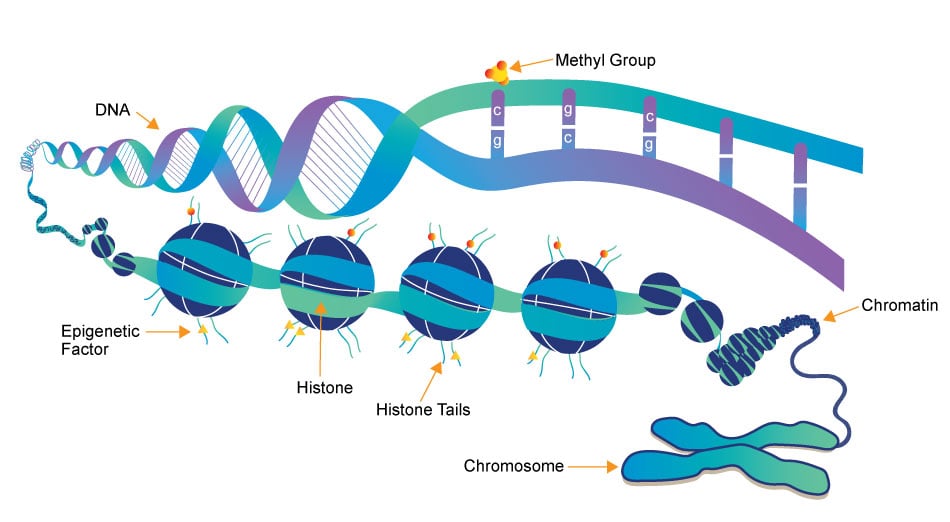
Epigenetics research delves into the molecular mechanisms that control gene expression and cellular traits without altering the underlying DNA sequence. One crucial aspect of this field is the role of small molecules, which act as powerful regulators of epigenetic modifications. These small compounds, typically comprising a few dozen to a few hundred atoms, have emerged as essential tools in understanding and manipulating the epigenome.
- DNA Methylation Inhibitors: Small molecules like 5-azacytidine and 5-aza-2'-deoxycytidine are DNA methyltransferase inhibitors. They block the addition of methyl groups to DNA, leading to DNA demethylation. This can reactivate silenced genes, potentially offering therapeutic avenues for conditions like cancer.
- HDAC inhibitors: HDACs remove acetyl groups from histone proteins, contributing to gene repression. Small molecule HDAC inhibitors, such as Vorinostat and Romidepsin, can reverse this process by increasing histone acetylation, allowing genes to be more accessible for transcription. These inhibitors are being explored for cancer therapy and other conditions.
- Histone Methyltransferase Inhibitors: Small molecules like GSK126 inhibit specific histone methyltransferases, affecting histone methylation patterns. This can alter gene expression, making them promising candidates for cancer and other diseases with epigenetic dysregulation.
- RNA Modulators: Small molecules can also target non-coding RNAs involved in epigenetic regulation. For instance, small molecules called small interfering RNAs (siRNAs) can be designed to target and degrade specific long non-coding RNAs, influencing gene expression.
- Epigenetic Reader Domain Inhibitors: These small molecules target proteins that recognize and bind to specific epigenetic marks. Examples include inhibitors of bromodomain-containing proteins (BET inhibitors), which can disrupt gene regulation by interfering with protein-DNA interactions.
Small molecules in epigenetics research not only provide insights into the fundamental biology of gene regulation but also hold immense promise for developing novel therapeutics. Their ability to selectively modulate specific epigenetic marks and pathways has led to ongoing clinical trials and drug development efforts for various diseases, including cancer, neurological disorders, and inflammatory conditions. Understanding and harnessing the power of these small molecules is at the forefront of modern epigenetics research, offering new hope for precision medicine and targeted therapies.
3 key components involved in the regulation of epigenetic modifications
Epigenetics Writer
Epigenetics writers are enzymes responsible for adding chemical marks or modifications to DNA or histone proteins. These marks include DNA methylation (addition of methyl groups to DNA) and histone modifications (such as acetylation, methylation, phosphorylation, etc.).
Epigenetics Reader
Function: Epigenetics readers are proteins that can recognize and bind to specific epigenetic marks on DNA or histones. These reader proteins interpret the epigenetic code and facilitate downstream cellular processes, such as gene activation or repression.
Epigenetics Eraser
Function: Epigenetics erasers are enzymes responsible for removing or reversing epigenetic marks on DNA or histones. This process allows for the dynamic regulation of gene expression and the resetting of epigenetic states during various stages of development and in response to environmental changes.
-
PARP-1 inhibitor
BYK204165 is a cell-permeable isoquinolinedione compound that potently and selectively inhibits poly (ADP-ribose) polymerase 1 (PARP1). -
PARP1 Inhibitor
EB 47 is a potent inhibitor of PARP1 with IC50 of 45 nM. -
PTPMT1 inhibitor
Alexidine is an alkyl bis(biguanide) antiseptic which has been used in mouthwashes to eliminate plaque forming microorganisms. -
HDAC6 inhibitor
TCS HDAC6 20b, selective inhibitor of histone deacetylase 6 (HDAC6). Inhibits HCT116 growth in combination with taxol. Also inhibits growth of MCF-7 cells stimulated by estrogen. -
PTP1B Inhibitor
TCS 401 is a selective inhibitor of protein-tyrosine phosphatase 1B (PTP1B) (Ki values are 0.29, 59, 560, 1100, > 2000, > 2000 and > 2000 μM for PTP1B, CD45 D1D2, PTPβ, PTPε D1, SHP-1, PTPα D1 and LAR D1D2 respectively). -
Calcineurin inhibitor
Cyclosporine is a calcineurin phosphatase pathway inhibitor, used as an immunosuppressant drug to prevent rejection in organ transplantation. -
HDAC/ACE inhibitor
Sinapinic acid (Sinapic acid) is a phenolic compound isolated from Hydnophytum formicarum Jack. Rhizome, acts as an inhibitor of HDAC, with an IC50 of 2.27 mM, and also inhibits ACE-I activity. Sinapinic acid posssess potent anti-tumor activity, induces apoptosis of tumor cells. -
KAT5 (Tip60) HAT inhibitor
NU9056 is an selective KAT5 (Tip60) HAT inhibitor. IC50 values are < 2, 60, 36, and >100 μM for KAT5, p300, pCAF and GCN5, respectively. Inhibits protein acetylation in prostate cancer cell lines and blocks DNA damage response. Decreases proliferation of LNCaP cells; induces apoptosis via caspase activation. -
CDK/JAK2/FLT3 inhibitor
SB1317 is a potent inhibitor of Cyclin dependent kinases (CDKs), FMS-like tyrosine kinase-3 (FLT3) and Janus kinase 2 (JAK2) with IC50 values of 13nM, 56nM and 73nM for CDK2, JAK2 and FLT3, respectively. -
HDACs/mTOR Inhibitor 1
HDACs/mTOR Inhibitor 1 is a dual Histone Deacetylases (HDACs) and mammalian target of Rapamycin (mTOR) target inhibitor for treating hematologic malignancies. -
JAK3 inhibitor
ZM 39923 HCl is an inhibitor of JAK3 (IC50 = 79 nM) that less potently inhibits epidermal growth factor receptor, JAK1, and cyclin-dependent kinase 4 (IC50s = 2.4, 40, and 10 M, respectively) -
Aurora kinase A inhibitor
TC-A-2317 hydrochloride is a potent Aurora kinase A inhibitor (Ki = 1.2 nM compared to 101 nM for inhibition of Aurora kinase B). Selective over 60 other kinases (IC50 values > 1000 nM). Exhibits good cell permeability and antitumor activity. -
MGMT inhibitor
O6-Benzylguanine is an effective substrate and efficient inactivator of DNA alkyltransferase. O6-Benzylguanine is an inhibitor of MGMT. -
BET inhibitor
OTX015 is an orally bioavailable, small molecule inhibitor of BRD2, BRD3, and BRD4 (EC50s = 10-19 nM). -
Pim-1 inhibitor
Hispidulin is a natural flavone with a broad spectrum of biological activities. Hispidulin is a Pim-1 inhibitor with an IC50 of 2.71 μM. -
EZH2 inhibitor
3-deazaneplanocin A, also known as DZNep, is a well-known histone methyltransferase inhibitor, which disrupts polycomb-repressive complex 2 (PRC2), and induces apoptosis, while inhibiting proliferation and metastasis, in cancer cells, including acute myeloid leukemia, breast cancer and glioblastoma. -
BET bromodomain inhibitor
RVX-208 is a potent BET bromodomain inhibitor with IC50 of 0.510 uM for BD2, about 170-fold selectivity over BD1. -
JAK3 inhibitor
Decernotinib is an oral, selective Janus kinase 3 (JAK3) inhibitor being developed by Vertex. -
HDAC6 inhibitor
Nexturastat A is an aryl urea derivative that acts as a potent and highly selective inhibitor of histone deacetylase 6 (HDAC6) (IC50= 5.02 +/- 0.60 nM). -
Aurora A/B inhibitor
SCH-1473759 is a novel sub-nanomolar Aurora A/B inhibitor with IC50 of 4 nM and 13 nM, respectively. -
JAK2 inhibitor
Z3 is a novel specific inhibitor of Jak2 tyrosine kinase. - GSK 525768A is the enantiomer compound of GSK 525762A, which is a potent small molecule inhibitor that disrupt the function of the BET family of bromodomains (Brd2, Brd3, and Brd4); GSK 525768A has NO activity towards BET.
-
Dual Syk and JAK inhibitor
PRT062070 is a novel, oral, dual spleen tyrosine kinase (Syk) and janus kinase (JAK) inhibitor. Cerdulatinib preferentially inhibited JAK1 and JAK3 dependent cytokine mediated signaling and functional responses in various cell types. -
BET bromodomain inhibitor
The bromodomain and extra terminal domain (BET) family of proteins, including BRD2, BRD3, and BRD4, play a key role in many cellular processes, including inflammatory gene expression, mitosis, and viral/host interaction by controlling the assembly of histone acetylation-dependent chromatin complexes.
