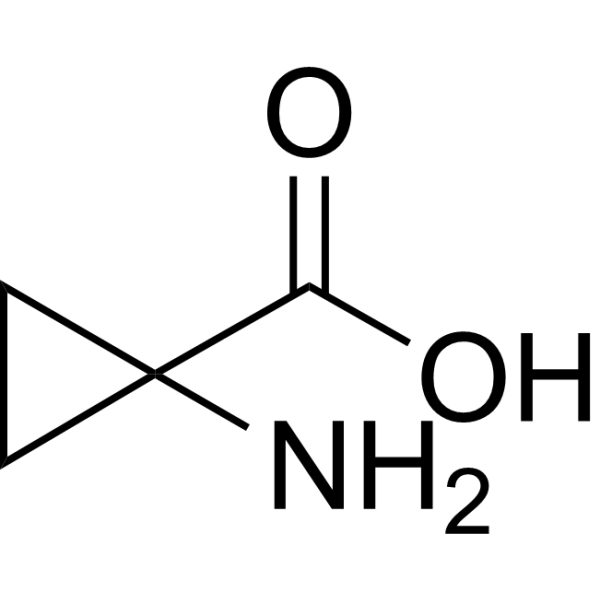
1-Aminocyclopropane-1-carboxylic acid (ACC) is an endogenous metabolite that primarily targets NMDA receptors. At low glutamate concentrations, ACC functions as a small molecule agonist, enhancing NMDA receptor activity with an EC50 of 0.7-0.9 μM, while at high glutamate concentrations, it acts as a competitive antagonist with an EC50 of 81.6 nM. This dual action contributes to its neuroprotective effects, preventing neuronal cell death in ischemic models and inducing blood pressure reduction in hypertensive rats. Additionally, ACC has been shown to enhance object recognition memory and cognitive flexibility without affecting impulsivity, making it a valuable compound for studies in neurotoxicity and cognitive function.
1-Aminocyclopropane-1-carboxylic acid (ACC) is an endogenous metabolite that primarily targets NMDA receptors. At low glutamate concentrations, ACC functions as a small molecule agonist, enhancing NMDA receptor activity with an EC50 of 0.7-0.9 μM, while at high glutamate concentrations, it acts as a competitive antagonist with an EC50 of 81.6 nM. This dual action contributes to its neuroprotective effects, preventing neuronal cell death in ischemic models and inducing blood pressure reduction in hypertensive rats. Additionally, ACC has been shown to enhance object recognition memory and cognitive flexibility without affecting impulsivity, making it a valuable compound for studies in neurotoxicity and cognitive function.
This calculator helps you calculate mass of compound based on solution concentration, volume and molecular weight in a specific solution using the formula: