
- Cat. No.
- A13867
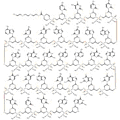
Eteplirsen (AVI-4658)
Synonyms: AVI 4658
Eteplirsen is an experimental drug, currently in clinical trials.
In stock
View Details
Search by product name, CAS, target or catalog number. Press Down Arrow to reach product suggestions, Tab to move between links, and Escape to close suggestions.
Oligonucleotide Therapeutics lists antisense oligonucleotides and small interfering RNAs that reduce or modify gene expression. Each antisense oligonucleotide (ASO) binds complementary RNA and, depending on its chemistry, triggers ribonuclease H (RNase H) cleavage, alters splicing or blocks translation. Antisense examples include eteplirsen, a phosphorodiamidate morpholino oligomer, and danvatirsen, which is directed at signal transducer and activator of transcription 3 (STAT3). Each small interfering RNA (siRNA) is a short double-stranded RNA that guides the RNA-induced silencing complex (RISC) to cleave a matching messenger RNA (mRNA). Inclisiran, for example, is an siRNA directed at proprotein convertase subtilisin/kexin type 9 (PCSK9). Phosphoramidite building blocks for oligonucleotide synthesis are listed separately under Phosphoramidites.
Synonyms: AVI 4658
Eteplirsen is an experimental drug, currently in clinical trials.
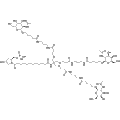
Synonyms: ALN-CC5
Cemdisiran is an N-acetylgalactosamine (GalNAc)-conjugated small interfering RNA (siRNA) designed to suppress hepatic production of complement component 5 (C5). It is used in research focused on complement-mediated diseases.

Synonyms: BIIB078; IONIS-C9Rx
Tadnersen is an antisense oligonucleotide (ASO) designed to selectively target C9ORF72 transcript variants 1 and 3 with the hexanucleotide expansion. This targeted mechanism of action allows for modulation of gene expression associated with neurodegenerative diseases, particularly associated with amyotrophic lateral sclerosis (ALS) and frontotemporal dementia (FTD). Tadnersen is utilized in research applications aimed at understanding the role of C9ORF72 in these conditions and evaluating potential therapeutic strategies.
Synonyms: QPI-1007
Cosdosiran is a chemically modified small interfering RNA (siRNA) that specifically targets and inhibits the expression of caspase 2 protein. This reagent is instrumental in researching nonarteritic anterior ischemic optic neuropathy and various optic neuropathies, including glaucoma, that lead to the degeneration of retinal ganglion cells. Cosdosiran facilitates the exploration of pathways involved in retinal cell survival and offers insights into potential therapeutic strategies for neurodegenerative eye diseases.

Synonyms: ALN-PCSsc
Inclisiran is a double-stranded small interfering RNA (siRNA) that specifically targets and inhibits the transcription of proprotein convertase subtilisin/kexin type 9 (PCSK9). By reducing PCSK9 levels, Inclisiran effectively modulates lipid metabolism and demonstrates anti-inflammatory properties, including the inhibition of pyroptosis and a decrease in NLRP3, cleaved caspase-1, IL-1β, and IL-18. This reagent is valuable for research applications focused on hyperlipidemia and cardiovascular diseases (CVD), as it supports studies aimed at understanding lipid regulation and atherosclerosis.
Synonyms: OGX-011
Custirsen is a targeted antisense oligonucleotide that inhibits the expression of clusterin, an antiapoptotic protein often upregulated in response to chemotherapy. By downregulating clusterin, custirsen enhances apoptosis in cancer cells, thereby overcoming treatment resistance. This compound is primarily utilized in cancer research, particularly in studies focused on improving therapeutic efficacy and understanding apoptotic mechanisms in tumor biology.

Synonyms: AZD9150
Danvatirsen is an antisense oligonucleotide that specifically inhibits STAT3, a transcription factor involved in cell survival and proliferation. This compound reduces cell viability and promotes apoptosis in leukemia cell lines, while downregulating the expression of endogenous STAT3 and its downstream target genes. Additionally, Danvatirsen effectively diminishes proliferation and tumorigenicity in models of neuroblastoma and lymphoma. In vivo studies demonstrate its capacity to inhibit tumor growth rates in mouse models of neuroblastoma, lymphoma, and non-small cell lung cancer. Danvatirsen is applicable in research focused on lymphoma, myelodysplastic syndrome, acute myeloid leukemia, and neuroblastoma.
Aganirsen is a 25-mer DNA antisense oligonucleotide that functions as an inhibitor of the insulin receptor by silencing the expression of insulin receptor substrate-1 (IRS-1). This compound exhibits significant biological activity in modulating insulin signaling pathways, making it a valuable tool for research into metabolic disorders and insulin resistance. Its application extends to studies investigating the role of IRS-1 in various cellular processes and diseases.
Out of stock
All 3 sizes
Cibrigirsen is an antisense oligonucleotide that specifically targets and reduces the expression of the insulin-like growth factor I receptor (IGF-1R). By inhibiting IGF-1R synthesis, it plays a crucial role in modulating signaling pathways associated with cell proliferation and survival. This reagent is valuable for research applications focused on cancer biology, particularly in studies investigating the role of IGF-1R in tumor growth and resistance to therapy.
Out of stock
All 3 sizes
Agazisiran is a small interfering RNA (siRNA) that targets and reduces the synthesis of complement factor B, a key component in the alternative complement pathway. By modulating complement activation, Agazisiran has potential applications in research focused on autoimmune diseases, inflammatory conditions, and other disorders where complement dysregulation plays a critical role.
Out of stock
All 3 sizes
Synonyms: IONIS-FB-LRx sodium; RG6299 sodium; ISIS 696844 sodium
Sefaxersen sodium is a specific antisense oligonucleotide (ASO) that targets complement factor B (CFB). It effectively reduces circulating levels of CFB, making it a valuable tool for research into geographic atrophy (GA). This compound facilitates the exploration of therapeutic strategies aimed at modulating the complement pathway in ocular diseases.
Synonyms: IONIS-FB-LRx; RG6299; ISIS 696844
Sefaxersen is a specific antisense oligonucleotide (ASO) that targets complement factor B (CFB), effectively decreasing its circulating levels. This compound plays a critical role in modulating the complement pathway and has significant implications for research related to geographic atrophy (GA). Researchers can utilize Sefaxersen to investigate the therapeutic potential in conditions characterized by complement dysregulation.
Cevolisiran is a small interfering RNA (siRNA) that specifically targets and reduces the synthesis of complement component 3 (C3). This reduction in C3 levels may modulate the complement pathway, which is pivotal in immune responses and inflammation. Cevolisiran is primarily used in research applications aimed at understanding the role of the complement system in various diseases and therapeutic strategies.
Out of stock
All 3 sizes
Synonyms: RG6084; RO-7191863
Cadapersen is an antisense oligonucleotide that selectively induces the degradation of PD-L1 mRNA. By inhibiting PD-L1 expression, this reagent serves as a valuable tool in the investigation of immune responses and mechanisms underlying chronic hepatitis B (CHB). Its application in research enhances the understanding of immune checkpoint regulation, facilitating studies geared towards novel therapeutic strategies.
Out of stock
All 3 sizes
Synonyms: GED-0301 sodium
Mongersen sodium is a targeted SMAD7 antisense oligonucleotide that functions to restore TGF-β1 activity, resulting in the inhibition of inflammatory signaling pathways. This compound has demonstrated efficacy in attenuating experimental colitis resembling Crohn's disease in mouse models. It is a valuable tool for studying inflammatory bowel disease mechanisms and the modulation of TGF-β signaling in various research applications.

Synonyms: AP 12009
Trabedersen is an antisense oligodeoxynucleotide that specifically targets and inhibits TGF-β2, a key regulator in the TGF-beta/Smad signaling pathway. This reagent is critical for research in malignant brain tumors and various solid tumors, including those affecting the skin, pancreas, and colon, which exhibit overexpression of TGF-β2. By modulating this pathway, Trabedersen offers insights into tumor biology and potential therapeutic strategies.

Synonyms: GED-0301
Mongersen is a targeted SMAD7 antisense oligonucleotide that restores TGF-β1 activity, thereby inhibiting inflammatory pathways. This compound has demonstrated the ability to attenuate experimental colitis resembling Crohn's disease in murine models. Its application is particularly relevant in studying inflammation and fibrosis related to gastrointestinal disorders.
ISTH0036 is a selective antisense oligonucleotide targeting transforming growth factor beta 2 (TGF-β2). It exhibits inhibitory activity against TGF-β2 expression, making it a valuable tool for investigating the pathophysiological mechanisms of primary open-angle glaucoma (POAG) and wet age-related macular degeneration. This reagent is suitable for both in vitro and in vivo studies aimed at understanding the role of TGF-β2 in these ocular conditions.
Out of stock
All 3 sizes
Surbisiran is a small interfering RNA (siRNA) that functions as a β-catenin synthesis reducer. By inhibiting the synthesis of β-catenin, it exhibits antineoplastic activity, making it a valuable tool for cancer research. Surbisiran can be utilized to explore the role of β-catenin in various malignancies and investigate therapeutic strategies targeting this pathway.
Out of stock
All 3 sizes
Synonyms: OGX-427 sodium
Apatorsen sodium is a 2'-methoxyethyl-modified antisense oligonucleotide targeting Hsp27. It effectively reduces Hsp27 mRNA and protein levels, disrupting stress-induced cytoprotective functions, promoting apoptosis, inhibiting tumor growth, and preventing metastasis. This compound is relevant for research applications in non-small cell lung cancer, castration-resistant prostate cancer, breast cancer, ovarian cancer, and bladder cancer.
Synonyms: OGX-427
Apatorsen is a 2'-methoxyethyl-modified antisense oligonucleotide that functions as a Heat Shock Protein 27 (Hsp27) inhibitor. By reducing Hsp27 mRNA and protein levels, Apatorsen disrupts stress-induced cytoprotective mechanisms, promotes apoptosis, inhibits tumor growth, and prevents metastasis. This compound is particularly relevant for research focused on non-small cell lung cancer, castration-resistant prostate cancer, breast cancer, ovarian cancer, and bladder cancer.

Nusinersen is an antisense oligonucleotide that targets the SMN2 gene to enhance pre-messenger RNA splicing. By promoting the production of full-length survival motor neuron (SMN) protein, Nusinersen plays a crucial role in the treatment of spinal muscular atrophy (SMA). This compound is valuable in research focused on genetic disorders related to neuronal degeneration and SMN protein deficiency.

Synonyms: BIIB067; ISIS-SOD1Rx; ISIS 333611
Tofersen is an antisense oligonucleotide designed to induce RNase H-mediated degradation of superoxide dismutase 1 (SOD1) mRNA, thereby decreasing SOD1 protein synthesis. This compound serves as a valuable tool in the study of amyotrophic lateral sclerosis (ALS) pathology and therapeutic interventions targeting SOD1 mutations. Researchers can utilize Tofersen to explore its potential effects on motor neuron preservation and neurodegeneration associated with ALS.
Synonyms: BIIB067 sodium; ISIS-SOD1Rx sodium; ISIS 333611 sodium
Tofersen sodium is an antisense oligonucleotide that specifically induces RNase H-mediated degradation of superoxide dismutase 1 (SOD1) mRNA, leading to decreased SOD1 protein synthesis. This compound is primarily utilized in research related to amyotrophic lateral sclerosis (ALS), providing insights into the pathophysiology and potential therapeutic strategies targeting SOD1 mutations.
Synonyms: ION-363
Ulefnersen (ION363) is an antisense oligonucleotide designed to target the sixth intron of the fused-in sarcoma (FUS) transcript, facilitating the silencing of FUS in a non-allele-specific manner. This reagent effectively reduces FUS protein levels in the brain and spinal cord of relevant mouse models, thereby delaying the progression of motor neuron degeneration associated with amyotrophic lateral sclerosis (ALS-FUS). Ulefnersen is a valuable tool for research into ALS and related neurodegenerative disorders.