
- Cat. No.
- A13522
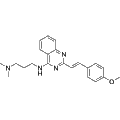
CP 31398
CP 31398 has been shown to act as a stabilizing agent for p53, and to promotes activity of p53 in cancer cell lines.
In stock
View Details
Search by product name, CAS, target or catalog number. Press Down Arrow to reach product suggestions, Tab to move between links, and Escape to close suggestions.
p53 activators and inhibitors act on the tumor suppressor p53, a transcription factor activated by cellular stress. In unstressed cells the ubiquitin ligase mouse double minute 2 (MDM2) keeps p53 levels low by promoting its degradation. RG7112 blocks the p53-MDM2 interaction, and SJ 172550 targets the related protein mouse double minute 4 (MDM4, also called MDMX). RITA binds p53 itself, while tenovin-1 and tenovin-6 raise cellular p53 levels. Tenovin-6 also inhibits the deacetylases sirtuin 1 and sirtuin 2 (SIRT1, SIRT2). Pifithrin-α hydrobromide works the other way, inhibiting p53-dependent transcription in cells exposed to genotoxic stress. Further compounds directed at MDM2 are listed in the neighboring MDM2 category.
CP 31398 has been shown to act as a stabilizing agent for p53, and to promotes activity of p53 in cancer cell lines.
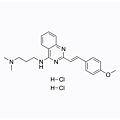
CP 31398 dihydrochloride, p53 stabilizing agent. Stabilizes the active conformation of p53 and promotes p53 activity in cancer cell lines with mutant or wild-type p53. Inhibits growth of small human tumor xenografts in vivo.
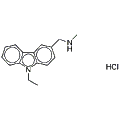
PhiKan 083, p53 stabilizing agent; preferentially binds mutated (Y220C) p53 over wild-type p53 at a site distinct from functional DNA/protein interaction regions.
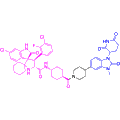
Synonyms: KT-253
Seldegamadlin is a selective p53 stabilizer and an MDM2 PROTAC degrader with a DC50 of 0.4 nM. It effectively inhibits the proliferation of RS4;11 cancer cells, demonstrating an IC50 of 0.3 nM, and induces cell cycle arrest at the G2/M phase while promoting apoptosis. By upregulating p53 activity, Seldegamadlin overcomes the p53-MDM2 feedback loop, making it a valuable tool for research in hematologic and solid tumors, including acute myeloid leukemia (AML) and acute lymphoblastic leukemia (ALL).
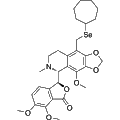
p53 Stabilizer 2 (Compound 17a16) is a potent p53 stabilizer that enhances the stability and function of the p53 protein. This compound induces S-phase arrest and apoptosis in both p53-proficient and p53-deficient cancer cells, demonstrating its broad therapeutic potential. Mechanistically, p53 Stabilizer 2 triggers mitochondrial stress and activates critical checkpoint pathways, including NA-PKcs-dependent p53 stabilization and ATR-Chk1 axis activation. Additionally, it has shown efficacy in inhibiting tumor growth in p53-deficient xenograft models, making it a valuable tool for cancer research.
Out of stock
All 3 sizes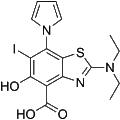
MB710 is an aminobenzothiazole derivative that functions as a stabilizer for the oncogenic p53 mutation Y220C. By tightly binding to the Y220C pocket with a Kd of 4.1 μM, MB710 effectively stabilizes the p53-Y220C variant. This compound demonstrates significant anticancer activity in cell lines expressing the p53-Y220C mutation, making it a valuable tool for research in cancer biology and therapeutic development.
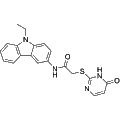
PK095 is a p53 mutant stabilizer that enhances the stability and function of mutated forms of the p53 protein. This compound is primarily utilized in cancer research, where it aids in the investigation of p53-related pathways and mechanisms of tumorigenesis. Its ability to stabilize p53 mutants makes it a valuable tool for studying therapeutic strategies targeting p53 abnormalities in various cancer models.
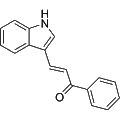
Antitumor agent-202 is a stabilizer of the p53 Y220C mutant, specifically targeting the mutated protein to enhance its functional activity. This compound demonstrates a selective inhibitory effect on the proliferation of tumor cells harboring the p53 Y220C mutation. It serves as a valuable tool in the exploration of therapeutic strategies for cancers associated with this specific mutation, facilitating research into potential treatments and cellular mechanisms.
Out of stock
All 3 sizes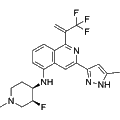
P53 mutant stabilizer-1 is a covalent stabilizer specifically designed to target and stabilize mutant forms of the p53 protein. By restoring the wild-type function of p53 mutants, it serves as a valuable tool in cancer research, particularly in studies focused on cancers associated with p53 mutations. This compound enhances the understanding of p53-related pathways and potential therapeutic strategies for p53-mutated tumors.
Out of stock
All 3 sizes