RIP Kinase

RIP kinase inhibitors act on receptor-interacting protein kinases (RIPKs), mainly RIPK1, RIPK2 and RIPK3. RIPK1 and RIPK3 control necroptosis, a regulated form of necrosis triggered by tumor necrosis factor alpha (TNF-α) and other death receptor signals. Necrostatin-1 was described in 2005 as an inhibitor of nonapoptotic cell death, and RIPK1 was identified as its cellular target in 2008. A 2009 study showed that RIPK3 determines whether cells die by necrosis in response to TNF-α. GSK481 and PK68 are further RIPK1 inhibitors, and GSK-843 inhibits RIPK3. GSK583 inhibits RIPK2, which relays signals from the bacterial sensors nucleotide-binding oligomerization domain-containing proteins 1 and 2 (NOD1, NOD2).

7 Items

  • PROTAC RIPK degrader-2
    Cat. No.
    A23956

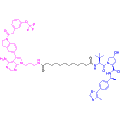
    PROTAC RIPK degrader-2

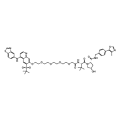
    PROTAC RIPK Degrader-2 is a non-peptidic, VHL-based PROTAC that selectively targets the serine/threonine kinase RIPK2 for degradation. It promotes cancer cell death and ion channel activation, while also inhibiting key protein interactions involved in disease pathways, including those related to cancer and diabetes.

    5 mg
    $405.00
    10 mg
    $698.00
    All 4 sizes
  • PROTAC RIPK degrader-6
    Cat. No.
    A24847

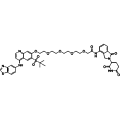
    PROTAC RIPK degrader-6

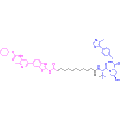
    PROTAC RIPK degrader-6 is a Cereblon-based protein-targeting chimeric molecule designed for the degradation of RIP Kinase. This compound employs a RIP2 kinase inhibitor linked through a suitable spacer to a cereblon ligand, facilitating targeted proteolysis of RIPK. Prominent applications include investigations into kinase-related signaling pathways and the development of innovative therapeutic strategies for diseases associated with RIPK dysregulation.

    1 mg
    $185.00
    5 mg
    $475.00
    All 4 sizes
  • cRIPGBM chloride
    Cat. No.
    A25071

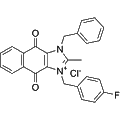
    cRIPGBM chloride

    cRIPGBM chloride is a selective modulator of receptor-interacting protein kinase 2 (RIPK2) that induces caspase 1-dependent apoptosis. This compound effectively disrupts the RIPK2/TAK1 prosurvival complex while promoting the formation of the RIPK2/caspase 1 pro-apoptotic complex. cRIPGBM chloride demonstrates significant anti-tumor efficacy in vivo in animal models, making it a valuable tool for research into glioblastoma multiforme (GBM) and related cancer therapies. Its proapoptotic properties offer insights into mechanisms of cell death and potential therapeutic strategies in cancer treatment.

    1 mg
    $25.00
    5 mg
    $50.00
    All 7 sizes
  • LD4172
    Cat. No.
    A25074

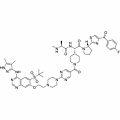
    LD4172

    LD4172 is a selective RIPK1 PROTAC degrader that exhibits a Ki of 4.8 nM. It facilitates RIPK1 protein degradation through the formation of a ternary complex with RIPK1 and VHL E3 ligase, leading to ubiquitination and proteasomal degradation. LD4172 effectively inhibits TNF-induced classical NF-κB signaling in TRAF2-deficient cells, significantly reducing IκBα phosphorylation and IL-8 production. Additionally, it promotes apoptosis and immunogenic cell death in tumor cells, enhances tumor-infiltrating lymphocyte responses, and sensitizes tumors to anti-PD1 therapy, making it a valuable chemical probe for studying RIPK1-related functions in melanoma and colon cancer research.

    1 mg
    $495.00
    5 mg
    $1,025.00
    All 3 sizes
  • RIPK2-IN-2
    Cat. No.
    A25224

    RIPK2-IN-2

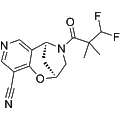
    RIPK2-IN-2 is a PROTAC-based inhibitor specifically targeting RIP2 kinase. It effectively inhibits RIP2-dependent proinflammatory signaling pathways, thereby regulating RIP2 activity implicated in autoinflammatory diseases. This compound serves as a valuable tool for research in understanding the molecular mechanisms of inflammation and developing potential therapeutic strategies for related disorders.

    Out of stock

    All 3 sizes
  • RIPK1-IN-31
    Cat. No.
    A25235

    RIPK1-IN-31

    RIPK1-IN-31 is a selective allosteric modulator of receptor-interacting protein kinase 1 (RIPK1) with an IC50 value of 16 nM. This compound demonstrates potential for modulating RIPK1 activity, making it a valuable tool for research in the fields of infectious, autoimmune, and neurodegenerative diseases. Its ability to selectively influence RIPK1 pathways can aid in elucidating the mechanisms underlying these conditions.

    Out of stock

    All 3 sizes
  • R1-ICR-5
    Cat. No.
    A26221

    R1-ICR-5

    R1-ICR-5 is a selective RIPK1 PROTAC degrader designed to mediate protein degradation via the VHL pathway. This compound promotes the degradation of RIPK1, subsequently dysregulating TNFR1 and TLR3/4 signaling pathways, enhancing the activity of NF-κB, MAPK, and IFN signaling. Additionally, R1-ICR-5 facilitates RIPK3 activation, leading to necroptosis. This reagent is applicable in research focused on triple-negative breast cancer and skin inflammation.

    5 mg
    $1,130.00
    10 mg
    $1,930.00
    All 5 sizes

7 Items

Added to your cart

View Cart Checkout

    Loading...