
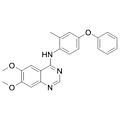
- Cat. No.
- A16231
APS-2-79
APS-2-79 is an antagonist of MEK phosphorylation by RAF through direct binding of the KSR active site.
In stock
View Details
Search by product name, CAS, target or catalog number. Press Down Arrow to reach product suggestions, Tab to move between links, and Escape to close suggestions.
Ras inhibitors and related small GTPase modulators act on KRAS and on the Rac, Rho and Cdc42 proteins. Small GTPases of the Ras superfamily work as molecular switches. They cycle between an active form bound to guanosine triphosphate (GTP) and an inactive form bound to guanosine diphosphate (GDP). Oncogenic KRAS mutations such as G12C keep the protein in its signaling state. ARS-853 and KRas G12C inhibitor 4 target the mutant cysteine of KRAS G12C, while Kobe2602 interferes with binding of Ras to Raf. Salirasib, a farnesylcysteine mimetic, disrupts the membrane association of Ras. Rho-family tools include NSC 23766 and EHT 1864, which inhibit Rac, and CASIN, which targets Cdc42.
APS-2-79 is an antagonist of MEK phosphorylation by RAF through direct binding of the KSR active site.
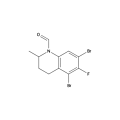
CE3F4 is a selective antagonist of exchange protein directly activated by cAMP (Epac1), with IC50s of 10.7 μM and 66 μM for Epac1 and Epac2(B), respectively.
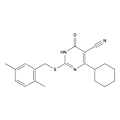
ESI-08 is a potent and selective antagonist of exchange proteins directly activated by cAMP (EPACs). It inhibits both EPAC1 and EPAC2 with an IC₅₀ of 8.4 μM, effectively blocking cAMP-induced EPAC activation while sparing cAMP-mediated protein kinase A (PKA) signaling. By selectively disrupting EPAC-dependent pathways, ESI-08 serves as a valuable tool compound for dissecting cAMP signaling mechanisms and studying EPAC-related physiological and pathological processes.
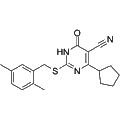
HJC0197 is a selective antagonist of Epac1 and Epac2, exhibiting an IC50 of 5.9 μM for Epac2. This compound effectively inhibits cAMP-induced activation of Epac, demonstrating a capacity to block Epac1-mediated Rap1-GDP exchange activity at a concentration of 25 μM in the presence of a corresponding concentration of cAMP. HJC0197 serves as a valuable tool for investigating the role of Epac proteins in cellular signaling pathways and cAMP-mediated biological processes.
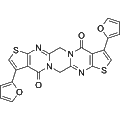
RGB-1 is a selective RNA G-quadruplex stabilizer that targets and reduces the expression of the NRAS proto-oncogene within breast cancer cells. This compound serves as a valuable tool for exploring the cellular mechanisms and functions of RNA G-quadruplex structures, while also aiding in the identification of novel mRNA sequences capable of forming G-quadruplexes. RGB-1 is particularly relevant for research focused on breast cancer therapeutics and the molecular basis of oncogene regulation.
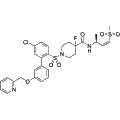
VVD-849 is a RAS ligand that covalently binds to Cys242 in the RAS-binding domain of PI3K p110α, facilitating the interaction between RAS and PI3K. This compound exhibits partial inhibition of pAKT (S473) specifically in HER2-overexpressing tumors. VVD-849 is utilized in cancer research, particularly for studying the mechanisms underlying breast cancer progression and RAS-related signaling pathways.
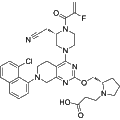
MRTX849 acid serves as a ligand for KRAS G12C, facilitating the synthesis of the PROTAC LC-2. This first-in-class PROTAC effectively induces degradation of endogenous KRAS G12C, demonstrating potent biological activity with DC50 values ranging from 0.25 to 0.76 μM. It is applicable in research settings focused on targeted protein degradation and cancer therapeutics.
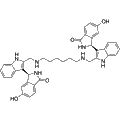
PPI stabilizer-1 is a KRAS dimerizing agent that effectively promotes the dimerization of KRAS with a dissociation constant (KD) of 3.8 µM. This compound has the ability to co-crystallize with GCP-KRASG12D, facilitating structural studies and elucidating the role of KRAS in cellular signaling. PPI stabilizer-1 is valuable for researching KRAS-driven cancers, providing insights into therapeutic strategies targeting this critical pathway.
Out of stock
All 3 sizes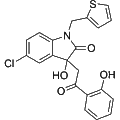
K-Ras-IN-2 is a selective antagonist of the K-Ras protein. It has demonstrated significant biological activity in inhibiting K-Ras-driven signaling pathways, making it a valuable tool for researchers studying tumor biology and oncogenic signaling. This compound is particularly useful in cancer research applications focused on K-Ras-related malignancies.
Out of stock
All 3 sizes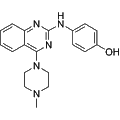
SOS2 Ligand 1 is a selective ligand that targets son of sevenless 2 (SOS2), exhibiting a KD value of 4.6 µM. This compound is valuable for studying the role of SOS2 in cellular signaling pathways and may facilitate research in cancer biology and related fields. Its specificity for SOS2 makes it a useful tool for investigating SOS2-mediated processes and potential therapeutic interventions.
Out of stock
All 3 sizes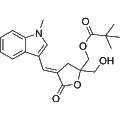
RasGRP3 ligand 1 is a specific ligand for RasGRP3 with a binding affinity characterized by a Ki of 1.75 nM. This compound effectively induces Ras activation, making it a valuable tool for investigating downstream signaling pathways in cancer research. Its targeted mechanism allows for detailed studies of RasGRP3's role in cellular processes associated with tumorigenesis.
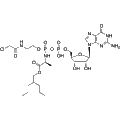
SML-10-70-1 is a K-Ras ligand that covalently modifies the K-Ras G12C mutant protein, providing a targeted approach in cancer research. This compound effectively inhibits the phosphorylation of ERK and Akt, key signaling pathways involved in cell proliferation. In vitro studies demonstrate that SML-10-70-1 significantly reduces the proliferation of cancer cell lines H23, H358, and A549, with IC50 values ranging from 26.6 to 47.6 μM, indicating its potential utility in therapeutic applications against K-Ras-driven malignancies.
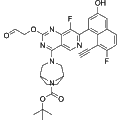
pan-KRAS ligand 1 is a potent ligand designed for Target Protein applications within PROTAC technology. It facilitates the development of PROTAC pan-KRAS degrader 4, enabling targeted degradation of KRAS mutants. This compound is instrumental for researchers investigating KRAS-related oncogenic pathways and therapeutic strategies against cancer.
Out of stock
All 3 sizes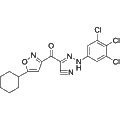
NY-0173 is an antagonist of exchange proteins directly activated by cAMP (EPAC), demonstrating IC50 values of 3.5 μM for EPAC2 and 4.0 μM for EPAC1. This reagent serves as a valuable tool for investigating the biological roles and pathways mediated by EPAC. Researchers can utilize NY-0173 to explore its impact on cellular processes influenced by EPAC signaling.