β-glucuronidase

β-Glucuronidase inhibitors block the glycosidase that removes glucuronic acid from glucuronide conjugates. In human cells the enzyme acts in lysosomes, where it helps degrade glycosaminoglycans such as heparan, dermatan and chondroitin sulfate. Inherited β-glucuronidase deficiency was reported in 1973 as a new mucopolysaccharidosis, now known as mucopolysaccharidosis type VII (Sly syndrome). Gut bacteria make their own β-glucuronidases, which free drugs and toxins from glucuronides excreted in bile. In a 2010 mouse study, inhibiting the bacterial enzyme reduced the intestinal toxicity of the anticancer drug irinotecan. Saccharolactone, also listed as D-Saccharic acid 1,4-lactone hydrate, is a classic inhibitor, and sanggenol A is a plant-derived one. Escherichia coli β-glucuronidase and the chromogenic substrate 4-nitrophenyl β-D-glucuronide support enzyme assays.

6 Items

  • 4-Nitrophenyl β-D-glucuronide
    Cat. No.
    A78184

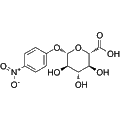
    4-Nitrophenyl β-D-glucuronide

    Synonyms: pNPG_1

    4-Nitrophenyl β-D-glucuronide serves as a chromogenic substrate for the enzyme β-glucuronidase. Upon hydrolysis by β-glucuronidase, it produces a colored product, enabling easy detection and quantification. This compound is widely utilized in biochemical assays for studying enzyme kinetics, assessing enzyme activity, and exploring glucuronidation processes in various biological contexts.

    50 mg
    $25.00
    100 mg
    $35.00
    All 3 sizes
  • Phenolphthalein glucuronide sodium
    Cat. No.
    A78189

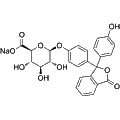
    Phenolphthalein glucuronide sodium

    Phenolphthalein glucuronide sodium is a specific substrate for β-glucuronidase, an enzyme involved in the hydrolysis of glucuronides. This compound is utilized in biochemical assays to measure β-glucuronidase activity, which is significant in various physiological and pathological processes. Its application extends to drug metabolism studies and understanding liver function, contributing to research in toxicology and pharmacology.

    5 mg
    $35.00
    10 mg
    $60.00
    All 5 sizes
  • 6-Chloro-3-indolyl-β-D-glucuronide cyclohexylammonium
    Cat. No.
    A78191

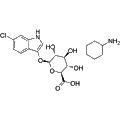
    6-Chloro-3-indolyl-β-D-glucuronide cyclohexylammonium

    6-Chloro-3-indolyl-β-D-glucuronide cyclohexylammonium is a chromogenic substrate specifically designed for β-glucuronidase activity. Upon enzymatic cleavage, it generates a distinctive salmon-colored precipitate, facilitating the detection and quantification of β-glucuronidase activity in biological samples. This reagent is ideal for applications in enzymology and biochemical assays, providing a reliable means to study glucuronidation processes in various research settings.

    10 mg
    $25.00
    25 mg
    $40.00
    All 5 sizes
  • Naphthol AS-OL
    Cat. No.
    A78192

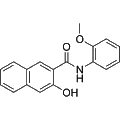
    Naphthol AS-OL

    Synonyms: C.I. 37530

    Naphthol AS-OL is a substrate for β-glucuronidase, enabling the assessment of enzyme activity in biochemical research. As a key tool in glucuronidation studies, it facilitates the detection of β-glucuronidase activity, which is important for understanding drug metabolism and various physiological processes. This compound is instrumental in assays that quantify β-glucuronidase levels, contributing to studies in pharmacokinetics and enzymology.

    25 g
    $20.00
    50 g
    $30.00
    All 3 sizes
  • 5-Bromo-4-chloro-1H-indol-3-yl nonanoate
    Cat. No.
    A78193

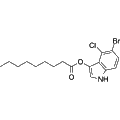
    5-Bromo-4-chloro-1H-indol-3-yl nonanoate

    5-Bromo-4-chloro-1H-indol-3-yl nonanoate serves as a fluorescent substrate for enzyme detection. Upon reaction with specific enzymes, it generates a detectable fluorescent product, making it particularly effective for monitoring β-galactosidase, α-chymotrypsin, and β-glucuronidase activities. This reagent is widely utilized in biochemical assays and enzyme activity studies, providing valuable insights in various research applications.

    Out of stock

    All 3 sizes
  • 4-Methylumbelliferyl-β-D-glucuronide
    Cat. No.
    A78196

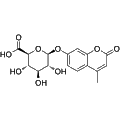
    4-Methylumbelliferyl-β-D-glucuronide

    4-Methylumbelliferyl-β-D-glucuronide is a fluorogenic substrate utilized for the detection of β-glucuronidase activity. Upon enzymatic hydrolysis, it emits fluorescence at an excitation wavelength of 362 nm and an emission wavelength of 445 nm. This compound serves as an effective tool in research applications aimed at quantifying β-glucuronidase activity and monitoring Escherichia coli populations.

    25 mg
    $25.00
    50 mg
    $40.00
    All 3 sizes

6 Items

Added to your cart

View Cart Checkout

    Loading...