PCSK9

PCSK9 inhibitors and degraders target a secreted protein that limits cholesterol uptake by the liver. Proprotein convertase subtilisin/kexin type 9 (PCSK9) was described in 2003 as neural apoptosis-regulated convertase 1 (NARC-1), a convertase expressed in liver and brain. In the same year, mutations in its gene were linked to autosomal dominant hypercholesterolemia. Secreted PCSK9 binds low-density lipoprotein (LDL) receptors and routes them to lysosomal degradation. SBC-115076 and laroprovstat are small-molecule PCSK9 inhibitors, while PF-06446846 hydrochloride selectively stalls ribosomes during PCSK9 translation. Inclisiran is a small interfering RNA (siRNA), and PCSK9 autophagic degrader 2 removes the protein through autophagy.

2 Items

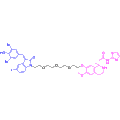
  • PCSK9 autophagic degrader 2
    Cat. No.
    A46128

    PCSK9 autophagic degrader 2

    PCSK9 autophagic degrader 2 (W6) targets proprotein convertase subtilisin/kexin type 9 (PCSK9) through an autophagic mechanism, displaying a DC50 value of 20.6 nM. This compound exhibits significant antiatherosclerotic activity, with a dissociation constant (KD) for LC3B of 2.5 μM. PCSK9 autophagic degrader 2 (W6) facilitates research into cholesterol homeostasis, cardiovascular disease, and potential therapeutic interventions targeting the PCSK9 pathway.

    Out of stock

    All 3 sizes
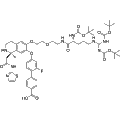
  • (R,R)-PCSK9 degrader 1
    Cat. No.
    A77048

    (R,R)-PCSK9 degrader 1

    (R,R)-PCSK9 degrader 1 targets proprotein convertase subtilisin/kexin type 9 (PCSK9) and functions as a potent small molecule degrader. With a high affinity (Ki = 107 nM), it effectively disrupts the interaction between PCSK9 and low-density lipoprotein (LDL) receptors. This compound is valuable for research applications focused on cholesterol metabolism and cardiovascular diseases, enabling investigations into the modulation of lipid profiles and potential therapeutic interventions.

    Out of stock

    All 3 sizes

2 Items

Added to your cart

View Cart Checkout

    Loading...