- Cat. No.
- A22462
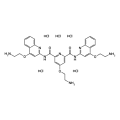
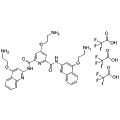
Pyridostatin TFA salt
Synonyms: Pyridostatin; PDS
Pyridostatin stabilizes G-quadruplexes (G4s) in cells and elicits a DNA damage response by causing the formation of DNA double strand breaks (DSB).
Search by product name, CAS, target or catalog number. Press Down Arrow to reach product suggestions, Tab to move between links, and Escape to close suggestions.
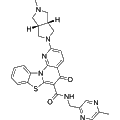
G-quadruplex ligands bind four-stranded structures that form in guanine-rich DNA and RNA sequences. Four guanines pair through Hoogsteen hydrogen bonds into a planar G-quartet, and stacked quartets are stabilized by potassium ions. Parallel four-stranded complexes of guanine-rich DNA were described in 1988. In 2013 a structure-specific antibody visualized G-quadruplexes in human cell nuclei, with numbers that changed during the cell cycle. Such structures occur at telomeres, in gene promoters and in ribosomal DNA. Pyridostatin, reported in 2008, stabilizes telomeric G-quadruplexes and triggers a DNA damage response there. 360A and MTR-106 are further stabilizing ligands, and BMVC-8C3O is a carbazole-based G-quadruplex ligand. Quarfloxin targets G-quadruplexes in ribosomal DNA and inhibits ribosomal RNA (rRNA) biogenesis.
Synonyms: Pyridostatin; PDS
Pyridostatin stabilizes G-quadruplexes (G4s) in cells and elicits a DNA damage response by causing the formation of DNA double strand breaks (DSB).
Synonyms: RR82 hydrochloride; RR 82
Pyridostatin hydrochloride (RR82 hydrochloride) is a G-quadruplexe stabilizer, with a Kd of 490 nM.
L5-DA is a selective G-quadruplex stabilizer that preferentially interacts with G4 structures over double-stranded DNA. This compound exhibits notable cytotoxicity against HeLa cells, with an IC50 value of 4.3 μM. L5-DA effectively stabilizes G4s within HeLa cells, leading to the induction of apoptosis and cell cycle arrest. Its role in modulating G-quadruplexes makes it a valuable tool for research in cancer biology and therapeutic development.
MTR-106 is a potent G-quadruplex stabilizer that also functions as an RNA polymerase I inhibitor. This compound has demonstrated the ability to induce apoptosis and inhibit cell proliferation, making it a valuable tool in cancer research. Its unique mechanism of action provides insights into G-quadruplex dynamics and their implications in tumor biology.
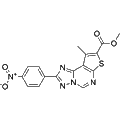
Y502-2304 is a potent c-Myc G-quadruplex stabilizer that exhibits significant antiproliferative activity in multiple myeloma (MM) cells. It effectively downregulates both c-Myc mRNA and protein expression, leading to the induction of apoptosis characterized by increased γH2AX levels and elevated reactive oxygen species (ROS). Additionally, Y502-2304 disrupts mitochondrial function and demonstrates a marked inhibition of tumor growth in xenograft models of MM. This compound is suitable for various research applications focused on elucidating the molecular mechanisms underlying multiple myeloma.
Out of stock
All 3 sizes
Synonyms: o-BMVC
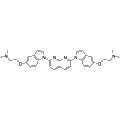
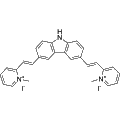
BMVC2 is a bisubstituted carbazole derivative that serves as a G-quadruplex (G4) stabilizer. This compound promotes the formation and stabilization of G-quadruplex structures, which are important in the regulation of gene expression and telomere maintenance. BMVC2 is utilized in research applications focusing on cancer biology, antiviral therapies, and the development of novel molecular therapeutics targeting G4 DNA structures.
Synonyms: RR82 trihydrochloride
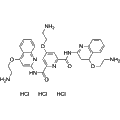
Pyridostatin trihydrochloride is a potent G-quadruplex stabilizer with a binding affinity (Kd) of 490 nM, effectively targeting DNA and RNA G-quadruplex structures within cellular environments. This compound induces growth arrest in human cancer cells through mechanisms involving replication- and transcription-dependent DNA damage. Pyridostatin specifically impacts the proto-oncogene Src, leading to diminished SRC protein levels and reduced SRC-dependent cellular motility in human breast cancer cells. Its applications extend to cancer research, particularly in studying mechanisms of tumor progression and drug resistance.