- Cat. No.
- A22176
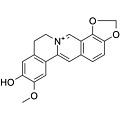
Groenlandicine
Groenlandicine is a protoberberine alkaloid isolated from Coptidis Rhizoma. Groenlandicine exhibits moderate inhibitory effect with IC50 value of 154.2 μM for human recombinant aldose reductase (HRAR).
Search by product name, CAS, target or catalog number. Press Down Arrow to reach product suggestions, Tab to move between links, and Escape to close suggestions.
Topoisomerase inhibitors act on the enzymes that cut and rejoin DNA strands to relieve torsional stress. Type I topoisomerases cleave a single DNA strand, while type II enzymes pass one double helix through a transient break in another. Many inhibitors stabilize the cleavage complex, in which the enzyme remains covalently attached to broken DNA. Camptothecin traps topoisomerase I in this way and produces protein-linked DNA breaks. Irinotecan and its active metabolite SN 38 are camptothecin derivatives with the same target. Etoposide, doxorubicin and ellipticine inhibit topoisomerase II and are used in DNA damage and cell death research. Moxifloxacin, a fluoroquinolone antibacterial, represents the inhibitors of bacterial type II topoisomerases.
Groenlandicine is a protoberberine alkaloid isolated from Coptidis Rhizoma. Groenlandicine exhibits moderate inhibitory effect with IC50 value of 154.2 μM for human recombinant aldose reductase (HRAR).
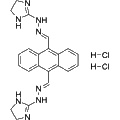
Synonyms: CL-216942 dihydrochloride
Bisantrene dihydrochloride is an effective antitumor agent that acts primarily through DNA intercalation. It specifically targets eukaryotic type II topoisomerases, disrupting DNA replication and transcription. Furthermore, Bisantrene dihydrochloride is a substrate of the multidrug resistance protein, MDR1, making it a relevant compound for studies on drug resistance mechanisms in cancer research.