
- Cat. No.
- A20056
E6130
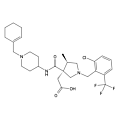
E6130 is an orally available and highly selective CX3CR1 modulator, that may be effective for treatment of inflammatory bowel disease.
In stock
View Details
Search by product name, CAS, target or catalog number. Press Down Arrow to reach product suggestions, Tab to move between links, and Escape to close suggestions.
CC chemokine receptor (CCR) antagonists block G protein-coupled receptors that guide leukocyte migration. CCR2, a receptor for monocyte chemoattractant protein 1 (MCP-1), was cloned in 1994 as two splice variants. CCR5 was identified in 1996 as a fusion cofactor for macrophage-tropic human immunodeficiency virus type 1 (HIV-1). Maraviroc, described in 2005 as a selective small-molecule CCR5 inhibitor, blocks this route of viral entry. Other CCR5 antagonists include vicriviroc malate and aplaviroc, while INCB3344 and MK-0812 target CCR2. Cenicriviroc blocks both CCR2 and CCR5, and GSK2239633A is a CCR4 antagonist for studies of T cell trafficking.
E6130 is an orally available and highly selective CX3CR1 modulator, that may be effective for treatment of inflammatory bowel disease.
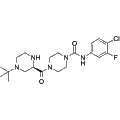
AZD2423 functions as a negative allosteric modulator of the CCR2 chemokine receptor, exhibiting potent selectivity and oral bioavailability. With an IC50 value of 1.2 nM for CCR2-mediated Ca2+ flux, this compound is valuable for investigating the role of CCR2 in various physiological and pathological processes. AZD2423 is useful in research applications related to inflammation, cancer, and immune system modulation.
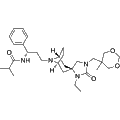
CCR5 modulator-1 is a selective modulator of the CCR5 chemokine receptor. This compound plays a significant role in the regulation of inflammatory processes and can be applied in research aimed at understanding various inflammatory diseases. Its use may provide insights into therapeutic strategies targeting CCR5-related pathways.
Out of stock
All 3 sizes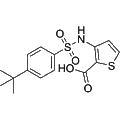
CCR9 modulator-1 is a selective modulator of the chemokine receptor CCR9, primarily involved in T-cell trafficking and immune response regulation. This compound demonstrates significant potential in influencing CCR9-mediated immune pathways, making it a valuable tool for the study of inflammatory diseases such as Crohn's disease and other gastrointestinal disorders. Researchers can utilize CCR9 modulator-1 to explore therapeutic strategies targeting CCR9 in various immunological contexts.
Out of stock
All 3 sizes