
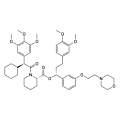
- Cat. No.
- A17104
SAFit2
SAFit2 is a selective inhibitor of the ?FK506-binding protein 51 (FKBP51).
In stock
View Details
Search by product name, CAS, target or catalog number. Press Down Arrow to reach product suggestions, Tab to move between links, and Escape to close suggestions.
FKBP ligands bind FK506-binding proteins (FKBPs), a family of peptidyl-prolyl cis-trans isomerases. In 1989 the receptor for the immunosuppressant FK506 (tacrolimus) was shown to be such an isomerase, now known as FKBP12. Pimecrolimus is a related macrolactam that also binds FKBP12 and inhibits calcineurin. SAFit1 and SAFit2 selectively inhibit FKBP51 through an induced-fit binding mode reported in 2015. Shield-1 stabilizes fusions to a destabilized FKBP12 domain, a method described in 2006 for rapid, reversible control of protein levels. AP1867 binds the engineered mutant FKBP12(F36V), and FKBP12 PROTAC dTAG-7 uses this ligand to degrade tagged proteins in the degradation tag (dTAG) system. Rimiducid and zapalog are chemical inducers of dimerization for FKBP fusion proteins.
SAFit2 is a selective inhibitor of the ?FK506-binding protein 51 (FKBP51).
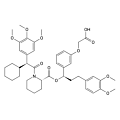
SAFit1 is a FK506 binding protein 51 (FKBP51)-specific inhibitor with a Ki of 4±0.3 nM.
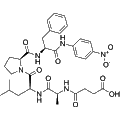
Synonyms: Suc-ALPF-pNA
Suc-Ala-Leu-Pro-Phe-pNA (Suc-ALPF-pNA) is a substrate of FK-506 binding protein (FKBP).
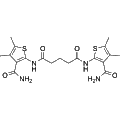
FKBP51-Hsp90-IN-1 is a selective inhibitor targeting the FKBP51-Hsp90 protein-protein interaction, exhibiting an IC50 value of 0.1 μM against FKBP51. This compound is valuable for research into stress-related diseases, Alzheimer's disease, and various metabolic disorders, owing to its ability to modulate protein interactions critical for cellular stress responses and stability. Its specificity makes it a potent tool for elucidating the role of FKBP51 in disease mechanisms.
Out of stock
All 3 sizes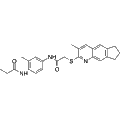
FKBP51-Hsp90-IN-2 is a selective inhibitor of the FKBP51-Hsp90 protein-protein interaction, demonstrating IC50 values of 0.4 µM for FKBP51 and 5 µM for FKBP52. This compound has been shown to enhance cellular energy metabolism and promote neurite growth. Its efficacy makes FKBP51-Hsp90-IN-2 a valuable tool in research focused on neurodegenerative diseases and cancer.
Out of stock
All 3 sizes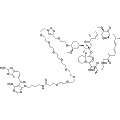
RapaLink-1 is a third-generation bivalent inhibitor targeting the mechanistic target of rapamycin (mTOR). By combining Rapamycin with MLN0128 through an inert linker, RapaLink-1 demonstrates superior efficacy in inhibiting both wild-type and mutant forms of mTOR compared to other inhibitors. This compound effectively crosses the blood-brain barrier, promoting durable mTORC1 inhibition via FKBP12 binding. Additionally, RapaLink-1 exhibits anticancer properties and may play an antithrombotic role in antiphospholipid syndrome by enhancing autophagy.
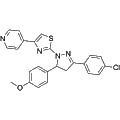
mTOR inhibitor-8 is a potent inhibitor of the mechanistic target of rapamycin (mTOR), functioning through the interaction with FKBP12. This compound effectively suppresses mTOR activity and induces autophagy in A549 human lung cancer cells. It is a valuable tool for studying mTOR signaling pathways and the role of autophagy in cancer research.
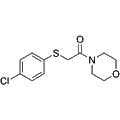
WAY-380153 is an FKBP12 inhibitor that demonstrates moderate binding affinity for FKBP12, with a KD of 19 μM measured via isothermal titration calorimetry and 15 μM via nuclear magnetic resonance. This compound is relevant for research applications involving neurotrophy and neuroprotection, serving as a valuable tool for investigating conditions related to neuronal health and function.
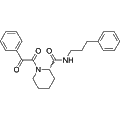
ElteN378 is a selective inhibitor of FKBP12. This compound has demonstrated significant biological activity in the modulation of protein folding and signaling pathways. Research applications include investigations into neurodegenerative diseases such as Alzheimer's and Parkinson's, as well as studies on amyotrophic lateral sclerosis, proliferation disorders, and various cancer types.
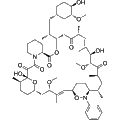
ILS-920 is an immunosuppressive modulator and a nonimmunosuppressive analog of Rapamycin, designed to exhibit reduced immunosuppressive effects while retaining neuroprotective properties. It selectively binds to FKBP52 and the β1-subunit of L-type voltage-gated calcium channels (VGCC), demonstrating a remarkable 200-fold selectivity for FKBP52 over FKBP12. This compound is of particular interest in research areas focusing on neuroprotection and the modulation of calcium signaling pathways.
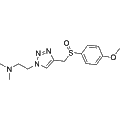
MP-010 is a potent FKBP12 ligand that modulates cytosolic calcium levels by stabilizing ryanodine receptor (RyR) channel activity. This compound has been shown to enhance functional outcomes in SOD1G93A amyotrophic lateral sclerosis (ALS) mouse models, evidenced by improved motor coordination, enhanced integrity of neuromuscular junctions, and increased survival of spinal motor neurons. MP-010 serves as a valuable tool in the investigation of neurological disorders and the underlying mechanisms of ALS.
Out of stock
All 3 sizes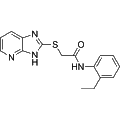
D44 is a selective inhibitor of FKBP35, targeting the PPIase activity essential for Plasmodium survival. With IC50 values of 132 nM for Plasmodium falciparum and 125 nM for Plasmodium vivax, D44 demonstrates significant antiplasmodium activity. This compound is valuable for research applications focused on malaria and other infectious diseases, providing insights into potential therapeutic approaches.