
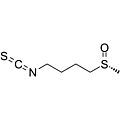
- Cat. No.
- A21690
(R)-Sulforaphane
(R)-Sulforaphane is a highly potent inducer of the Keap1/Nrf2/ARE pathway. (R)-Sulforaphane is a far more potent inducer of the carcinogen-detoxifying enzyme systems in rat liver and lung than the S-isomer.
Search by product name, CAS, target or catalog number. Press Down Arrow to reach product suggestions, Tab to move between links, and Escape to close suggestions.
Keap1-Nrf2 pathway activators and inhibitors act on the master regulator of the cellular antioxidant response. Kelch-like ECH-associated protein 1 (Keap1) binds nuclear factor erythroid 2-related factor 2 (Nrf2) and keeps it from accumulating in the nucleus. In 1997, Nrf2 and small Maf proteins were shown to induce detoxifying genes through antioxidant response elements (AREs). Electrophiles modify Keap1 cysteines, releasing Nrf2 to induce genes such as NAD(P)H quinone dehydrogenase 1 (NQO1). Activators include sulforaphane, an isothiocyanate isolated from broccoli in 1992, and dimethyl fumarate, oltipraz and the triterpenoid omaveloxolone. ML-385 inhibits Nrf2 itself, while dicoumarol blocks the downstream enzyme NQO1. Related oxidative stress tools are listed under Reactive Oxygen Species (ROS).
(R)-Sulforaphane is a highly potent inducer of the Keap1/Nrf2/ARE pathway. (R)-Sulforaphane is a far more potent inducer of the carcinogen-detoxifying enzyme systems in rat liver and lung than the S-isomer.
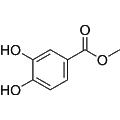
Synonyms: Protocatechuic acid methyl ester; Methyl protocatechuate
Methyl 3,4-dihydroxybenzoate functions as a Keap1-Nrf2 agonist, promoting the activation of the Nrf2 pathway. This compound exhibits significant antioxidant and anti-inflammatory properties, making it valuable in research focused on oxidative stress and cellular defense mechanisms. It is primarily utilized in studies investigating the neuroprotective effects of polyphenols and their potential therapeutic applications in various diseases.
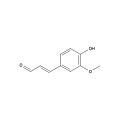
Synonyms: Ferulaldehyde
Coniferaldehyde (Ferulaldehyde), isolated from the ethanol extract of Vitex rotundifolia fruits, is an effective inducer of heme oxygenase-1 (HO-1).
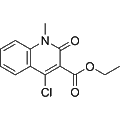
Nrf2 Activator-10 (Compound AI-1) acts as a PI3K-dependent inducer of the antioxidant response element (ARE), with an EC50 value of 2.7 μM, effectively activating Nrf2. By modifying Keap1 and inhibiting the Cul3-Keap1 ubiquitin ligase complex, Nrf2 Activator-10 enhances Nrf2 transcription and promotes cellular defense mechanisms. This compound is particularly valuable for research focused on oxidative stress and cytoprotection, demonstrating protective effects against H2O2-induced apoptosis.
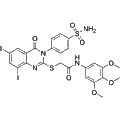
Keap1-Nrf2-IN-10 is a potent inducer of NQO1, mediating the Keap1-Nrf2 signaling pathway. This compound effectively reduces oxidative stress by lowering levels of malondialdehyde (MDA), reactive oxygen species (ROS), and NQO1 in hepatic tissues. Research indicates that Keap1-Nrf2-IN-10 enhances the survival rates of gamma-irradiated mice, making it a valuable tool for studies focused on oxidative damage and cellular protection mechanisms.
Out of stock
All 3 sizes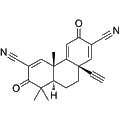
TBE 31 is a highly effective NQO1 inducer, exhibiting a dissociation constant (Kd) of 1.1 nM. It functions as a potent activator of the transcription factor Nrf2 by covalently modifying cysteine residues in Keap1, thereby inhibiting its role in the degradation of Nrf2. This mechanism leads to increased Nrf2 accumulation, promoting cytoprotective effects. TBE 31 is particularly valuable in research focused on oxidative stress response and protective signaling pathways.
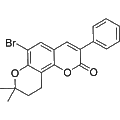
Nrf2 activator-2 (compound O15) is a potent Nrf2 agonist that functions by disrupting the interaction between Keap1 and Nrf2, thereby promoting Nrf2 activation. With an EC50 of 2.9 μM in 293 T cells, this compound significantly reduces the levels of ubiquitinated Nrf2, enhancing its stability and nuclear translocation. Nrf2 activator-2 is valuable in studies exploring oxidative stress response, cellular defense mechanisms, and potential therapeutic applications in diseases associated with Nrf2 dysregulation.
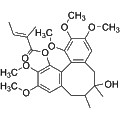
Tigloylgomisin H is a lignan that targets the induction of quinone reductase (QR) activity in Hepa1c1c7 mouse hepatocarcinoma cells. This compound functions as a monofunctional inducer, specifically enhancing the expression of the phase II detoxification enzyme NQO1 via the NF-E2-related factor 2 (Nrf2)-ARE pathway. As a result, Tigloylgomisin H demonstrates potential as a preventive agent against liver cancer, making it valuable for cancer research applications.