PGE Synthase

PGE synthase inhibitors act on the terminal enzymes that convert prostaglandin H2 into prostaglandin E2. Microsomal prostaglandin E (PGE) synthase-1 (mPGES-1) was described in 1999 as a glutathione-dependent enzyme induced by inflammatory stimuli. Inhibitors of this enzyme reduce prostaglandin E2 formation without blocking the upstream cyclooxygenases. MF63 and mPGES1-IN-3 are mPGES-1 inhibitors for inflammation and pain research. The list also covers the prostaglandin D synthases, which turn the same precursor into prostaglandin D2. Hematopoietic prostaglandin D synthase (H-PGDS) was cloned and its crystal structure solved in 1997. HPGDS inhibitor 1 and hPGDS-IN-1 target H-PGDS, whereas AT 56 inhibits lipocalin-type prostaglandin D synthase (L-PGDS).

3 Items

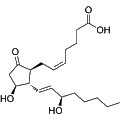
  • ent-Prostaglandin E2
    Cat. No.
    A63193

    ent-Prostaglandin E2

    Synonyms: ent-PGE2

    ent-Prostaglandin E2 (ent-PGE2) is an enantiomer of Prostaglandin E2 that serves as a poor substrate for 15-hydroxyprostaglandin dehydrogenase. This differential substrate activity can be leveraged in various biochemical studies to investigate the enzymatic pathways and regulatory mechanisms involving prostaglandins. Research applications include studying the physiological effects of PGE2 and the role of its enantiomers in inflammatory processes and cell signaling pathways.

    0.1 mg
    $80.00
    0.5 mg
    $140.00
    All 2 sizes
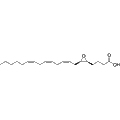
  • 5S(6R)-EET
    Cat. No.
    A63379

    5S(6R)-EET

    5S(6R)-EET is a metabolite derived from arachidonic acid that acts as a potent inducer of prostaglandin E2 (PGE2) synthesis. This compound enhances intracellular calcium levels and inhibits sodium absorption, contributing to membrane depolarization. Its biological activity makes it a valuable tool for research focused on the regulatory roles of prostaglandins in various physiological processes.

    Out of stock

    All 3 sizes
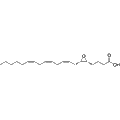
  • 5R(6S)-EET
    Cat. No.
    A63428

    5R(6S)-EET

    5R(6S)-EET is a metabolite derived from arachidonic acid that functions as a PGE2 inducer. It activates the synthesis of endogenous prostaglandin E2, leading to inhibition of sodium absorption, an increase in intracellular calcium levels, and enhanced depolarization of transmembrane voltage. This compound displays stereoselectivity, exhibiting differential activity compared to its stereoisomer, 5S(6R)-EET. Its biological effects make it a valuable tool for研究 applications focusing on prostaglandin signaling and related pathways.

    Out of stock

    All 3 sizes

3 Items

Added to your cart

View Cart Checkout

    Loading...