Amyloid-β

Amyloid-β (Aβ) research compounds include Aβ peptides and modulators of Aβ production, aggregation and signaling. Aβ was first purified from cerebrovascular amyloid in Alzheimer's disease and characterized in 1984. The peptide is cleaved from the amyloid precursor protein (APP), whose cloning in 1987 revealed a structure resembling a cell-surface receptor. The amyloid hypothesis proposes that Aβ accumulation drives Alzheimer's disease pathogenesis, and it frames much current research. The category includes Amyloid b-Peptide (1-42) (human) for aggregation and toxicity studies. γ-Secretase inhibitors such as avagacestat and RO4929097 reduce Aβ formation. FPS-ZM1 blocks the receptor for advanced glycation end products (RAGE), which binds Aβ.

11 Items

  • Amyloid b-Peptide (10-20) (human)
    Cat. No.
    A15415

    Amyloid b-Peptide (10-20) (human)

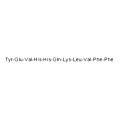
    Amyloid b-Peptide (10-20) (human), soluble amyloid b-peptide fragment that is a substrate for gelatinase A/type IV collagenase/MMP-2 and APP secretase; cleaved between Lys16 and Leu17.

    1 mg
    $45.00
    5 mg
    $220.00
    All 3 sizes
  • Aftin-4
    Cat. No.
    A17139

    Aftin-4

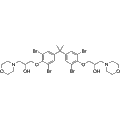
    Aftin-4 is an amyloid-β42 inducer that electively and potently increases production of extracellular Aβ42 and decreases production of extracellular Aβ38 in cultured cells.

    2 mg
    $30.00
    5 mg
    $65.00
    All 8 sizes
  • ARN2966
    Cat. No.
    A21016

    ARN2966

    ARN2966 is a potent post-transcriptional modulator of APP expression; reduces expression of APP with resultant lower production of Aβ.

    1 mg
    $25.00
    5 mg
    $65.00
    All 8 sizes
  • Aβ42-IN-2
    Cat. No.
    A37248

    Aβ42-IN-2

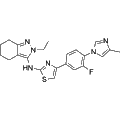
    Aβ42-IN-2 is a potent γ-secretase modulator, specifically targeting Aβ42 with an IC50 of 6.5 nM. This compound is essential for studying the modulation of amyloid beta peptide levels, making it a valuable tool for Alzheimer's disease research. Its selective inhibition of Aβ42 provides insights into the mechanisms underlying amyloid pathology and potential therapeutic strategies.

    1 mg
    $30.00
    5 mg
    $70.00
    All 7 sizes
  • Simufilam hydrochloride
    Cat. No.
    A67082

    Simufilam hydrochloride

    Synonyms: PTI-125 hydrochloride

    Simufilam hydrochloride is an orally active modulator of filamin A (FLNA) that targets neuronal signaling pathways. This compound restores NMDAR signaling and Arc expression while inhibiting dysregulated mTOR activity. Additionally, it enhances insulin sensitivity and mitigates Aβ42-induced neuroinflammation and tau protein hyperphosphorylation. Simufilam hydrochloride is applicable in research related to Alzheimer's disease, particularly in understanding the underlying mechanisms of neurodegeneration.

    1 mg
    $80.00
    2 mg
    $110.00
    All 7 sizes
  • Simufilam
    Cat. No.
    A67113

    Simufilam

    Synonyms: PTI-125

    Simufilam is an orally active modulator of filamin A (FLNA) that restores NMDA receptor (NMDAR) signaling and Arc expression. It effectively inhibits overactive mTOR signaling by restoring the normal conformation of FLNA, which results in improved insulin sensitivity and a reduction in Aβ42-induced neuroinflammation and tau protein hyperphosphorylation. This compound is particularly valuable for research applications focused on Alzheimer's disease and related neurodegenerative disorders.

    5 mg
    $165.00
    10 mg
    $250.00
    All 4 sizes
  • Aftin-5
    Cat. No.
    A78232

    Aftin-5

    Aftin-5 is an inducer of Amyloid-β 42 (Aβ42) that functions by modulating β-secretase and γ-secretase activity, leading to an increase in Aβ42 levels while decreasing Aβ38 levels. This compound affects mitochondrial ultrastructure, which is essential for its biological activity. Aftin-5 displays moderate cytotoxicity in various cell lines, including SH-SY5Y, HT22, N2a, and N2a-AβPP695, with IC50 values ranging from 150 μM to 194 μM. Its role in research makes it a valuable tool for studying Alzheimer's disease and related neurodegenerative conditions.

    1 mg
    $50.00
    5 mg
    $190.00
    All 6 sizes
  • γ-Secretase modulator 13
    Cat. No.
    A78416

    γ-Secretase modulator 13

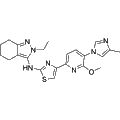
    γ-Secretase modulator 13 is a gamma-secretase modulator that inhibits the production of the aggregated amyloid β-peptide Aβ42, exhibiting an IC50 value of 163 nM. This compound is valuable for research in Alzheimer's disease, facilitating investigations into amyloidogenic processes and potential therapeutic interventions. Its specific modulation of γ-secretase activity positions it as a significant tool for studying the mechanisms underlying neurodegenerative disorders.

    1 mg
    $140.00
    5 mg
    $355.00
    All 4 sizes
  • gamma-secretase modulator 5
    Cat. No.
    A78420

    gamma-secretase modulator 5

    Gamma-secretase modulator 5 is a selective gamma-secretase modulator that effectively inhibits the production of the aggregated amyloid β-peptide Aβ42 with an IC50 value of 60 nM. This compound demonstrates the ability to penetrate the blood-brain barrier, making it a valuable tool in the investigation of Alzheimer's disease mechanisms. It is suitable for research applications aimed at understanding the role of gamma-secretase in neurodegenerative disorders.

    Out of stock

    All 3 sizes
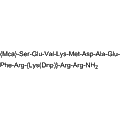
  • Mca-SEVKMDAEFRK(Dnp)RR-NH2
    Cat. No.
    A78443

    Mca-SEVKMDAEFRK(Dnp)RR-NH2

    Mca-SEVKMDAEFRK(Dnp)RR-NH2 is a substrate specifically designed for thimet oligopeptidase (TOP), featuring the beta-secretase cleavage site of the wild-type amyloid precursor protein (APP). This compound plays a crucial role in elucidating the processing of APP and the pathways leading to Alzheimer's disease. It serves as a valuable tool for researchers investigating amyloid pathology and related neurodegenerative processes.

    Out of stock

    All 3 sizes
  • APP modulator-1
    Cat. No.
    A78459

    APP modulator-1

    APP Modulator-1 is a compound that specifically targets the amyloid precursor protein (APP) to influence its processing and thereby modulate the production of amyloid-beta peptides. This activity suggests potential applications in Alzheimer's disease research, particularly in understanding the mechanisms of amyloid plaque formation. APP Modulator-1 is suitable for studies aimed at elucidating the role of APP in neurodegenerative disorders and developing therapeutic strategies for related conditions.

    Out of stock

    All 3 sizes

11 Items

Added to your cart

View Cart Checkout

    Loading...