- Cat. No.
- A15415
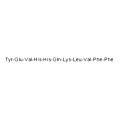
Amyloid b-Peptide (10-20) (human)
Amyloid b-Peptide (10-20) (human), soluble amyloid b-peptide fragment that is a substrate for gelatinase A/type IV collagenase/MMP-2 and APP secretase; cleaved between Lys16 and Leu17.
Search by product name, CAS, target or catalog number. Press Down Arrow to reach product suggestions, Tab to move between links, and Escape to close suggestions.
Amyloid-β (Aβ) research compounds include Aβ peptides and modulators of Aβ production, aggregation and signaling. Aβ was first purified from cerebrovascular amyloid in Alzheimer's disease and characterized in 1984. The peptide is cleaved from the amyloid precursor protein (APP), whose cloning in 1987 revealed a structure resembling a cell-surface receptor. The amyloid hypothesis proposes that Aβ accumulation drives Alzheimer's disease pathogenesis, and it frames much current research. The category includes Amyloid b-Peptide (1-42) (human) for aggregation and toxicity studies. γ-Secretase inhibitors such as avagacestat and RO4929097 reduce Aβ formation. FPS-ZM1 blocks the receptor for advanced glycation end products (RAGE), which binds Aβ.
Amyloid b-Peptide (10-20) (human), soluble amyloid b-peptide fragment that is a substrate for gelatinase A/type IV collagenase/MMP-2 and APP secretase; cleaved between Lys16 and Leu17.
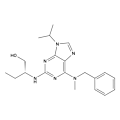
Aftin-4 is an amyloid-β42 inducer that electively and potently increases production of extracellular Aβ42 and decreases production of extracellular Aβ38 in cultured cells.
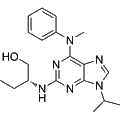
Aftin-5 is an inducer of Amyloid-β 42 (Aβ42) that functions by modulating β-secretase and γ-secretase activity, leading to an increase in Aβ42 levels while decreasing Aβ38 levels. This compound affects mitochondrial ultrastructure, which is essential for its biological activity. Aftin-5 displays moderate cytotoxicity in various cell lines, including SH-SY5Y, HT22, N2a, and N2a-AβPP695, with IC50 values ranging from 150 μM to 194 μM. Its role in research makes it a valuable tool for studying Alzheimer's disease and related neurodegenerative conditions.
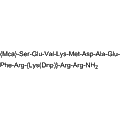
Mca-SEVKMDAEFRK(Dnp)RR-NH2 is a substrate specifically designed for thimet oligopeptidase (TOP), featuring the beta-secretase cleavage site of the wild-type amyloid precursor protein (APP). This compound plays a crucial role in elucidating the processing of APP and the pathways leading to Alzheimer's disease. It serves as a valuable tool for researchers investigating amyloid pathology and related neurodegenerative processes.
Out of stock
All 3 sizes